CorentinTh/emotion
 /emotion
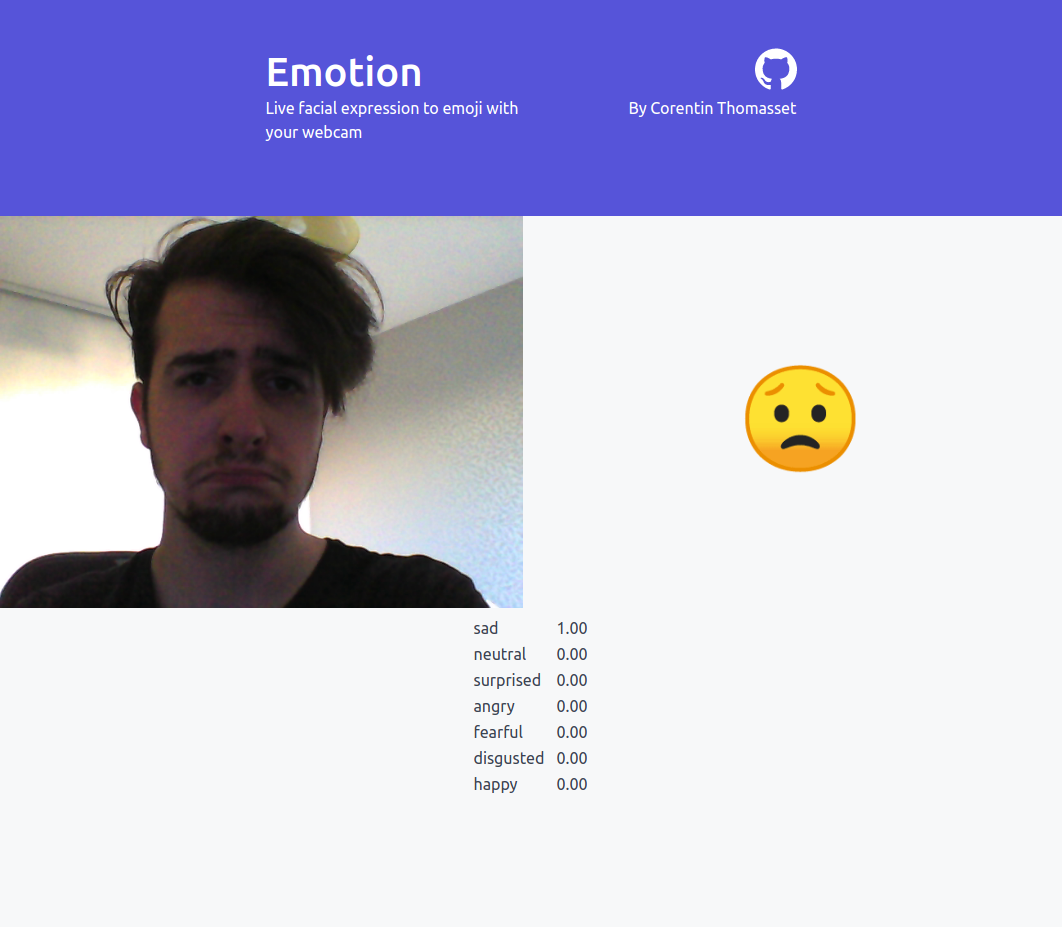
CorentinTh/emotion is tracked by TopGit as a frontend project, with 16 stars on GitHub, written primarily in HTML. Live facial expression to emoji with your webcam.
Snapshot summary built from the project's own GitHub metadata — there's no written TopGit review yet. The page will update automatically when a full review is published.
TopGit writes full reviews for the most-starred, most-requested repositories. This page is a snapshot until then — see the READ ME tab for the original README in full.
Snapshot
Top contributors
Show top contributors
Related repositories
Quick answers
Is CorentinTh/emotion open source?
Yes — CorentinTh/emotion ships under the MIT license, which makes its source code freely readable (and, depending on license terms, forkable and reusable). Source: github.com/CorentinTh/emotion.
What else is in the Frontend space?
CorentinTh/emotion is tracked by TopGit under the Frontend category, alongside 9 GitHub-tagged topics. Trending and Topics pages list peer repositories of comparable stars and language.
What is CorentinTh/emotion?
CorentinTh/emotion (CorentinTh/emotion) is a HTML project on GitHub. From the project's own README: Live facial expression to emoji with your webcam.
What license does CorentinTh/emotion use?
CorentinTh/emotion is released under the MIT license. Always verify the LICENSE file directly on GitHub for the authoritative terms — license strings can be edited out of sync with a project's actual stance.
Where can I see CorentinTh/emotion in action?
The project maintains a homepage at https://emotion.ctmsst.vercel.app. The README tab on this page also usually contains screenshots and a quickstart.
Where do I read more about CorentinTh/emotion?
This TopGit page is a snapshot — the READ ME tab shows the project's own README content (links stripped, images preserved). The GitHub repository at github.com/CorentinTh/emotion is the definitive source.
Why is CorentinTh/emotion categorized under Frontend?
TopGit places CorentinTh/emotion in the Frontend category based on its GitHub topics and description (tagged: "application", "browser", "emoji"). Categories are assigned from real repository metadata, not editorial guesswork.
Read full README in the tab above.
Still deciding about emotion?
One click hands the question to an AI along with this page — see what it says about emotion.