dmlc/gluon-cv — an AI tool — sits at 5.9k GitHub stars in the AI Tools space. Gluon CV Toolkit
Snapshot summary built from the project's own GitHub metadata — there's no written TopGit review yet. The page will update automatically when a full review is published.
WHY NO REVIEW YET
TopGit writes full reviews for the most-starred, most-requested repositories. This page is a snapshot until then — see the READ ME tab for the original README in full.
GluonCV provides implementations of the state-of-the-art (SOTA) deep learning models in computer vision.
It is designed for engineers, researchers, and
students to fast prototype products and research ideas based on these
models. This toolkit offers four main features:
Training scripts to reproduce SOTA results reported in research papers
Supports both PyTorch and MXNet
A large number of pre-trained models
Carefully designed APIs that greatly reduce the implementation complexity
Community supports
Please also checkout AutoGluon if you have image classification or object detection needs. We have built the MultimodalPredictor with an improved model zoo, including TIMM, Huggingface, MMDetection and more. With just a few lines of code, you can train and deploy high accuracy computer vision models for your application.
Demo
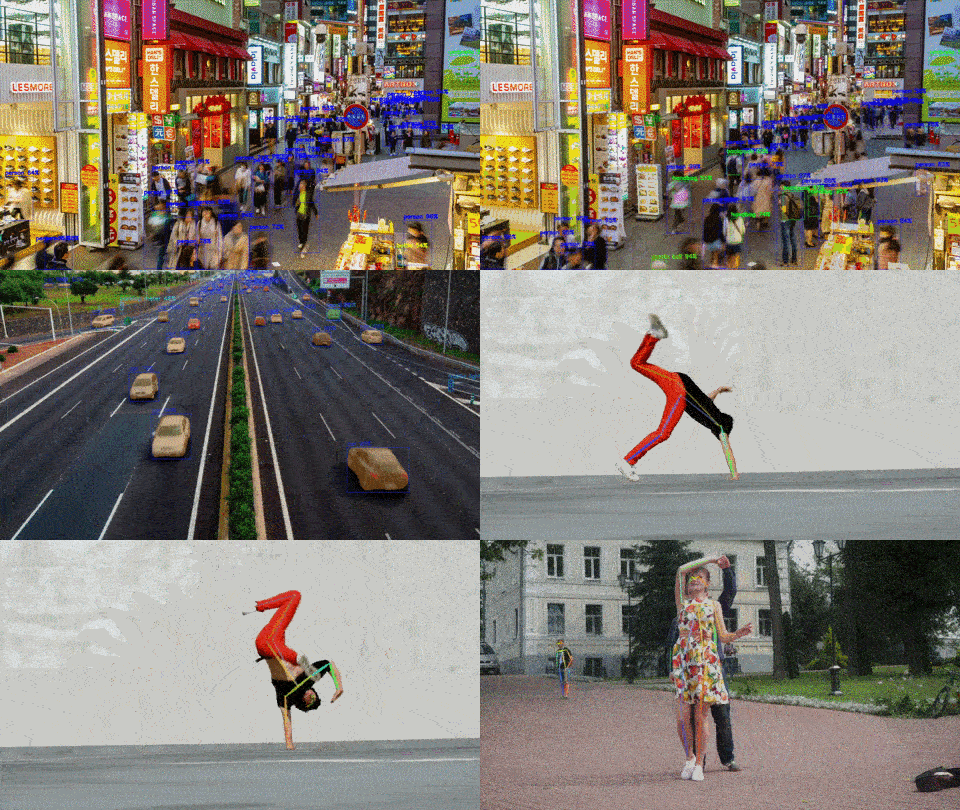
Check the HD video at Youtube or Bilibili.
Supported Applications
Application
Illustration
Available Models
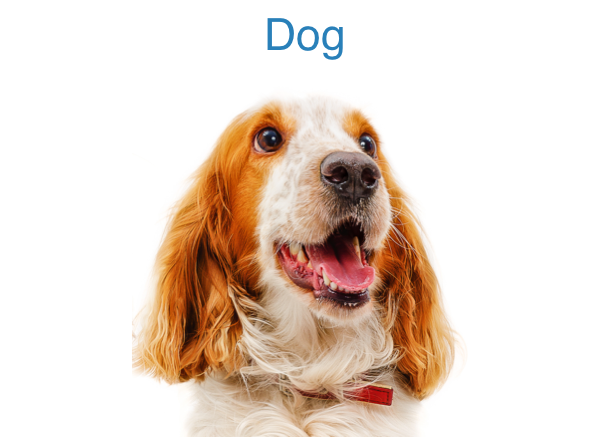
Image Classification: recognize an object in an image.
50+ models, including ResNet, MobileNet, DenseNet, VGG, ...
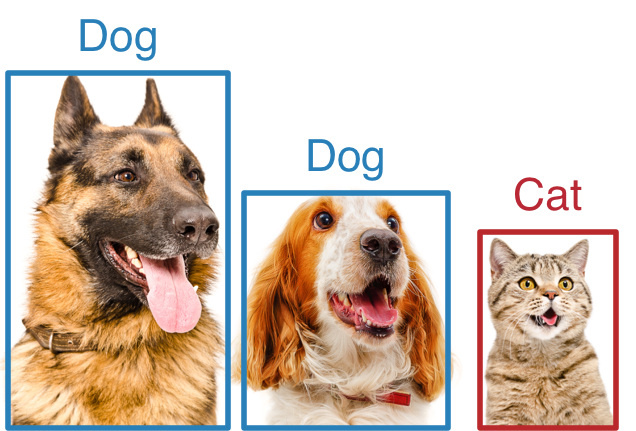
Object Detection: detect multiple objects with their bounding boxes in an image.
Faster RCNN, SSD, Yolo-v3
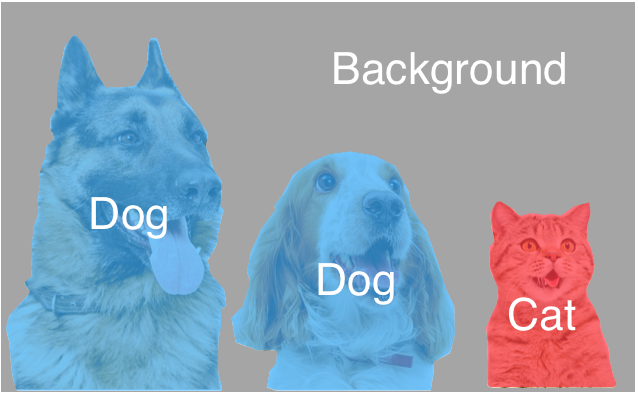
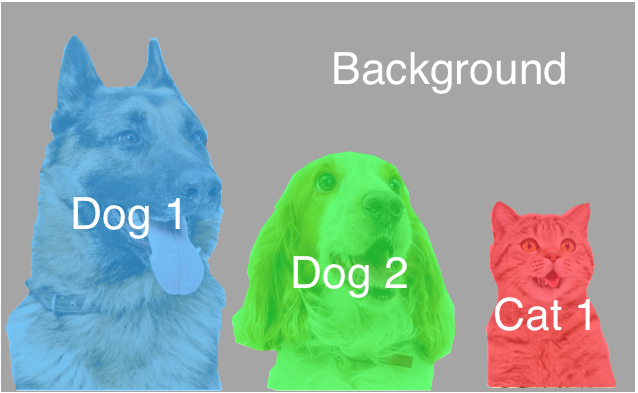
Semantic Segmentation: associate each pixel of an image with a categorical label.
Person Re-ID: re-identify pedestrians across scenes
Market1501 baseline
Installation
GluonCV is built on top of MXNet and PyTorch. Depending on the individual model implementation(check model zoo for the complete list), you will need to install either one of the deep learning framework. Of course you can always install both for the best coverage.
Please also check installation guide for a comprehensive guide to help you choose the right installation command for your environment.
Installation (MXNet)
GluonCV supports Python 3.6 or later. The easiest way to install is via pip.
Stable Release
The following commands install the stable version of GluonCV and MXNet:
GluonCV documentation is available at our website.
Examples
All tutorials are available at our website!
Image Classification
Object Detection
Semantic Segmentation
Instance Segmentation
Video Action Recognition
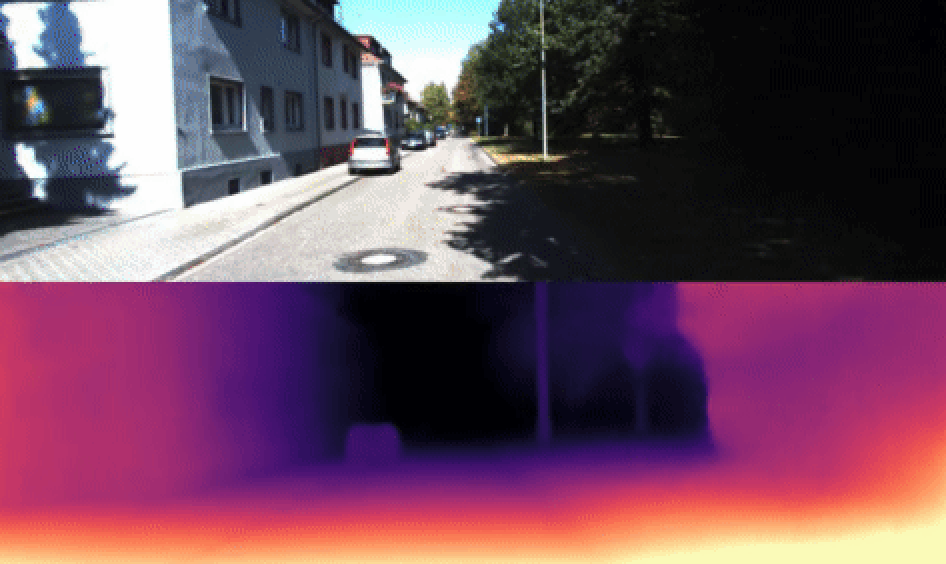
Depth Prediction
Generative Adversarial Network
Person Re-identification
Resources
Check out how to use GluonCV for your own research or projects.
For background knowledge of deep learning or CV, please refer to the open source book Dive into Deep Learning. If you are new to Gluon, please check out our 60-minute crash course.
For getting started quickly, refer to notebook runnable examples at Examples.
For advanced examples, check out our Scripts.
For experienced users, check out our API Notes.
Citation
If you feel our code or models helps in your research, kindly cite our papers:
@article{gluoncvnlp2020,
  author  = {Jian Guo and He He and Tong He and Leonard Lausen and Mu Li and Haibin Lin and Xingjian Shi and Chenguang Wang and Junyuan Xie and Sheng Zha and Aston Zhang and Hang Zhang and Zhi Zhang and Zhongyue Zhang and Shuai Zheng and Yi Zhu},
  title   = {GluonCV and GluonNLP: Deep Learning in Computer Vision and Natural Language Processing},
  journal = {Journal of Machine Learning Research},
  year    = {2020},
  volume  = {21},
  number  = {23},
  pages   = {1-7},
  url     = {http://jmlr.org/papers/v21/19-429.html}
}

@article{he2018bag,
  title={Bag of Tricks for Image Classification with Convolutional Neural Networks},
  author={He, Tong and Zhang, Zhi and Zhang, Hang and Zhang, Zhongyue and Xie, Junyuan and Li, Mu},
  journal={arXiv preprint arXiv:1812.01187},
  year={2018}
}

@article{zhang2019bag,
  title={Bag of Freebies for Training Object Detection Neural Networks},
  author={Zhang, Zhi and He, Tong and Zhang, Hang and Zhang, Zhongyue and Xie, Junyuan and Li, Mu},
  journal={arXiv preprint arXiv:1902.04103},
  year={2019}
}

@article{zhang2020resnest,
  title={ResNeSt: Split-Attention Networks},
  author={Zhang, Hang and Wu, Chongruo and Zhang, Zhongyue and Zhu, Yi and Zhang, Zhi and Lin, Haibin and Sun, Yue and He, Tong and Muller, Jonas and Manmatha, R. and Li, Mu and Smola, Alexander},
  journal={arXiv preprint arXiv:2004.08955},
  year={2020}
}
How does dmlc/gluon-cv compare to other AI Tools projects?
dmlc/gluon-cv is tracked by TopGit in the AI Tools category, with 5.9k GitHub stars and written in Python. Browse the AI Tools topic page on TopGit to compare it against similar projects by stars and activity.
Is dmlc/gluon-cv open source?
Yes — dmlc/gluon-cv ships under the Apache-2.0 license, which makes its source code freely readable (and, depending on license terms, forkable and reusable). Source: github.com/dmlc/gluon-cv.
What else is in the AI Tools space?
dmlc/gluon-cv is tracked by TopGit under the AI Tools category, alongside 13 GitHub-tagged topics. Trending and Topics pages list peer repositories of comparable stars and language.
What is dmlc/gluon-cv?
dmlc/gluon-cv (dmlc/gluon-cv) is a Python project on GitHub. From the project's own README: Gluon CV Toolkit
Where do I read more about dmlc/gluon-cv?
This TopGit page is a snapshot — the READ ME tab shows the project's own README content (links stripped, images preserved). The GitHub repository at github.com/dmlc/gluon-cv is the definitive source.
Why is dmlc/gluon-cv categorized under AI Tools?
TopGit places dmlc/gluon-cv in the AI Tools category based on its GitHub topics and description (tagged: "action-recognition", "computer-vision", "deep-learning"). Categories are assigned from real repository metadata, not editorial guesswork.
Read full README in the tab above.
Curious whether gluon-cv is right for you?
Let ChatGPT, Claude, or Perplexity look into it — click below and see what AI actually says about gluon-cv.
 /gluon-cv