Kotlin/anko is tracked by TopGit as a mobile project, with 15.8k stars on GitHub, written primarily in Kotlin. Pleasant Android application development
Snapshot summary built from the project's own GitHub metadata — there's no written TopGit review yet. The page will update automatically when a full review is published.
WHY NO REVIEW YET
TopGit writes full reviews for the most-starred, most-requested repositories. This page is a snapshot until then — see the READ ME tab for the original README in full.
:warning: Anko is deprecated. Please see this page for more information.
Anko is a Kotlin library which makes Android application development faster and easier. It makes your code clean and easy to read, and lets you forget about rough edges of the Android SDK for Java.
Anko consists of several parts:
Anko Commons: a lightweight library full of helpers for intents, dialogs, logging and so on;
Anko Layouts: a fast and type-safe way to write dynamic Android layouts;
Anko SQLite: a query DSL and parser collection for Android SQLite;
Anko Coroutines: utilities based on the kotlinx.coroutines library.
Anko Commons
Anko Commons is a "toolbox" for Kotlin Android developer. The library contains a lot of helpers for Android SDK, including, but not limited to:
Intents (wiki);
Dialogs and toasts (wiki);
Logging (wiki);
Resources and dimensions (wiki).
Anko Layouts (wiki)
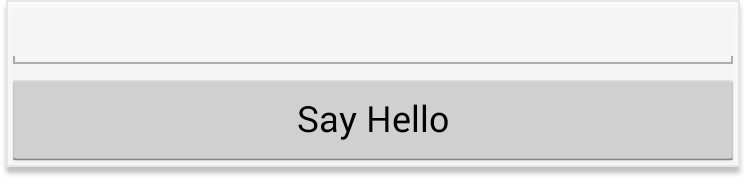
Anko Layouts is a DSL for writing dynamic Android layouts. Here is a simple UI written with Anko DSL:
verticalLayout {
    val name = editText()
    button("Say Hello") {
        onClick { toast("Hello, ${name.text}!") }
    }
}
The code above creates a button inside a LinearLayout and attaches an OnClickListener to that button. Moreover, onClick accepts a suspend lambda, so you can write your asynchronous code right inside the listener!
Note that this is the complete layout code. No XML is required!
Anko has a DSL for ConstraintLayout since v0.10.4
There is also a plugin for Android Studio that supports previewing Anko DSL layouts.
Anko SQLite (wiki)
Have you ever been tired of parsing SQLite query results using Android cursors? Anko SQLite provides lots of helpers to simplify working with SQLite databases.
For example, here is how you can fetch the list of users with a particular name:
Anko Coroutines is based on the kotlinx.coroutines library and provides:
bg() function that executes your code in a common pool.
asReference() function which creates a weak reference wrapper. By default, a coroutine holds references to captured objects until it is finished or canceled. If your asynchronous framework does not support cancellation, the values you use inside the asynchronous block can be leaked. asReference() protects you from this.
Using Anko
Gradle-based project
Anko has a meta-dependency which plugs in all available features (including Commons, Layouts, SQLite) into your project at once:
Make sure that you have the $anko_version settled in your gradle file at the project level:
ext.anko_version='0.10.8'
If you only need some of the features, you can reference any of Anko's parts:
dependencies {
    // Anko Commons
    implementation "org.jetbrains.anko:anko-commons:$anko_version"

    // Anko Layouts
    implementation "org.jetbrains.anko:anko-sdk25:$anko_version" // sdk15, sdk19, sdk21, sdk23 are also available
    implementation "org.jetbrains.anko:anko-appcompat-v7:$anko_version"

    // Coroutine listeners for Anko Layouts
    implementation "org.jetbrains.anko:anko-sdk25-coroutines:$anko_version"
    implementation "org.jetbrains.anko:anko-appcompat-v7-coroutines:$anko_version"

    // Anko SQLite
    implementation "org.jetbrains.anko:anko-sqlite:$anko_version"
}
There are also a number of artifacts for the Android support libraries:
There is an example project showing how to include Anko library into your Android Gradle project.
IntelliJ IDEA project
If your project is not based on Gradle, just attach the required JARs from the jcenter repository as the library dependencies and that's it.
Contributing
The best way to submit a patch is to send us a pull request. Before submitting the pull request, make sure all existing tests are passing, and add the new test if it is required.
If you want to add new functionality, please file a new proposal issue first to make sure that it is not in progress already. If you have any questions, feel free to create a question issue.
Instructions for building Anko are available in the Wiki.
No homepage URL was recorded for Kotlin/anko in TopGit's last sync. The README tab above frequently contains screenshots and demo links, or check the repository description on GitHub.
How active is development on Kotlin/anko?
The most recent commit recorded on Kotlin/anko was 7.0 years ago, based on the GitHub push timestamp. The repository has 1.3k forks — one of the better signals of community interest.
How many stars does Kotlin/anko have?
Kotlin/anko has 15.8k GitHub stars — refresh the page for the live number, or check github.com/Kotlin/anko. TopGit mirrors GitHub's count but does not claim minute-by-minute accuracy.
What language is Kotlin/anko written in?
Kotlin/anko is written primarily in Kotlin. GitHub's language field is based on the largest share of bytes in the default branch.
What license does Kotlin/anko use?
Kotlin/anko is released under the Apache-2.0 license. Always verify the LICENSE file directly on GitHub for the authoritative terms — license strings can be edited out of sync with a project's actual stance.
What topics is Kotlin/anko associated with?
GitHub's repository topics for Kotlin/anko: "android", "kotlin". TopGit's editorial category is Mobile.
Where do I read more about Kotlin/anko?
This TopGit page is a snapshot — the READ ME tab shows the project's own README content (links stripped, images preserved). The GitHub repository at github.com/Kotlin/anko is the definitive source.
Read full README in the tab above.
Is anko worth your time?
ChatGPT, Claude and Perplexity can all read this page. Ask one of them what it makes of anko.

 /anko