As an AI tool, NVIDIA/cosmos has picked up 12.3k stars on GitHub. NVIDIA Cosmos is an open platform of world models, datasets, and tools that enables developers to build Physical AI for robots, autonomous vehicles, smart infrastructure, and more.
Snapshot summary built from the project's own GitHub metadata — there's no written TopGit review yet. The page will update automatically when a full review is published.
WHY NO REVIEW YET
TopGit writes full reviews for the most-starred, most-requested repositories. This page is a snapshot until then — see the READ ME tab for the original README in full.
One model family that sees, reasons, simulates, and acts.
Try it in your browser · Quickstart · Find your path · Model Family · Cookbook
Physics-aware generation A Newton's cradle in motion: momentum transfer rendered with physical fidelity
Transfer World-scenario control layout → photoreal driving video
Action policy Policy run: "put the screwdriver and the glove in the purple container"
Simulation Generate synthetic data and create simulation for autonomous driving
Action-conditioned World Model Forward dynamics: egocentric rollout from input camera + hand pose
World reasoning Reason in complex real-world scenarios: a rolling ball means a child or pet may follow
What's new
[Oct 2026] Interactive World Simulation with Cosmos for Physical AI - example model checkpoints and training recipes: HF collection · Cookbook · Technical report · Website.
[Jul 2026] Cosmos3-Edge released - the 4B tier for on-device, real-time deployment (Jetson AGX Orin / Thor / RTX Pro 6000).
NVIDIA Cosmos is an open platform for building physical AI applications, supporting industry verticals such as robotics, autonomous vehicles, smart infrastructure, manufacturing, healthcare, agriculture. The mission of Cosmos is to provide better data, better environment, better starting point, and better tooling for physical AI developers.
Cosmos 3, the current model family, is a suite of omnimodal world models built on a unified Mixture-of-Transformers architecture (technical report).
One model, two towers:
Inputs
Outputs
Use it for
Reasoner
text, vision
text
world understanding, grounding, task planning, embodied reasoning
Generator
text, vision, audio, action
vision, audio, action
world simulation, future prediction, synthetic data, policy learning
This repository is the landing repo to start your physical AI journey with Cosmos. Here you can find detailed information on Cosmos models and explore Cosmos cookbook - a set of agent runnable recipes for various objectives and industries.
The recipes are supported by the Cosmos platform, including Cosmos Framework for training infra (SFT, LoRA, RL, distillation etc.), Cosmos Curator for data curation, and Cosmos Evaluator for model output evaluation.
Before running the code, request access to nvidia/Cosmos-1.0-Guardrail and accept its access conditions. Once access is granted, log in below with a Hugging Face read token from the same account. Logging in alone does not grant access.
import torch
from diffusers import Cosmos3OmniPipeline
from diffusers.utils import export_to_video

pipe = Cosmos3OmniPipeline.from_pretrained(
    "nvidia/Cosmos3-Nano", torch_dtype=torch.bfloat16, device_map="cuda"
)
video = pipe(prompt="A mobile robot navigates a warehouse aisle and stops at a shelf.").video
export_to_video(video, "first_video.mp4", fps=24)
First run downloads the 16B checkpoint; diffusion steps are compute-heavy, so long step times are normal. Full options, image/sound modes, and every other backend: audiovisual cookbooks · setup issues: environment setup guide.
Models
Cosmos 3 ships as three base models. Every deployment tier, one omnimodal architecture:
Base model
Size
Runs on
Best for
Cosmos3-Super
64B
H200 / B200 / GB200
Highest quality; synthetic data generation; teacher for distillation
Cosmos3-Nano
16B
RTX Pro 6000 / H100 / B200
Balanced speed and quality; strong base model to post-train
Cosmos3-Edge
4B
Jetson AGX Orin / Thor / RTX Pro 6000
Edge deployment; real-time robot policy and visual reasoning
Published static FP8 checkpoints: Cosmos3-Nano-FP8
and Cosmos3-Super-FP8.
FP8 reduces weight storage; activation precision depends on the serving backend
and exported runtime policy. See the cookbook
for local export and serving, including Super base and distilled T2I/I2V.
Example checkpoints in the cosmos3-examples collection are post-trained variants of the base models. They demonstrate what post-training with Cosmos Framework can specialize Cosmos for.
Auto-regressive transfer - depth, segmentation, edge, blur
Cosmos3-Super-Text2Image
Super
Elite quality text-to-image
Cosmos3-Super-Text2Image-4Step
Super
Elite quality text-to-image, 17-25x faster
Cosmos3-Super-Image2Video
Super
Elite quality image-to-video
Cosmos3-Super-Image2Video-4Step
Super
Elite quality image-to-video, 17-25x faster
Cosmos3-Nano-Policy-DROID
Nano
Open SOTA DROID robot policy, runs on RTX Pro 6000
Cosmos3-Edge-Policy-DROID
Edge
DROID robot policy at edge-deployable scale
Full I/O specs, generation settings, and supported action embodiments: model reference.
Platform
Project
Purpose
Cosmos
This repo
Cosmos Framework
Train, optimize, and deploy physical AI models, SFT · LoRA · distillation · RL post-training, for Cosmos and beyond
Cosmos Curator
Distributed data curation: processing, annotation, filtering, dedup
Cosmos Evaluator
Automated evaluation system for world generation & reasoning outputs
Cosmos 3 runs on Diffusers, Transformers, vLLM, vLLM-Omni, SGLang, TensorRT-LLM, and NIM. Pick a backend in the environment setup guide.
Community & contributing
Questions and ideas → Discussions. Bugs → Issues. Code and recipes → Cosmos Framework.
Limitations & safety
Cosmos 3 can produce artifacts in long, high-resolution, or physically complex outputs (temporal inconsistency, object morphing, implausible dynamics). Safety-critical applications need additional validation and system-level safety analysis. Generation ships with guardrails on by default.
Citation & license
@techreport{nvidia2026cosmos3,
  title  = {Cosmos 3: Omnimodal World Models for physical AI},
  author = {{NVIDIA Cosmos Team}},
  year   = {2026},
  url    = {https://research.nvidia.com/labs/cosmos-lab/cosmos3/technical-report.pdf}
}
Source code and models are released under OpenMDW-1.1. Custom licensing: [email protected]. This project may download third-party open source software; review those licenses before use.
The most recent commit recorded on NVIDIA/cosmos was 8 days ago, based on the GitHub push timestamp. The repository has 958 forks — one of the better signals of community interest.
How does NVIDIA/cosmos compare to other AI Tools projects?
NVIDIA/cosmos is tracked by TopGit in the AI Tools category, with 12.3k GitHub stars. Browse the AI Tools topic page on TopGit to compare it against similar projects by stars and activity.
How many stars does NVIDIA/cosmos have?
NVIDIA/cosmos has 12.3k GitHub stars — refresh the page for the live number, or check github.com/NVIDIA/cosmos. TopGit mirrors GitHub's count but does not claim minute-by-minute accuracy.
Is NVIDIA/cosmos open source?
TopGit's metadata for NVIDIA/cosmos does not record a license. Most public repositories on GitHub ARE open source, but the exact terms vary — verify by opening the LICENSE file directly.
What is NVIDIA/cosmos?
NVIDIA/cosmos (NVIDIA/cosmos) is a multi-language project on GitHub. From the project's own README: NVIDIA Cosmos is an open platform of world models, datasets, and tools that enables developers to build Physical AI for robots, autonomous vehicles, smart infrastructure, and more.
Where do I read more about NVIDIA/cosmos?
This TopGit page is a snapshot — the READ ME tab shows the project's own README content (links stripped, images preserved). The GitHub repository at github.com/NVIDIA/cosmos is the definitive source.
Read full README in the tab above.
Still deciding about cosmos?
One click hands the question to an AI along with this page — see what it says about cosmos.

 /cosmos




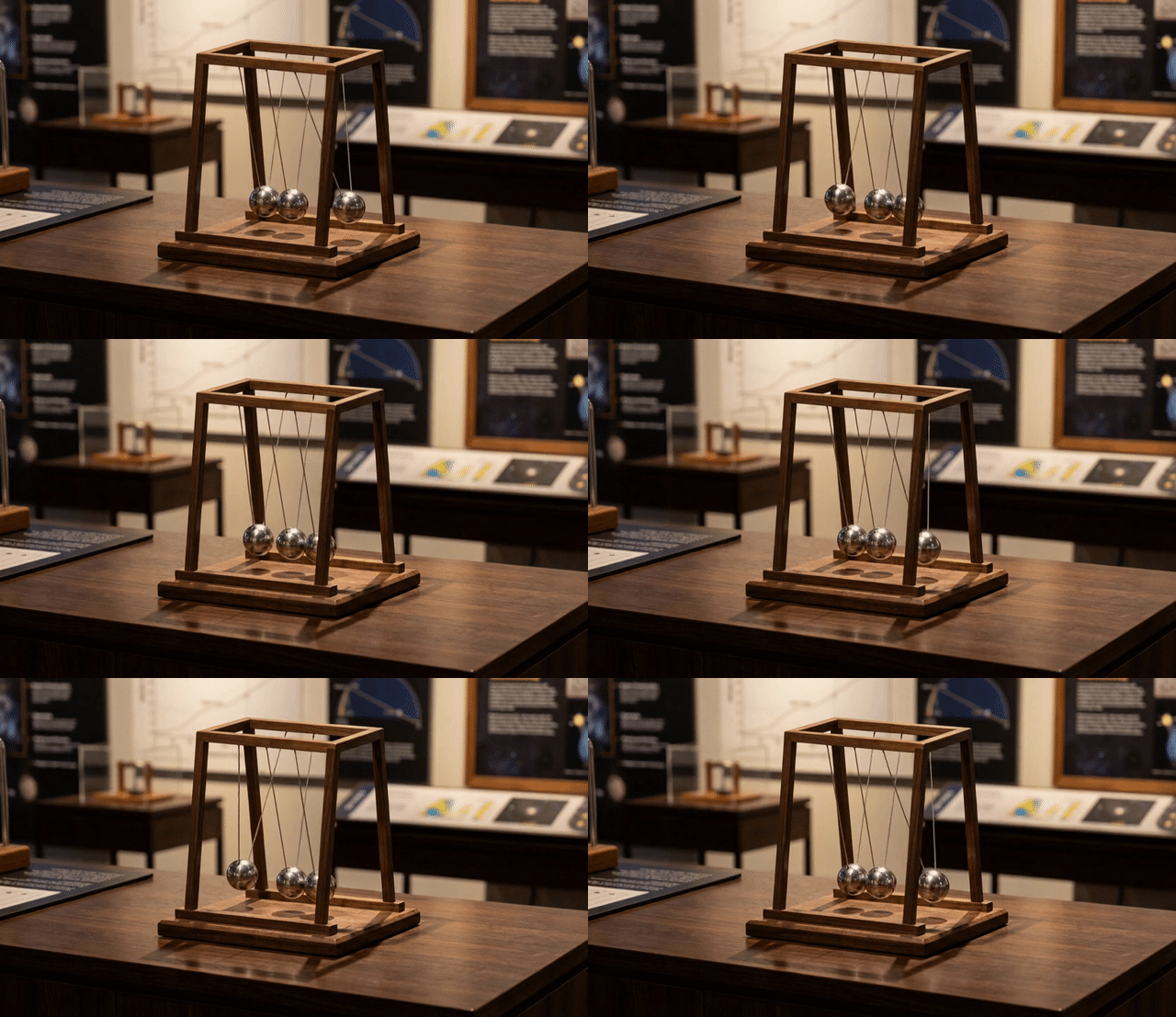 Physics-aware generation
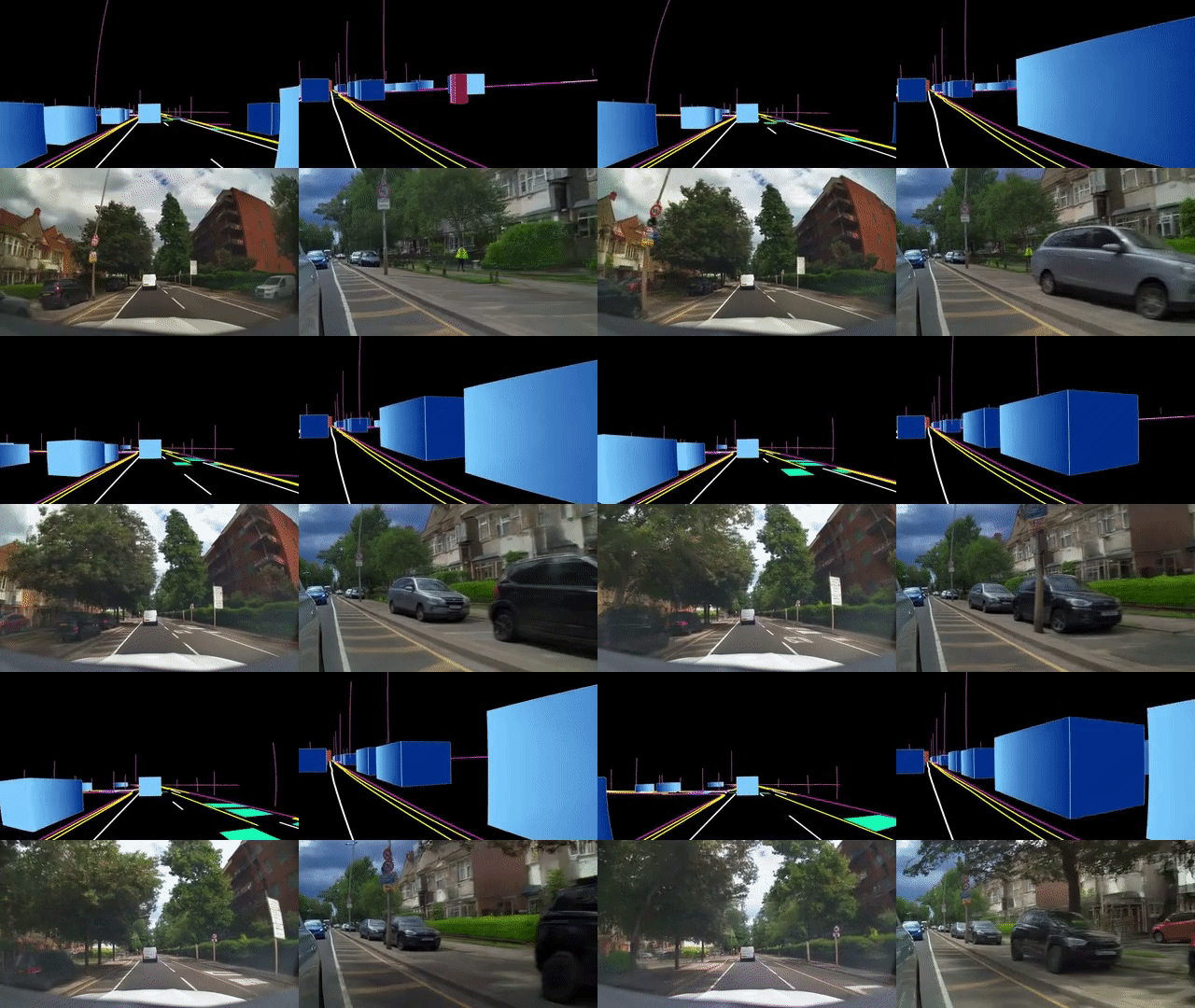 Transfer
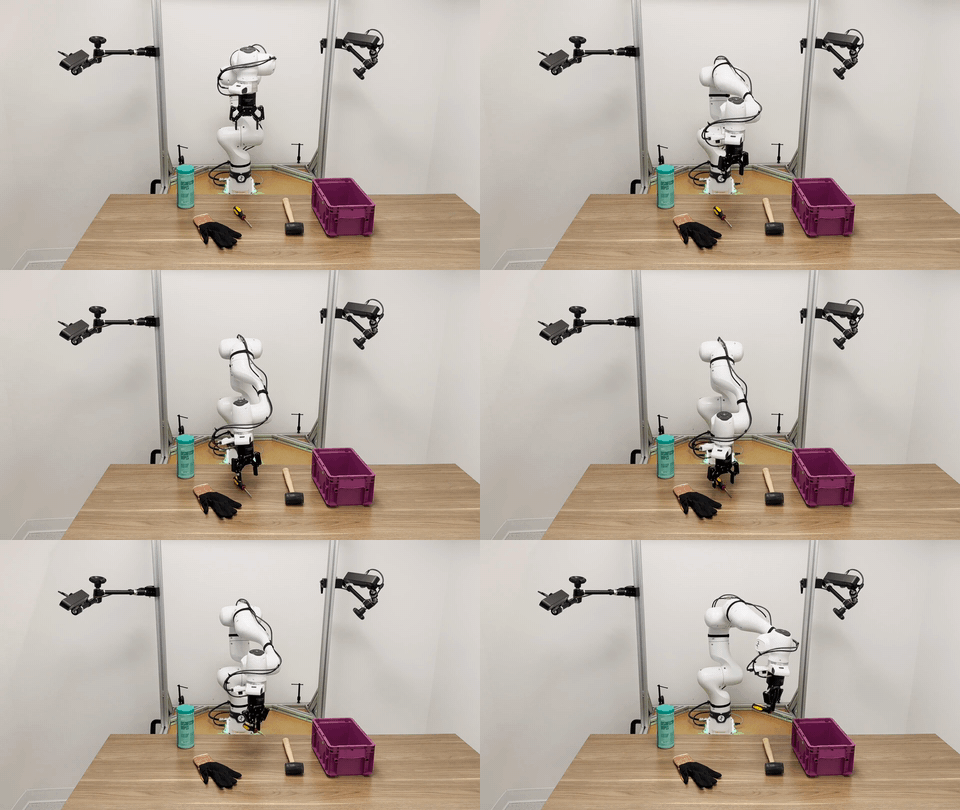 Action policy
 Simulation
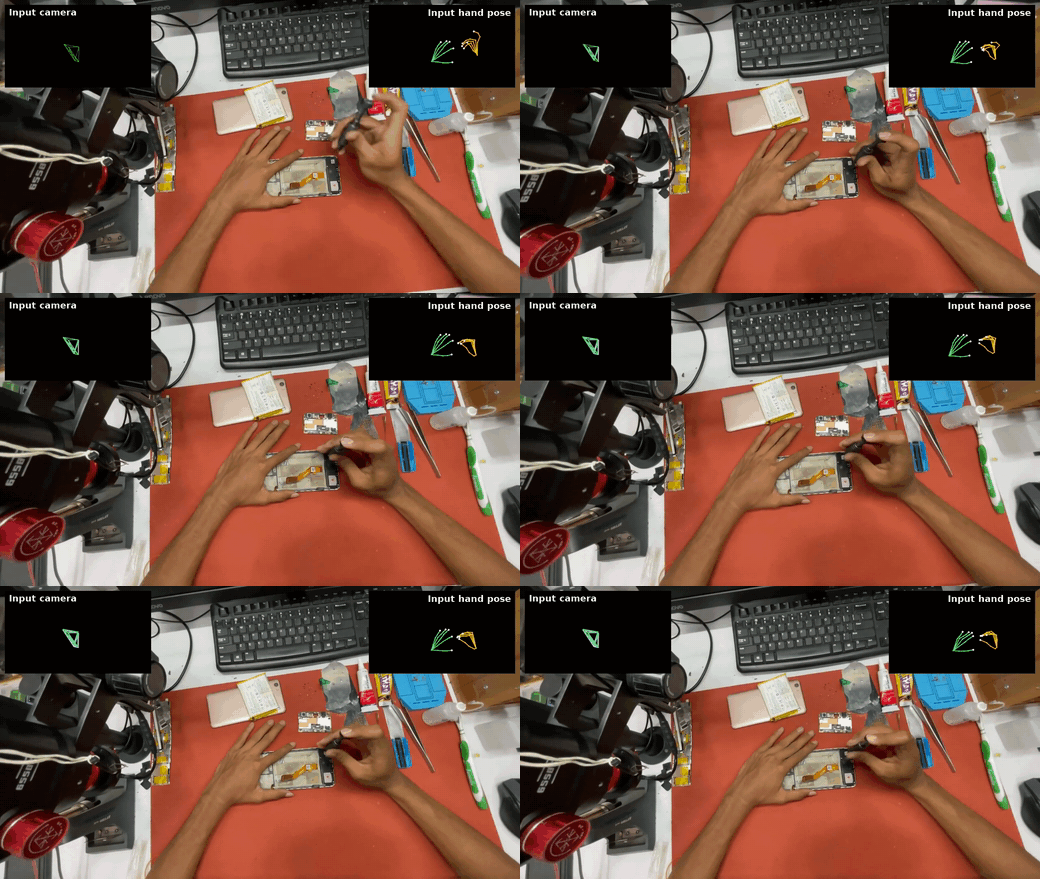 Action-conditioned World Model
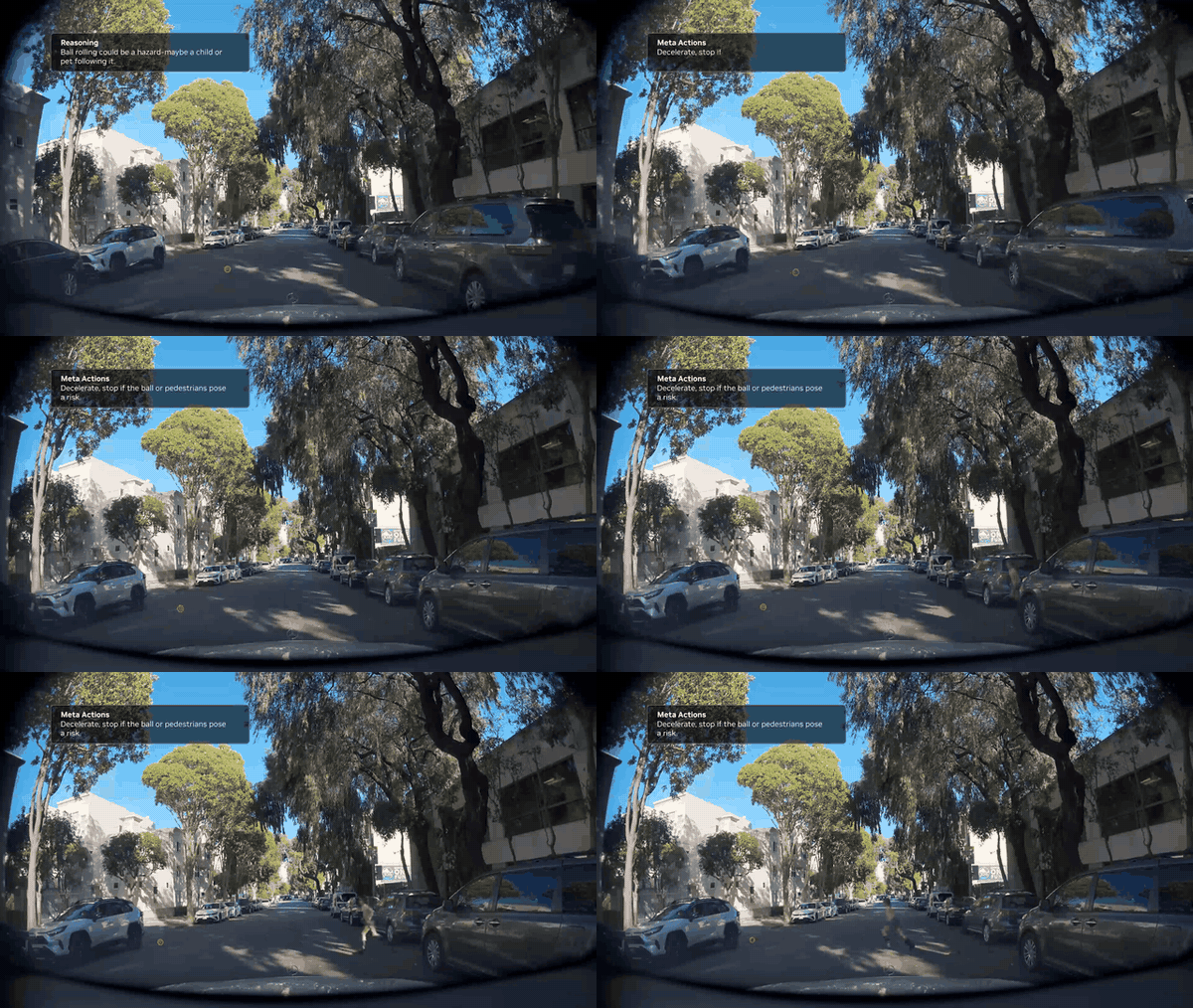 World reasoning
 Interactive World Simulation with Cosmos for Physical AI - example model checkpoints and training recipes: HF collection · Cookbook · Technical report · Website.