serengil/tensorflow-101 — 1.1k★ on GitHub (Jupyter Notebook). TensorFlow 101: Introduction to Deep Learning
Snapshot summary built from the project's own GitHub metadata — there's no written TopGit review yet. The page will update automatically when a full review is published.
WHY NO REVIEW YET
TopGit writes full reviews for the most-starred, most-requested repositories. This page is a snapshot until then — see the READ ME tab for the original README in full.
I have worked all my life in Machine Learning, and I've never seen one algorithm knock over its benchmarks like Deep Learning - Andrew Ng
This repository includes deep learning based project implementations I've done from scratch. You can find both the source code and documentation as a step by step tutorial. Model structrues and pre-trained weights are shared as well.
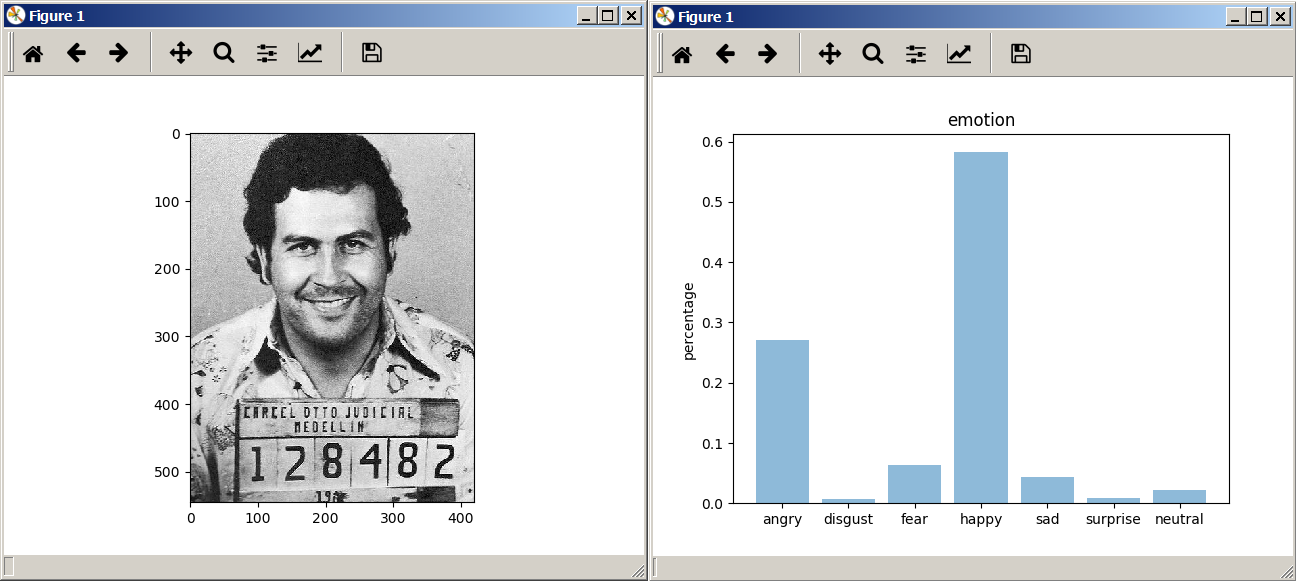
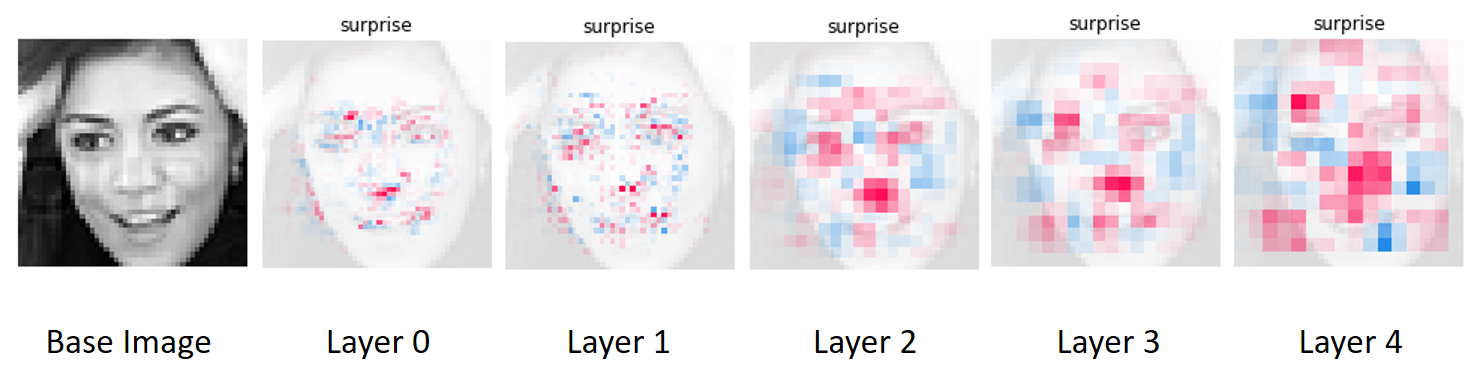
Facial Expression RecognitionCode, Tutorial
This is a custom CNN model. Kaggle FER 2013 data set is fed to the model. This model runs fast and produces satisfactory results. It can be also run real time as well.
We can run emotion analysis in real time as well Real Time Code, Video
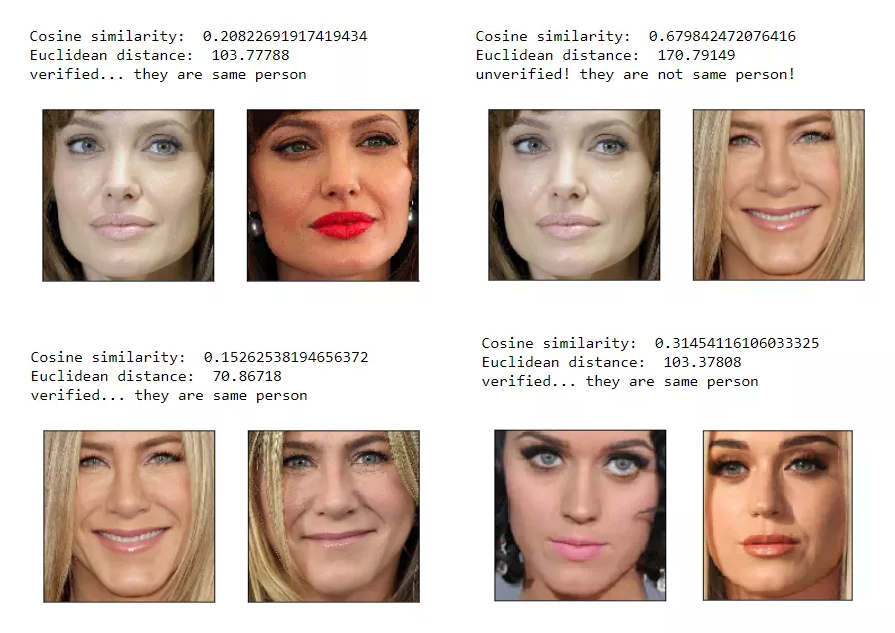
Face RecognitionCode, Tutorial
Face recognition is mainly based on convolutional neural networks. We feed two face images to a CNN model and it returns a multi-dimensional vector representations. We then compare these representations to determine these two face images are same person or not.
You can find the most popular face recognition models below.
Model
Creator
LFW Score
Code
Tutorial
VGG-Face
The University of Oxford
98.78
Code
Tutorial
FaceNet
Google
99.65
Code
Tutorial
DeepFace
Facebook
-
Code
Tutorial
OpenFace
Carnegie Mellon University
93.80
Code
Tutorial
DeepID
The Chinese University of Hong Kong
-
Code
Tutorial
Dlib
Davis E. King
99.38
Code
Tutorial
OpenCV
OpenCV Foundation
-
Code
Tutorial
OpenFace in OpenCV
Carnegie Mellon University
92.92
Code
Tutorial
SphereFace
Georgia Institute of Technology
99.30
Code
Tutorial
ArcFace
Imperial College London
99.40
Code
Tutorial
All of those state-of-the-art face recognition models are wrapped in deepface library for python. You can build and run them with a few lines of code. To have more information, please visit the repo of the library.
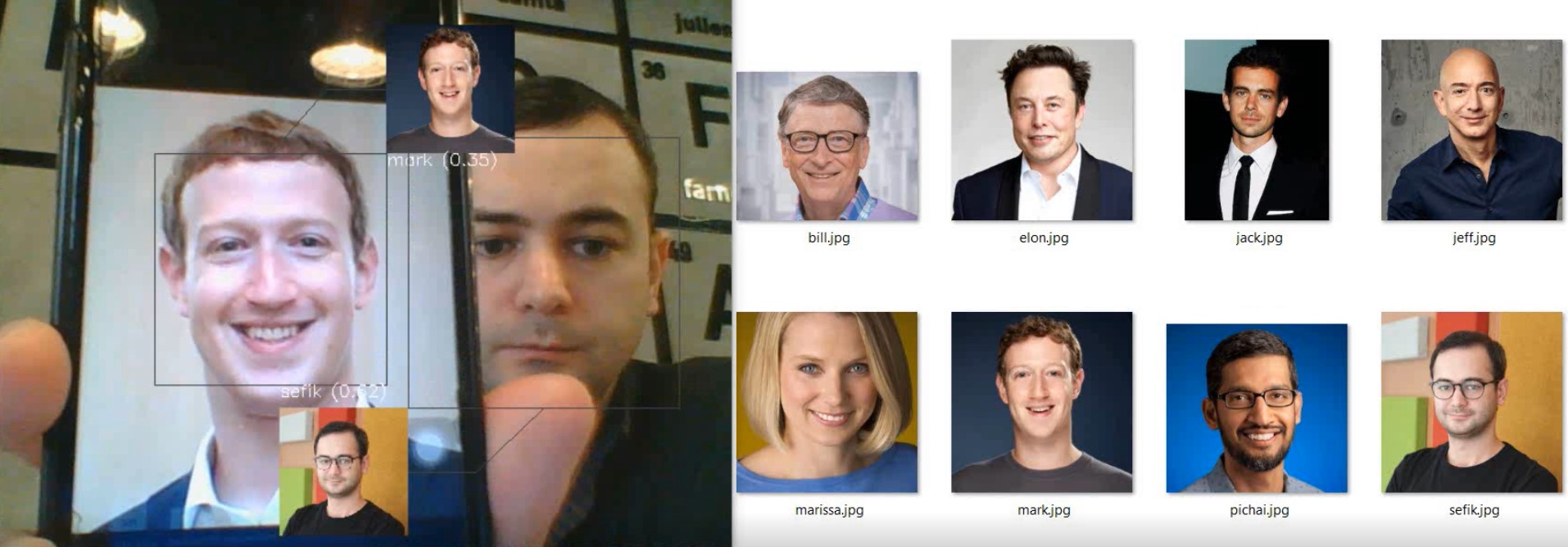
Real Time Deep Face Recognition ImplementationCode, Video
These are the real time implementations of the common face recognition models we've mentioned in the previous section. VGG-Face has the highest face recognition score but it comes with the high complexity among models. On the other hand, OpenFace is a pretty model and it has a close accuracy to VGG-Face but its simplicity offers high speed than others.
Model
Creator
Code
Demo
VGG-Face
Oxford University
Code
Video
FaceNet
Google
Code
Video
DeepFace
Facebook
Code
Video
OpenFace
Carnegie Mellon University
Code
Video
Large Scale Face Recognition
Face recognition requires to apply face verification several times. It has a O(n) time complexity and it would be problematic for very large scale data sets (millions or billions level data). Herein, if you have a really strong database, then you use relational databases and regular SQL. Besides, you can store facial embeddings in nosql databases. In this way, you can have the power of the map reduce technology. Besides, approximate nearest neighbor (a-nn) algorithm reduces time complexity dramatically. Spotify Annoy, Facebook Faiss and NMSLIB are amazing a-nn libraries. Besides, Elasticsearch wraps NMSLIB and it also offers highly scalablity. You should build and run face recognition models within those a-nn libraries if you have really large scale data sets.
Library
Algorithm
Tutorial
Code
Demo
Spotify Annoy
a-nn
Tutorial
-
Video
Facebook Faiss
a-nn
Tutorial
-
-
NMSLIB
a-nn
Tutorial
Code
-
Elasticsearch
a-nn
Tutorial
Code
Video
mongoDB
k-NN
Tutorial
Code
-
Cassandra
k-NN
Tutorial
Code
Video
Redis
k-NN
Tutorial
Code
Video
Hadoop
k-NN
Tutorial
Code
-
Relational Database
k-NN
Tutorial
Code
-
Neo4j Graph
k-NN
Tutorial
Code
Video
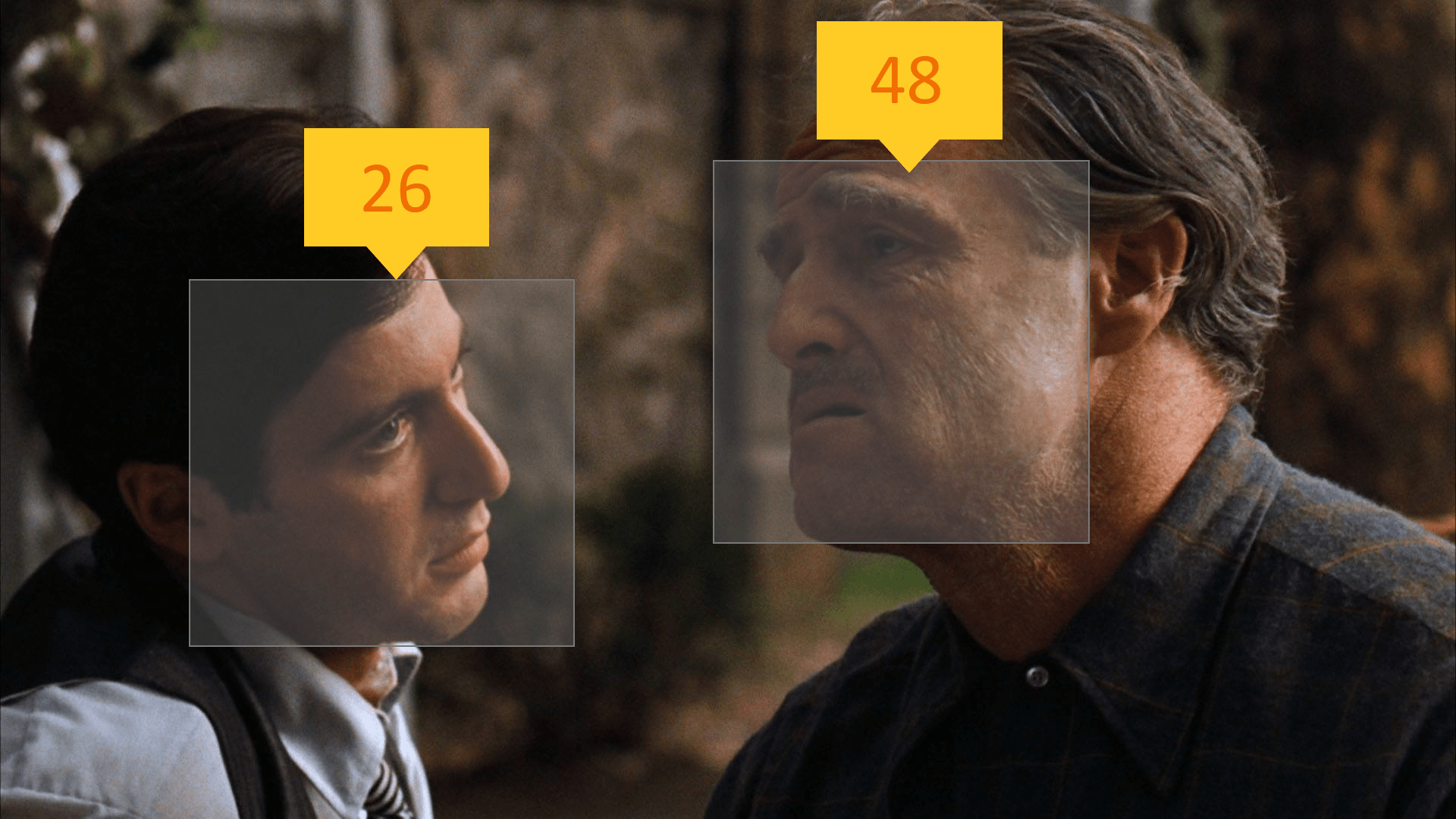
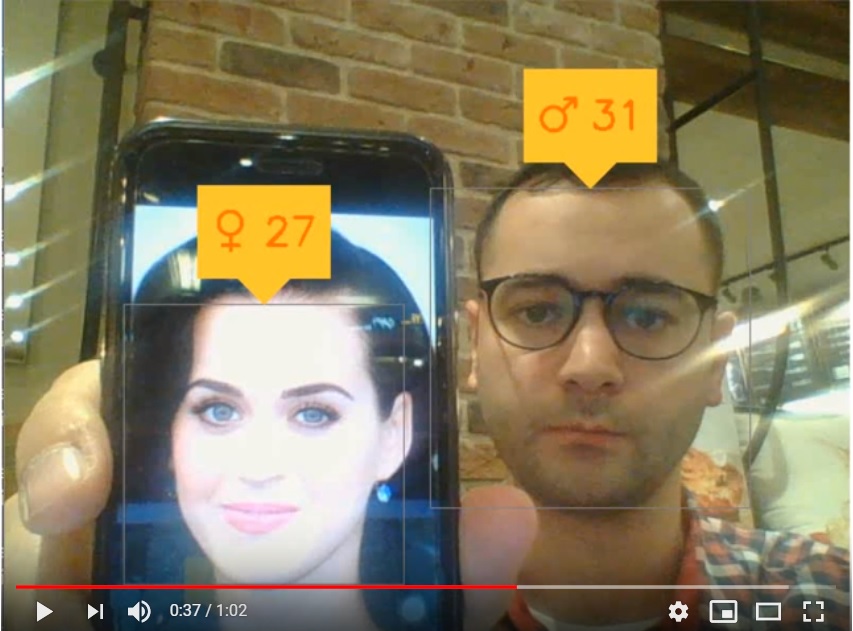
Apparent Age and Gender PredictionTutorial, Code for age, Code for gender
We've used VGG-Face model for apparent age prediction this time. We actually applied transfer learning. Locking the early layers' weights enables to have outcomes fast.
We can run age and gender prediction in real time as well Real Time Code, Video
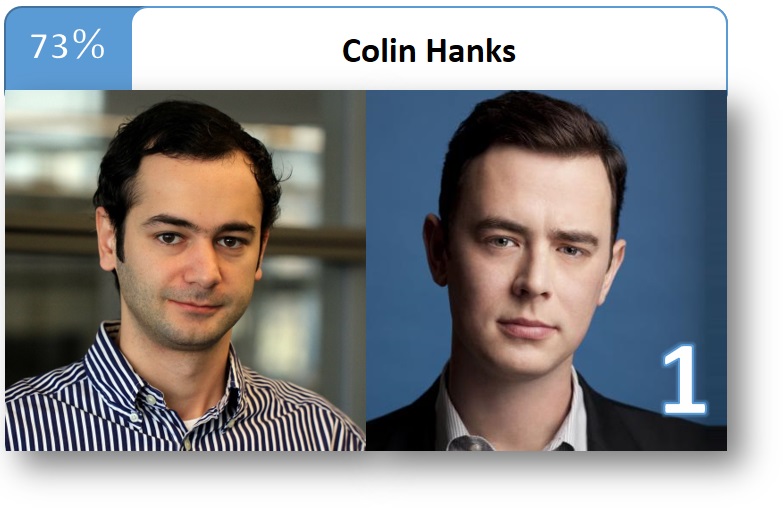
Celebrity You Look-Alike Face RecognitionCode, Tutorial
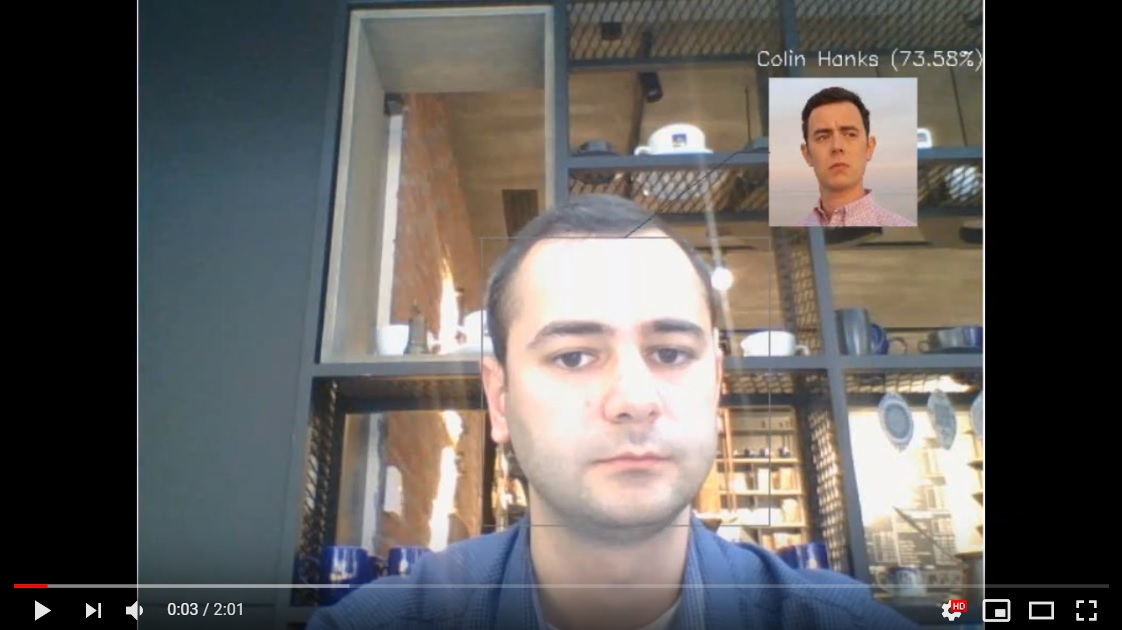
Applying VGG-Face recognition technology for imdb data set will find your celebrity look-alike if you discard the threshold in similarity score.
This can be run in real time as well Real Time Code, Video
Race and Ethnicity PredictionTutorial, Code, Real Time Code, Video
Ethnicity is a facial attribute as well and we can predict it from facial photos. We customize VGG-Face and we also applied transfer learning to classify 6 different ethnicity groups.
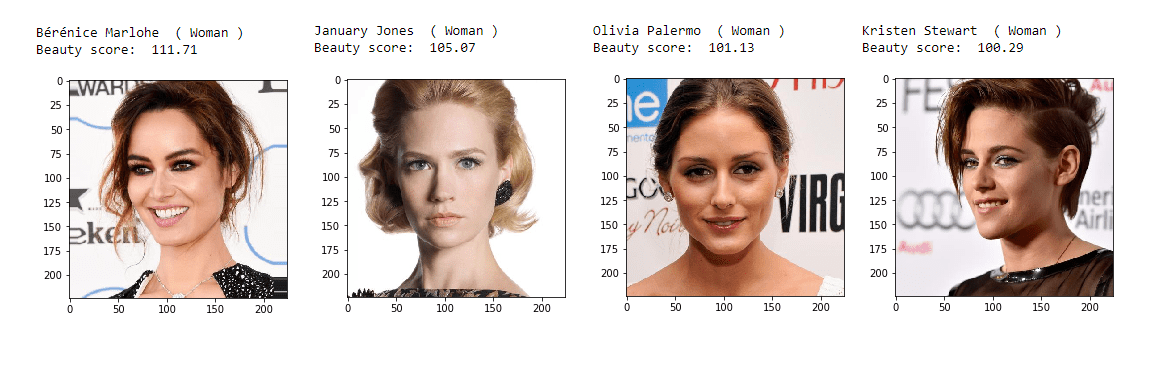
Beauty Score PredictionTutorial, Code
South China University of Technology published a research paper about facial beauty prediction. They also open-sourced the data set. 60 labelers scored the beauty of 5500 people. We will build a regressor to find facial beauty score. We will also test the built regressor on a huge imdb data set to find the most beautiful ones.
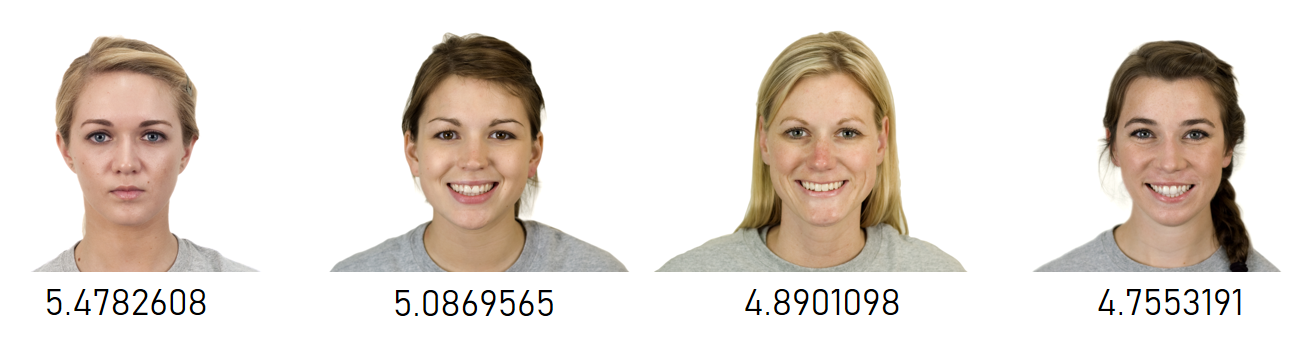
Attractiveness Score PredictionTutorial, Code
The University of Chicago open-sourced the Chicago Face Database. The database consists of 1200 facial photos of 600 people. Facial photos are also labeled with attractiveness and babyface scores by hundreds of volunteer markers. So, we've built a machine learning model to generalize attractiveness score based on a facial photo.
Making Arts with Deep Learning: Artistic Style TransferCode, Tutorial, Video
What if Vincent van Gogh had painted Istanbul Bosporus? Today we can answer this question. A deep learning technique named artistic style transfer enables to transform ordinary images to masterpieces.
Autoencoder and clusteringCode, Tutorial
We can use neural networks to represent data. If you design a neural networks model symmetric about the centroid and you can restore a base data with an acceptable loss, then output of the centroid layer can represent the base data. Representations can contribute any field of deep learning such as face recognition, style transfer or just clustering.
Convolutional Autoencoder and clusteringCode, Tutorial
We can adapt same representation approach to convolutional neural networks, too.
Transfer Learning: Consuming InceptionV3 to Classify Cat and Dog Images in KerasCode, Tutorial
We can have the outcomes of the other researchers effortlessly. Google researchers compete on Kaggle Imagenet competition. They got 97% accuracy. We will adapt Google's Inception V3 model to classify objects.
Handwritten Digit Classification Using Neural NetworksCode, Tutorial
We had to apply feature extraction on data sets to use neural networks. Deep learning enables to skip this step. We just feed the data, and deep neural networks can extract features on the data set. Here, we will feed handwritten digit data (MNIST) to deep neural networks, and expect to learn digits.
Handwritten Digit Recognition Using Convolutional Neural Networks with KerasCode, Tutorial
Convolutional neural networks are close to human brain. People look for some patterns in classifying objects. For example, mouth, nose and ear shape of a cat is enough to classify a cat. We don't look at all pixels, just focus on some area. Herein, CNN applies some filters to detect these kind of shapes. They perform better than conventional neural networks. Herein, we got almost 2% accuracy than fully connected neural networks.
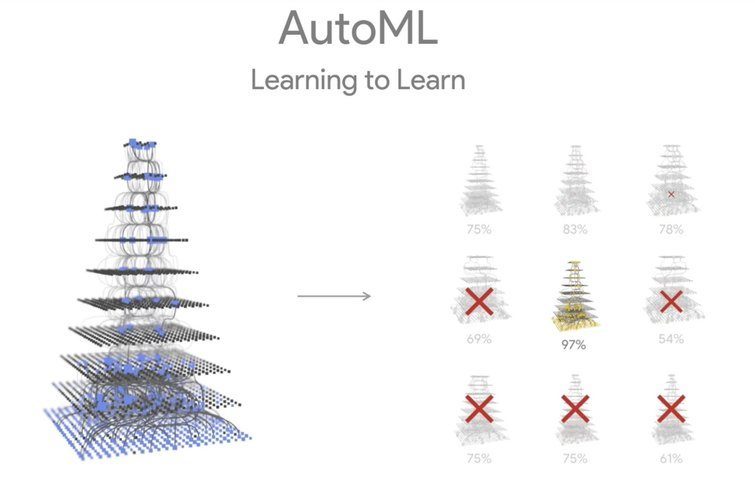
Automated Machine Learning and Auto-Keras for Image DataCode, Model, Tutorial
AutoML concept aims to find the best network structure and hyper-parameters. Here, I've applied AutoML to facial expression recognition data set. My custom design got 57% accuracy whereas AutoML found a better model and got 66% accuracy. This means almost 10% improvement in the accuracy.
Explaining Deep Learning Models with SHAPCode, Tutorial
SHAP explains black box machine learning models and makes them transparent, explainable and provable.
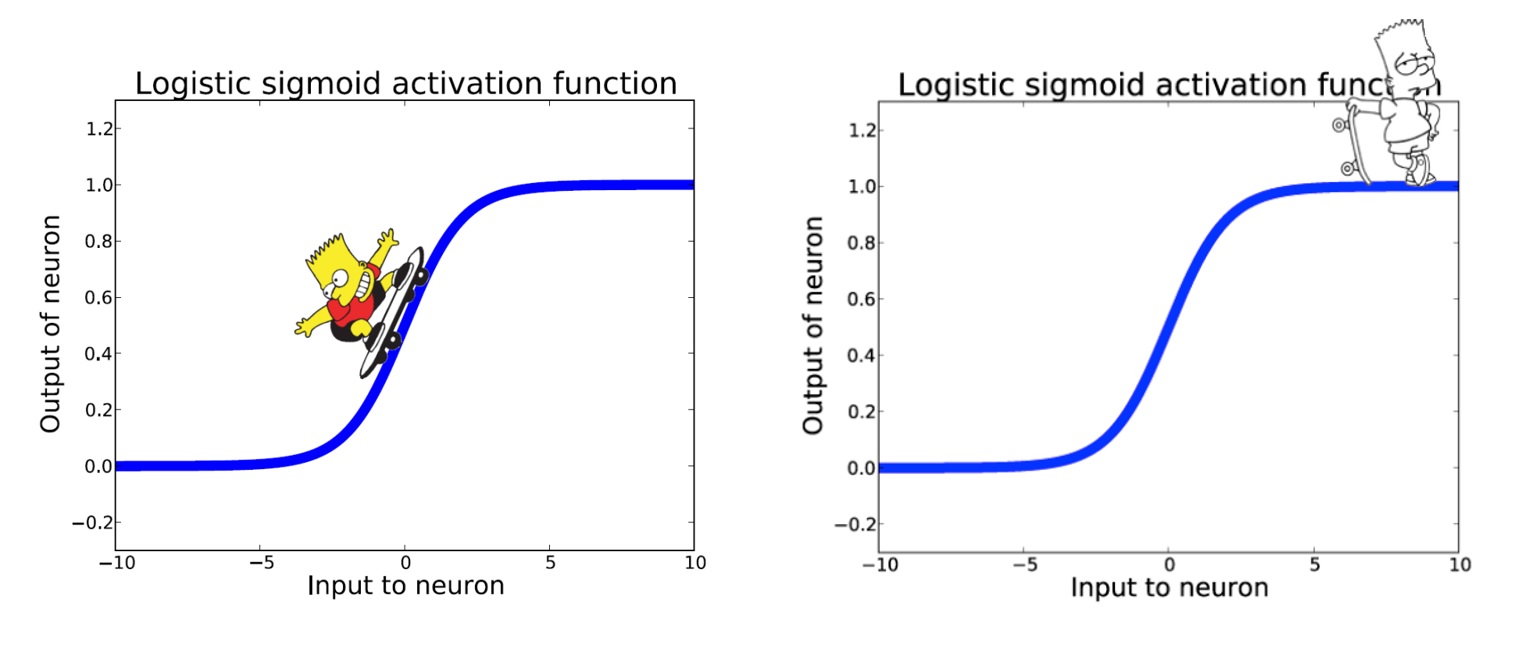
Gradient Vanishing ProblemCodeTutorial
Why legacy activation functions such as sigmoid and tanh disappear on the pages of the history?
How single layer perceptron worksCode
This is the 1957 model implementation of the perceptron.
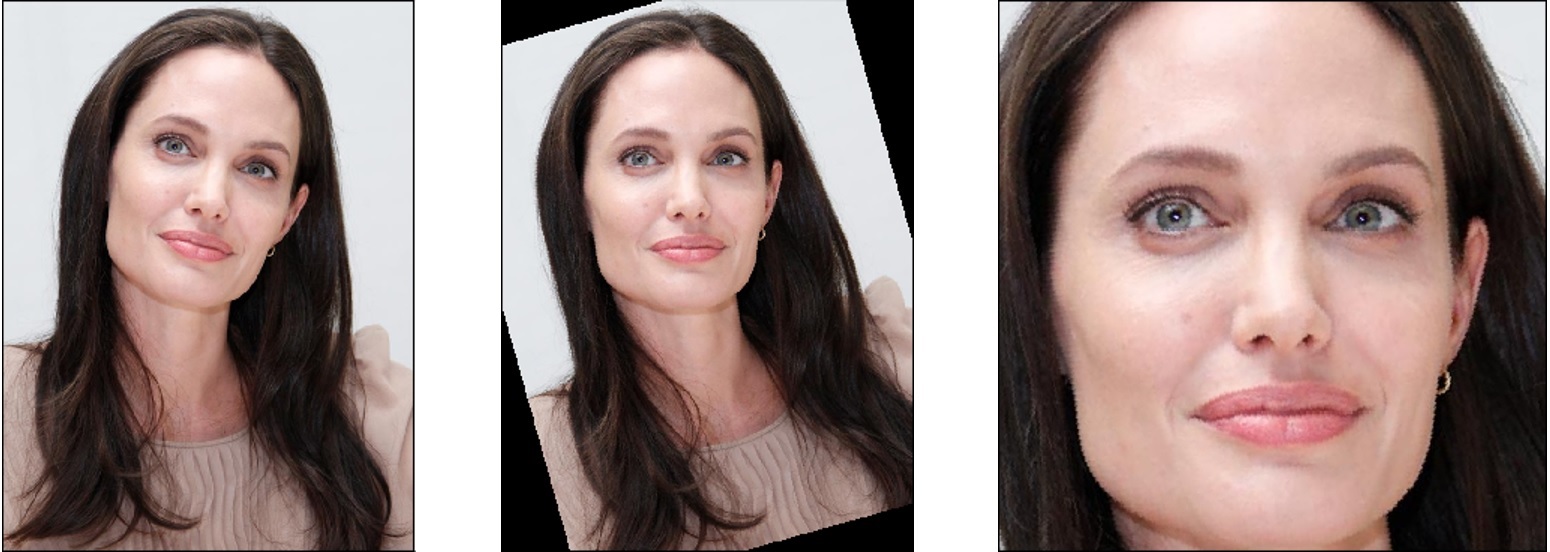
Face Alignment for Face RecognitionCode, Tutorial
Google declared that face alignment increase its face recognition model accuracy from 98.87% to 99.63%. This is almost 1% accuracy improvement which means a lot for engineering studies.
Requirements
I have tested this repository on the following environments. To avoid environmental issues, confirm your environment is same as below.
C:\>python --version
Python 3.6.4 :: Anaconda, Inc.

C:\>activate tensorflow

(tensorflow) C:\>python
Python 3.5.5 |Anaconda, Inc.| (default, Apr  7 2018, 04:52:34) [MSC v.1900 64 bit (AMD64)] on win32
Type "help", "copyright", "credits" or "license" for more information.
>>> import tensorflow as tf
>>> print(tf.__version__)
1.9.0
>>>
>>> import keras
Using TensorFlow backend.
>>> print(keras.__version__)
2.2.0
>>>
>>> import cv2
>>> print(cv2.__version__)
3.4.4
To get your environment up from zero, you can follow the instructions in the following videos.
Installing TensorFlow and PrerequisitesVideo
Installing KerasVideo
Disclaimer
This repo might use some external sources. Notice that related tutorial links and comments in the code blocks cite references already.
Support
There are many ways to support a project - starring⭐️ the GitHub repos is one 🙏
You can also support this work on Patreon, GitHub Sponsors or Buy Me a Coffee.
Citation
Please cite tensorflow-101 in your publications if it helps your research. Here is an example BibTeX entry:
@misc{serengil2021tensorflow,
  abstract     = {TensorFlow 101: Introduction to Deep Learning for Python Within TensorFlow},
  author       = {Serengil, Sefik Ilkin},
  title        = {tensorflow-101},
  howpublished = {https://github.com/serengil/tensorflow-101},
  year         = {2021}
}
Licence
This repository is licensed under MIT license - see LICENSE for more details
How does serengil/tensorflow-101 compare to other AI Tools projects?
serengil/tensorflow-101 is tracked by TopGit in the AI Tools category, with 1.1k GitHub stars and written in Jupyter Notebook. Browse the AI Tools topic page on TopGit to compare it against similar projects by stars and activity.
Is serengil/tensorflow-101 open source?
Yes — serengil/tensorflow-101 ships under the MIT license, which makes its source code freely readable (and, depending on license terms, forkable and reusable). Source: github.com/serengil/tensorflow-101.
What else is in the AI Tools space?
serengil/tensorflow-101 is tracked by TopGit under the AI Tools category, alongside 20 GitHub-tagged topics. Trending and Topics pages list peer repositories of comparable stars and language.
What is serengil/tensorflow-101?
serengil/tensorflow-101 (serengil/tensorflow-101) is a Jupyter Notebook project on GitHub. From the project's own README: TensorFlow 101: Introduction to Deep Learning
Where do I read more about serengil/tensorflow-101?
This TopGit page is a snapshot — the READ ME tab shows the project's own README content (links stripped, images preserved). The GitHub repository at github.com/serengil/tensorflow-101 is the definitive source.
Why is serengil/tensorflow-101 categorized under AI Tools?
TopGit places serengil/tensorflow-101 in the AI Tools category based on its GitHub topics and description (tagged: "age-prediction", "autoencoders", "automl"). Categories are assigned from real repository metadata, not editorial guesswork.
Read full README in the tab above.
Still deciding about tensorflow-101?
One click hands the question to an AI along with this page — see what it says about tensorflow-101.
 /tensorflow-101