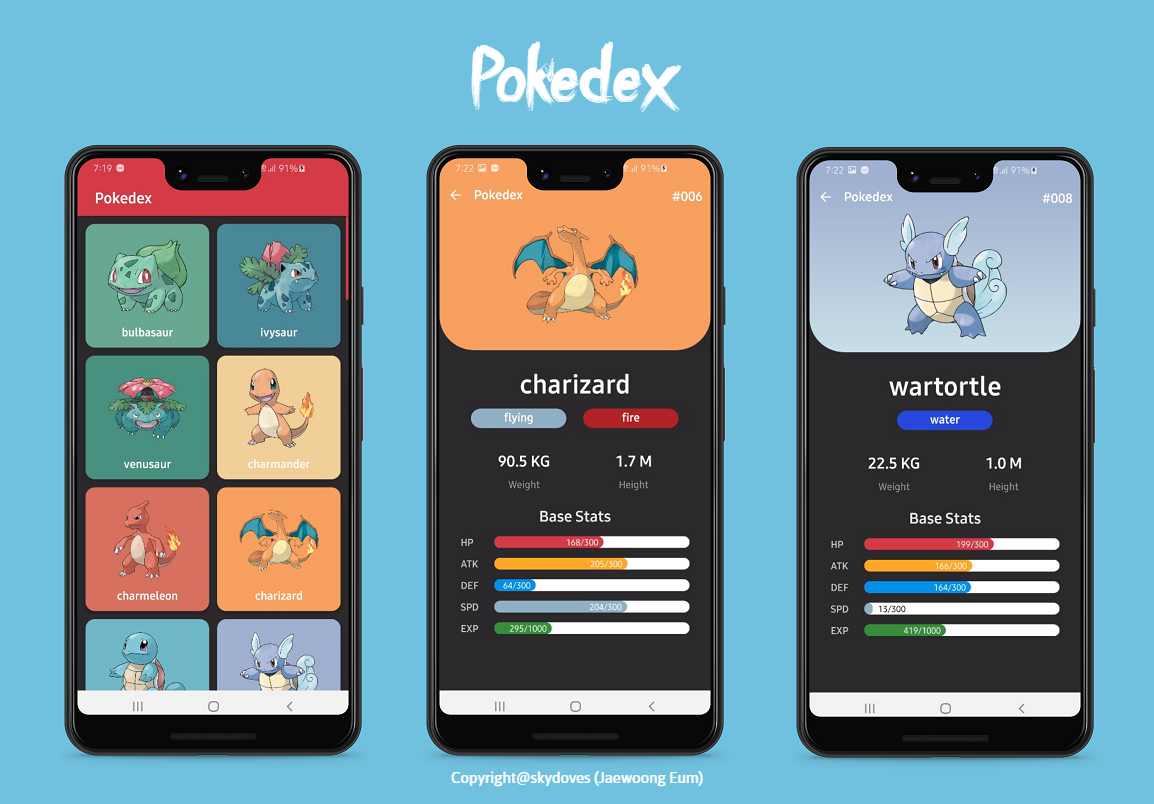
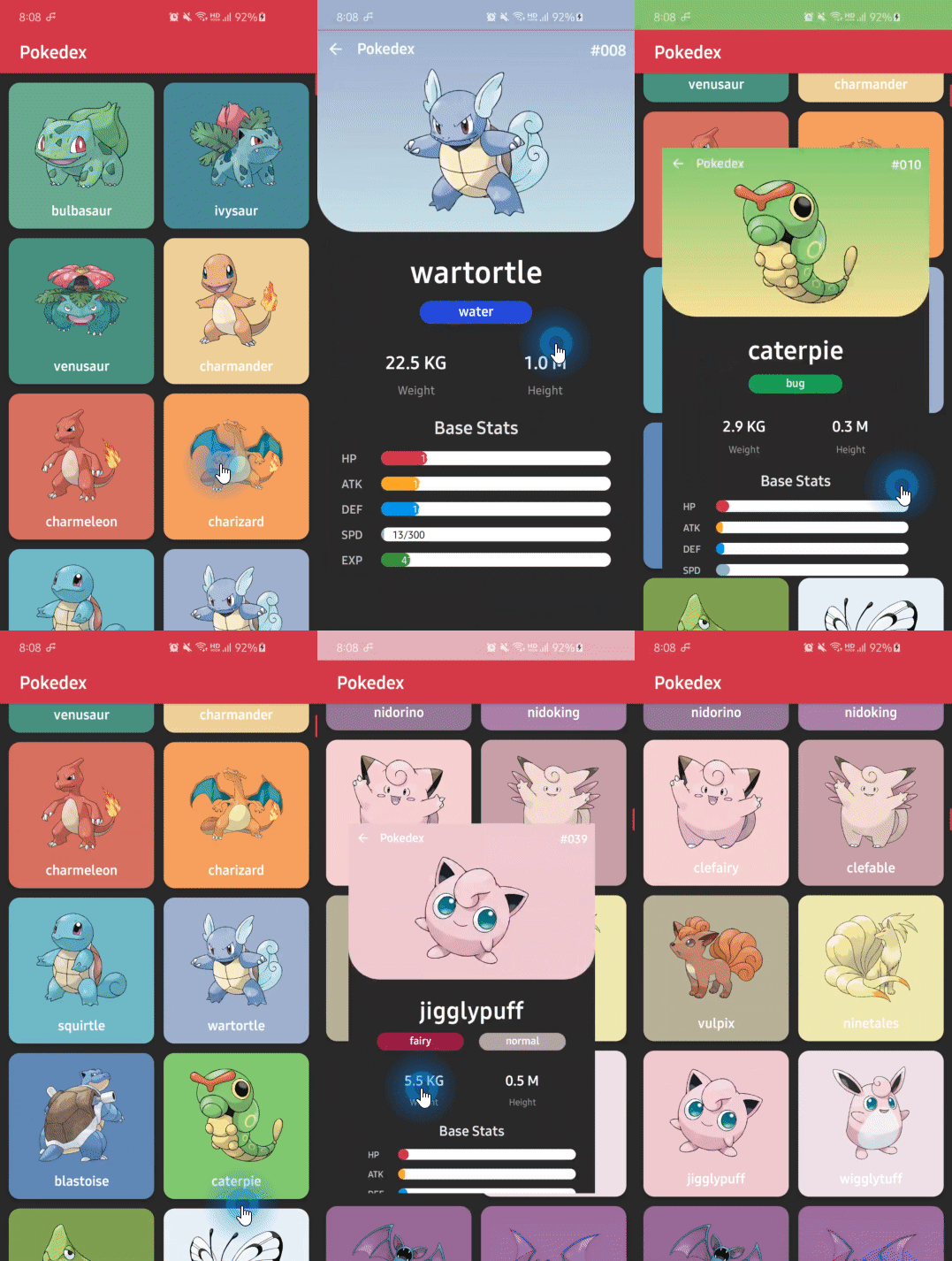
TopGit tracks skydoves/Pokedex on GitHub as part of the Mobile family. The project has 8.4k stars. 🗡️ Pokedex demonstrates modern Android development with Hilt, Material Motion, Coroutines, Flow, Jetpack (Room, ViewModel) based on MVVM architecture.
Snapshot summary built from the project's own GitHub metadata — there's no written TopGit review yet. The page will update automatically when a full review is published.
WHY NO REVIEW YET
TopGit writes full reviews for the most-starred, most-requested repositories. This page is a snapshot until then — see the READ ME tab for the original README in full.
🗡️ Pokedex demonstrates modern Android development with Hilt, Coroutines, Flow, Jetpack (Room, ViewModel), and Material Design based on MVVM architecture.
[!NOTE]
This project, along with Pokedex Compose, is featured in the official Android documentation on Hero benchmarks.
[!TIP]
If you want to see the Jetpack Compose version of Pokedex, check out the Pokedex Compose repository.
Download
Go to the Releases to download the latest APK.
📘 Manifest Android Interview
Manifest Android Interview is a comprehensive guide designed to enhance your Android development expertise through 108 interview questions with detailed answers, 162 additional practical questions, and 50+ "Pro Tips for Mastery" sections. The interview questions primarily focus on Android development—including the Framework, UI, Jetpack Libraries, and Business Logic—as well as Jetpack Compose, covering Fundamentals, Runtime, and UI.
📙 Practical Kotlin Deep Dive Book
Practical Kotlin Deep Dive takes you from “how to use Kotlin” into “how Kotlin really works,” revealing the internal implementations, desmifying bytecodes and compiler behavior, and internals that shape the language. If you want to write smarter, more confident Kotlin across fundamentals, coroutines, and multiplatform, this is the book that shows you why everything is the way it is. The Course - Practical Kotlin Deep Dive, with 158 interactive assessments to test and reinforce your understanding, this course doesn't just show you why everything is the way it is; it challenges you to prove you've mastered it and earn a certificate.
🕊️ Dove Letter
If you're eager to dive deeper into Kotlin and Android, explore Dove Letter, a private subscription repository where you can learn, discuss, and share knowledge. To get more details about this unique opportunity, check out the Learn Kotlin and Android With Dove Letter article.
Tech stack & Open-source libraries
Minimum SDK level 21
Kotlin based, Coroutines + Flow for asynchronous.
Jetpack
Lifecycle: Observe Android lifecycles and handle UI states upon the lifecycle changes.
ViewModel: Manages UI-related data holder and lifecycle aware. Allows data to survive configuration changes such as screen rotations.
DataBinding: Binds UI components in your layouts to data sources in your app using a declarative format rather than programmatically.
Room: Constructs Database by providing an abstraction layer over SQLite to allow fluent database access.
Rainbow: An easy way to apply gradations and tinting for Android.
AndroidRibbon: A simple way to implement a beautiful ribbon with the shimmering on Android.
ProgressView: A polished and flexible ProgressView, fully customizable with animations.
Timber: A logger with a small, extensible API.
Architecture
Pokedex is based on the MVVM architecture and the Repository pattern, which follows the Google's official architecture guidance.
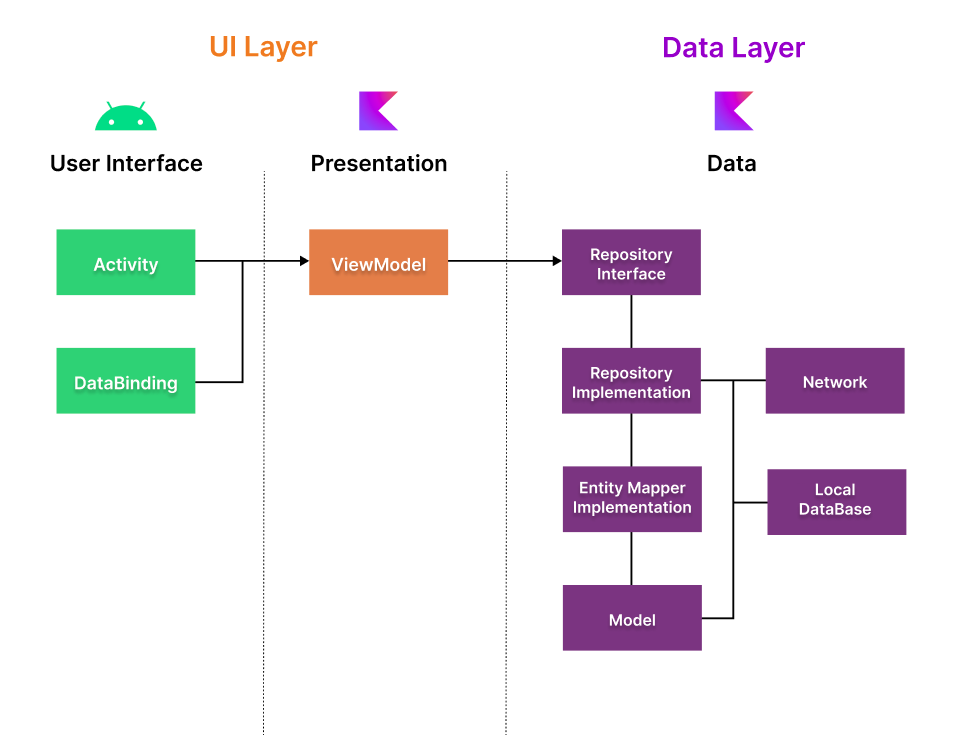
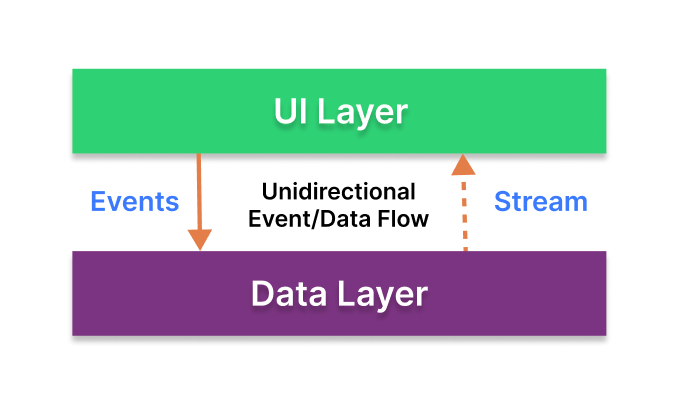
The overall architecture of Pokedex is composed of two layers; the UI layer and the data layer. Each layer has dedicated components and they have each different responsibilities, as defined below:
Pokedex was built with Guide to app architecture, so it would be a great sample to show how the architecture works in real-world projects.
Architecture Overview
Each layer follows unidirectional event/data flow; the UI layer emits user events to the data layer, and the data layer exposes data as a stream to other layers.
The data layer is designed to work independently from other layers and must be pure, which means it doesn't have any dependencies on the other layers.
With this loosely coupled architecture, you can increase the reusability of components and scalability of your app.
UI Layer
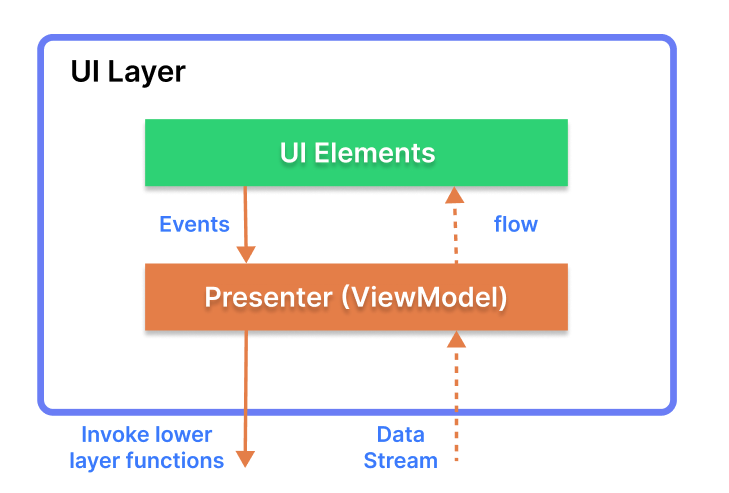
The UI layer consists of UI elements to configure screens that could interact with users and ViewModel that holds app states and restores data when configuration changes.
UI elements observe the data flow via DataBinding, which is the most essential part of the MVVM architecture.
With Bindables, which is an Android DataBinding kit for notifying data changes, you can implement two-way binding, and data observation in XML very clean.
Data Layer
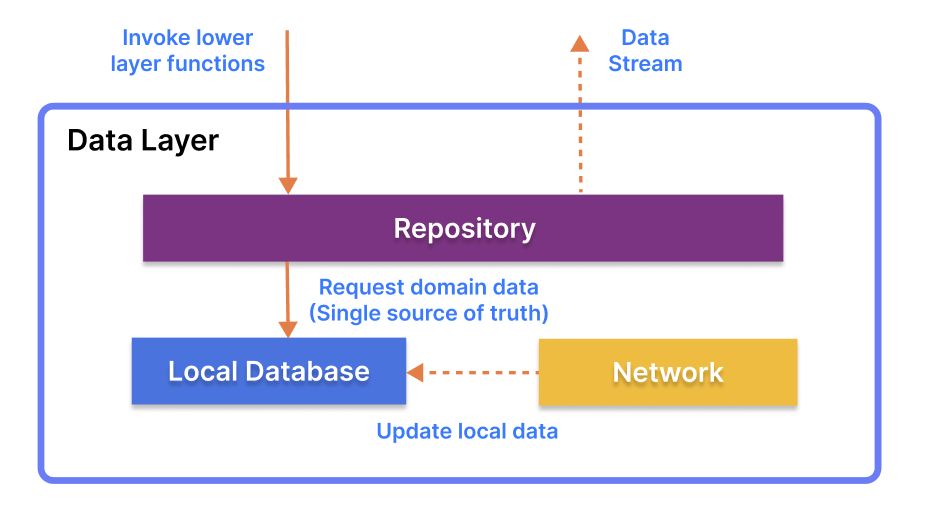
The data Layer consists of repositories, which include business logic, such as querying data from the local database and requesting remote data from the network. It is implemented as an offline-first source of business logic and follows the single source of truth principle.
Pokedex is an offline-first app is an app that is able to perform all, or a critical subset of its core functionality without access to the internet.
So users don't need to be up-to-date on the network resources every time and it will decrease users' data consumption. For further information, you can check out Build an offline-first app.
Modularization
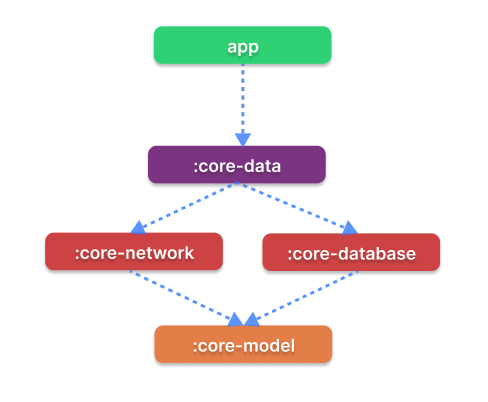
Pokedex adopted modularization strategies below:
Reusability: Modulizing reusable codes properly enable opportunities for code sharing and limits code accessibility in other modules at the same time.
Parallel Building: Each module can be run in parallel and it reduces the build time.
Strict visibility control: Modules restrict to expose dedicated components and access to other layers, so it prevents they're being used outside the module
Decentralized focusing: Each developer team can assign their dedicated module and they can focus on their own modules.
For more information, check out the Guide to Android app modularization.
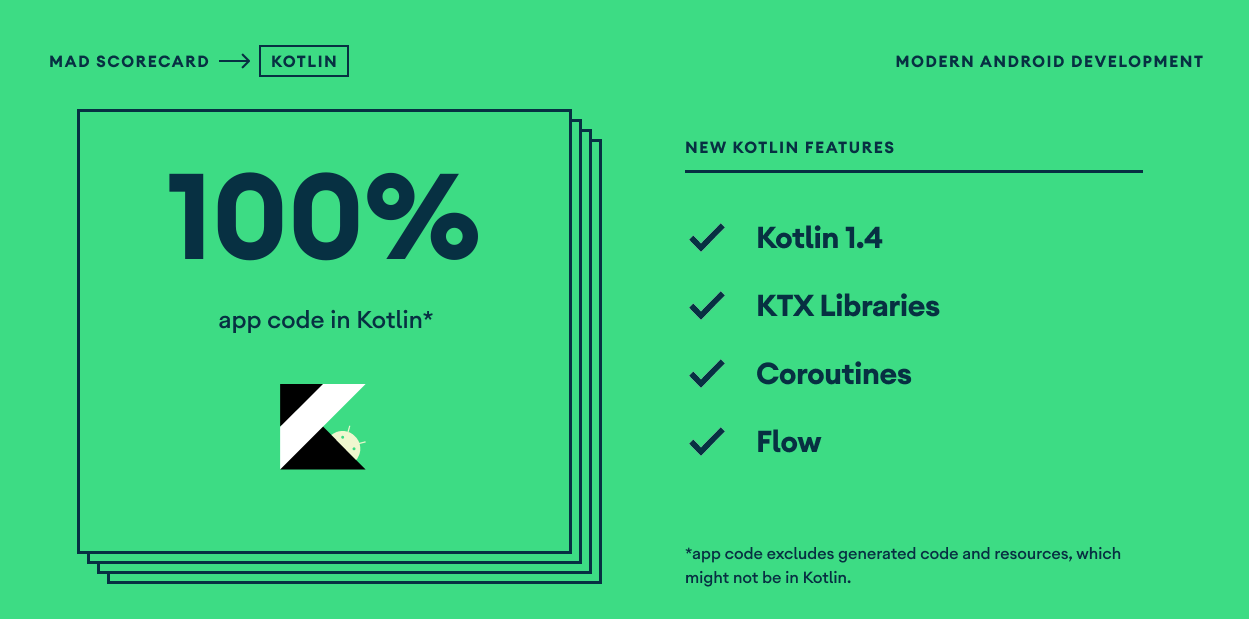
MAD Score
Open API
Pokedex using the PokeAPI for constructing RESTful API.
PokeAPI provides a RESTful API interface to highly detailed objects built from thousands of lines of data related to Pokémon.
Find this repository useful? :heart:
Support it by joining stargazers for this repository. :star:
Also, follow me on GitHub for my next creations! 🤩
License
Designed and developed by 2022 skydoves (Jaewoong Eum)

Licensed under the Apache License, Version 2.0 (the "License");
you may not use this file except in compliance with the License.
You may obtain a copy of the License at

   http://www.apache.org/licenses/LICENSE-2.0

Unless required by applicable law or agreed to in writing, software
distributed under the License is distributed on an "AS IS" BASIS,
WITHOUT WARRANTIES OR CONDITIONS OF ANY KIND, either express or implied.
See the License for the specific language governing permissions and
limitations under the License.
The most recent commit recorded on skydoves/Pokedex was 4 months ago, based on the GitHub push timestamp. The repository has 1.1k forks — one of the better signals of community interest.
How many stars does skydoves/Pokedex have?
skydoves/Pokedex has 8.4k GitHub stars — refresh the page for the live number, or check github.com/skydoves/Pokedex. TopGit mirrors GitHub's count but does not claim minute-by-minute accuracy.
Is skydoves/Pokedex open source?
Yes — skydoves/Pokedex ships under the Apache-2.0 license, which makes its source code freely readable (and, depending on license terms, forkable and reusable). Source: github.com/skydoves/Pokedex.
What else is in the Mobile space?
skydoves/Pokedex is tracked by TopGit under the Mobile category, alongside 11 GitHub-tagged topics. Trending and Topics pages list peer repositories of comparable stars and language.
What is skydoves/Pokedex?
skydoves/Pokedex (skydoves/Pokedex) is a Kotlin project on GitHub. From the project's own README: 🗡️ Pokedex demonstrates modern Android development with Hilt, Material Motion, Coroutines, Flow, Jetpack (Room, ViewModel) based on MVVM architecture.
What language is skydoves/Pokedex written in?
skydoves/Pokedex is written primarily in Kotlin. GitHub's language field is based on the largest share of bytes in the default branch.
What license does skydoves/Pokedex use?
skydoves/Pokedex is released under the Apache-2.0 license. Always verify the LICENSE file directly on GitHub for the authoritative terms — license strings can be edited out of sync with a project's actual stance.
Where do I read more about skydoves/Pokedex?
This TopGit page is a snapshot — the READ ME tab shows the project's own README content (links stripped, images preserved). The GitHub repository at github.com/skydoves/Pokedex is the definitive source.
Read full README in the tab above.
Want a second opinion on Pokedex?
Ask an AI that can read this page — one click and you get its take on Pokedex.

 /Pokedex