
dzhng/skills

dzhng/skills là một trong những repo mã nguồn mở mà TopGit theo dõi, hiện có 1.5k sao, viết chủ yếu bằng HTML. Reusable AI agent skills for software factories: explore ideas, write specs, implement, review, and run autonomous research. Works with Claude Code, Codex, and other skill-compatible agents.
Tóm tắt dựng từ metadata GitHub của chính dự án — chưa có bài review TopGit. Trang sẽ tự động cập nhật khi bài review đầy đủ được xuất bản.
TopGit viết bài đầy đủ cho repo có nhiều sao nhất và được yêu cầu nhiều nhất. Trang này là snapshot trong thời gian chờ — xem README gốc ở tab READ ME.
Snapshot
Cộng tác viên hàng đầu
Xem cộng tác viên hàng đầu
Skills
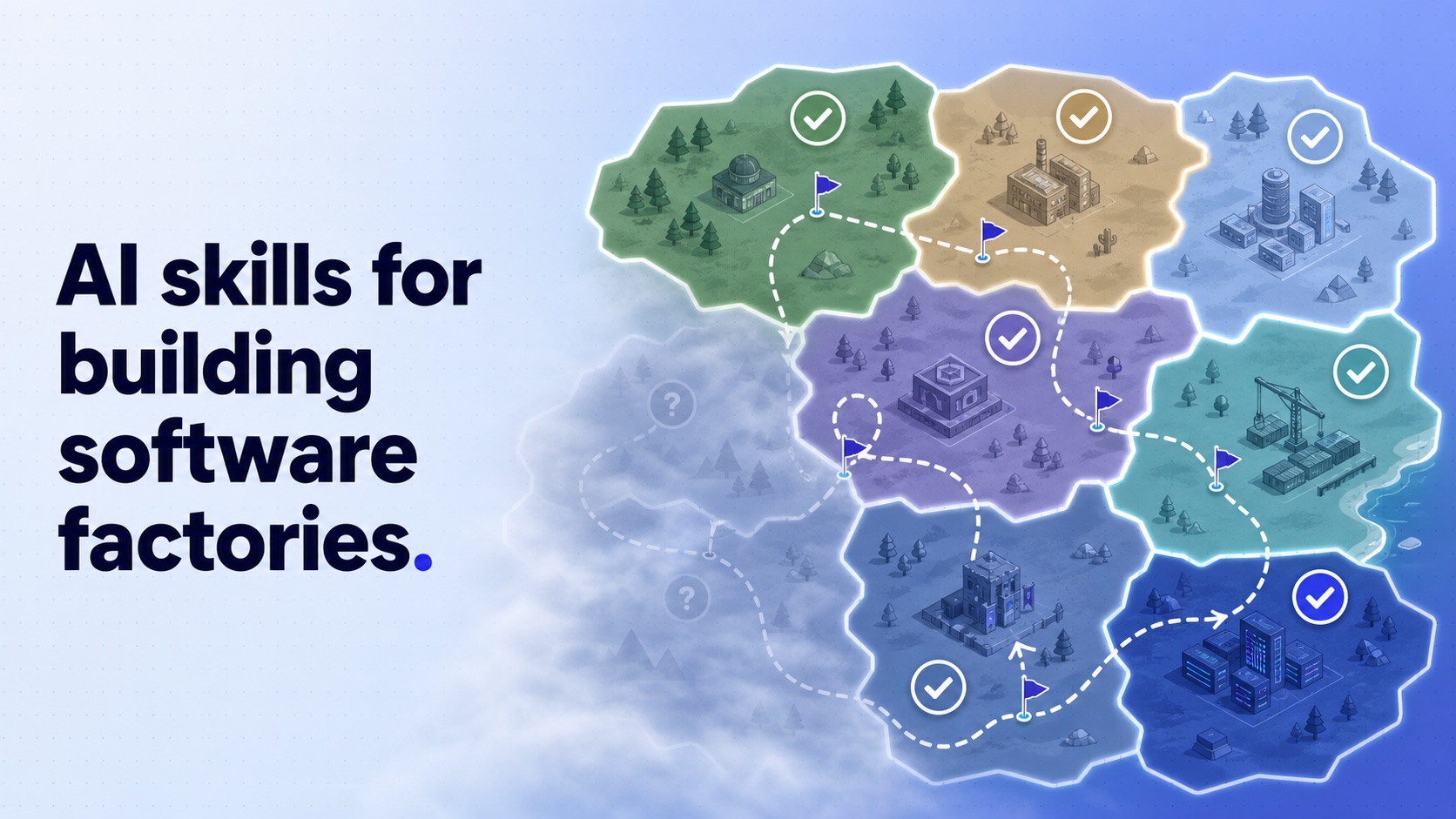
AI skills for building software factories. My personal library of domain-agnostic agent skills, reused across every project. Small, composable, and hackable — works with any harness that supports skills: Claude Code, Codex, opencode, Cursor, duet, and 70+ others.
npx skills add dzhng/skills
Add --list to pick individual skills, or copy any skills/<category>/<name>/
folder into your harness's skills directory (e.g. .claude/skills/).
From a clone, npm run install-skills does the same without the registry:
npm run install-skills              # into ~/.agents/skills, linked from ~/.claude/skills
npm run install-skills -- ../my-app # into a repo instead of the home directory
npm run install-skills -- --only write-spec,review ../my-app
npm run list-skills                 # names and categories
.agents/skills/<name>/ holds the real files (flat, category-free, with
cross-category links rewritten to match); .claude/skills/<name> is a relative
symlink into it, so both harnesses read one copy. Re-running overwrites the
installed copies — a .claude/skills/<name> you keep as a real directory is
left alone, and a .claude/skills that is already a symlink is left as is. Add
--dry-run to see the plan first.
Why
Software is moving from tasks to factories: agents that pursue a goal autonomously until the output can be trusted. The hard part isn't breaking the goal into tasks — it's breaking it into independently verifiable pieces, and knowing where the pieces even are.
These skills run that loop. Treat the unknown as fog of war: map the terrain, carve it into territories that build and verify in isolation, and recursively re-slice whatever hides more map. And re-planning doesn't stop when planning ends — the spec is a living document, updated and re-sliced mid-implementation whenever the work teaches the agent that the plan is stale. Every piece must prove itself — architecture review, code review, and visual review against a baseline — before the loop moves on. Each iteration gets less wrong, until the goal is done.
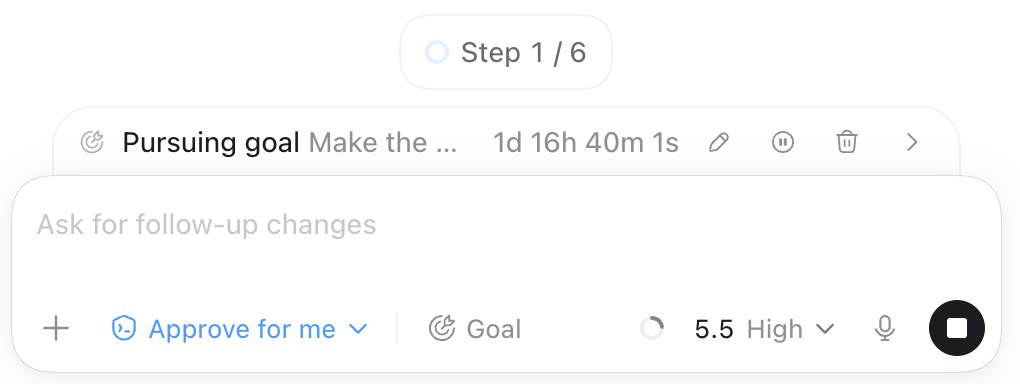
Proof: one unattended Codex run pursuing a single goal for 3d 18m on top of these skills, slicing and iterating until done.
How to use
Use a chained pipeline to build a feature, a research loop to discover what works, or individual skills as needed. Every skill stands alone.
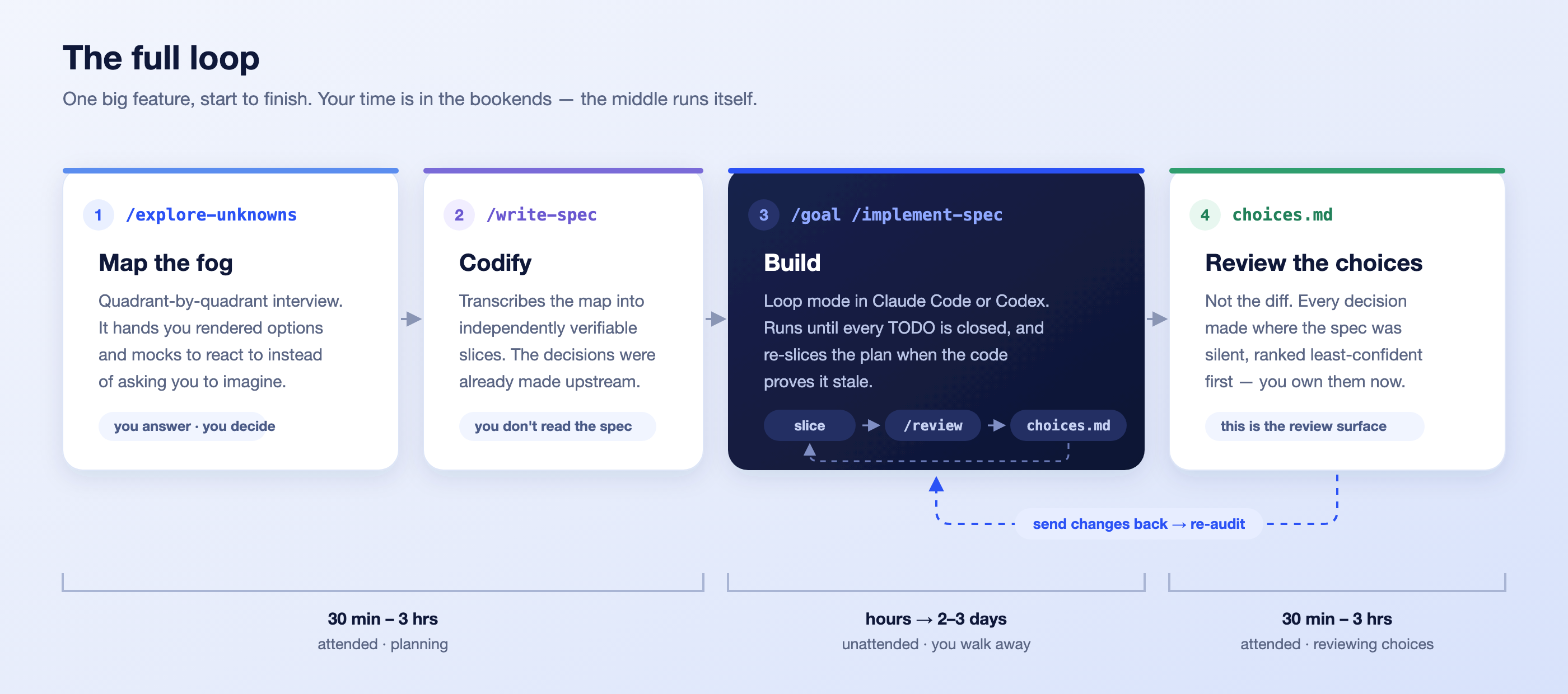
The full loop — a big feature, start to finish
-
Map the fog.
/explore-unknownson the idea. It interviews you quadrant by quadrant and hands you rendered options, mocks, and decision tables to react to instead of asking you to imagine. By the end you know what the feature does. -
Codify.
/write-specon that map. Most decisions were already made upstream, so this pass is transcription — I don't read the spec. Anything genuinely new it hits, it asks about instead of deciding. -
Build. Kick off the loop:
/goal /implement-spec specs/<feature>/goalis what puts the harness in loop mode — same move in Claude Code or Codex — and the spec drives it from there. A couple of hours for a small feature, two or three days for a large one. Add whatever framing fits:on the xyz branch, orusing /codex as the implementer while you stay the parent orchestrator and reviewer. -
Review the decisions, not the diff. The run ends by consolidating
specs/<feature>/decisions.md— every decision the agent made where the spec was silent, ranked least-confident first. That's the review surface. Send changes back and the next pass re-audits: every time the AI writes code, you audit what it decided.The rest fires on its own: a
/reviewpass at the end of every slice,/screenshot-critiqueand/compare-screenshotson anything visual,/close-specwhen the last slice lands, and a re-slice of the plan whenever implementation proves it stale.
Budget: 30 minutes to a few hours on steps 1–2, 30 minutes to a few hours on step 4. A run that goes two days is more like 2–3 hours on each end. Your time is in the bookends; the middle is unattended.
Research — learn through fast experiments
Use Auto Research when the next decision needs experimental evidence. It starts with one fast, revealing task, tests a short batch of hypotheses, checks combinations, and expands coverage as the approach improves. New failures become the focus; earlier tasks become regression checks.
/auto-research Reduce cost per task by at least 15% relative to the saved
baseline, without reducing task success. Start with one fast development task.
If the evaluator, metric, baseline, or required improvement is unclear, the skill asks before experimenting. Passing an evaluation and meeting an improvement target are separate requirements. The output includes the best verified artifact and a parameter-effect map: what was tested, where it helps or hurts, and how changes interact. Use that evidence to inform a spec when the research is ready for implementation.
À la carte — the spontaneous path
-
A brainstorm turns out to be a feature.
/explore-unknownsworks at the end of a discussion as well as at the start — run it to sweep for the angles neither of you thought of, then pick the loop up at step 2. -
Any code change that didn't come from a spec. An ad hoc fix that touched more than expected:
/reviewfirst (refactor-clean → code-review → write-docs), then/audit-decisions. When the diff is too big to read, the decisions ledger is how you still understand what is now in your codebase.
Skills
Engineering — slice, build, verify, repeat
| Skill | What it does |
|---|---|
| explore-unknowns | Walk the user through mapping a task's unknowns quadrant by quadrant — known knowns first, then interviews, reactable artifacts, and blindspot passes — ending with a complete four-quadrant map. |
| auto-research | Optimize through fast, progressive experiments, producing a verified candidate and a map of parameter effects and tradeoffs. |
| write-spec | Break a large feature into independently verifiable, human-reviewable slices with API seams and playable checkpoints. |
| implement-spec | Build an existing spec to completion, one reviewable pass at a time, delegating independent slices in parallel. |
| implement-spec-with-goal | Use the harness's goal feature, then follow implement-spec to completion. |
| implement-spec-with-codex | Run implement-spec with Codex writing the code — you orchestrate, integrate, and review every pass. |
| close-spec | Archive a shipped spec and rewrite it from a build plan into a durable rationale record that points back at the code. |
| handoff-spec | Hand a spec that is mid-implementation to another machine or agent: capture what the session knows in the spec, then push. User-invoked. |
| refactor-clean | Refactor by moving ownership to one clean concept instead of layering compatibility sediment beside the problem. |
| port-features | Port a feature by copying its exact upstream code and editing the copy instead of rewriting it, with git history explaining each odd line before it changes. |
| write-tests | Write tests one tracer bullet at a time that pin real behavior — not implementation details, config values, or lucky samples. |
| audit-tests | Map contracts to independent test proof, consolidate redundant coverage, and remove test-only machinery without losing regression protection. |
| audit-performance | Find hot paths that amplify or repeat without progress, rank them by real failure risk, and prefer the smallest bounded fix that preserves healing. |
| find-state-machines | Find implicit state machines and make them explicit — small safe fixes proactively, larger restructures after confirming. |
| find-overengineering | Roll back protective code for an edge case of an edge case, and migrations for products with no users. |
| ratchet-files | Keep every source file small enough for an agent to read whole: list files over a token budget, split them by concept, and install a pre-commit ratchet that lets oversized files shrink but never grow. Ships the check and a shared hook installer that covers every worktree. |
| write-docs | Write docs as a glossary of principles and pointers, never a mirror of the code that will rot. |
| code-review | Audit a diff for stale names, dead references, needless complexity, and comments that narrate instead of explain — ending on a clean/not-clean verdict. |
| audit-decisions | Audit the decisions an implementer made, not its diff — a pure, never-blocking audit whose ledger discloses the architecture settled on the user's behalf, reviewed instead of the code. |
| retro | Conduct a coding-session retrospective and suggest improvements to the agent's environment, checks, guidance, and information access. User-invoked. |
| eli5 | Explain a spec or change in plain language without losing precision — the ELI5 register other skills borrow for standalone, walked-scenario explanations. |
| review | Closeout a finished change as one pass — refactor-clean, then code-review, then write-docs — sequenced into a single verdict. |
| codex | Use the local Codex CLI as an independent second agent for review and (on explicit ask) delegated implementation. |
| claude | Use Claude Code (claude -p) as an independent second agent for consultation and (on explicit ask) delegated implementation. |
| marketing-pages | Rulebook for writing, updating, and auditing marketing pages by page class — campaign landers stay noindexed and unlinked with one CTA; everything else earns its sitemap entry, crawl-rail link, and canonical copy source. |
Visual review — never accept visuals on vibes
| Skill | What it does |
|---|---|
| design-with-images | Explore generated visual options, preserve the selected target, and iterate real screenshots against it until the implemented design matches. |
| compare-screenshots | Compare captures against an approved design or the intended result; use telemetry to locate differences rather than treating a historical baseline as correct. Ships a reusable diff script that also measures a lone capture for flat, empty, or misframed content. |
| screenshot-critique | Use an unprimed subagent as a second set of eyes on visual work before accepting it; mandatory before declaring a reported visual bug fixed. Ships a checker that strikes any number the critique cannot show a command for, and any file it named but never wrote. |
| preview-shots | Open a curated set of image shots in one macOS Preview window for the user to eyeball. |
Authoring — keep the skills themselves sharp
| Skill | What it does |
|---|---|
| write-skills | Create or revise agent skills: triggers, leading words, progressive disclosure, and the failure modes to prune. |
| audit-agents | Audit or rewrite AGENTS.md so it holds only lasting principles, with iteration speed at the core. Ships an example AGENTS.md that pairs with this pack. |
| eval-skills | Eval a skill against golden cases — blind runs in fresh subagents, a separate judge, and gap-driven edits. |
Graphics
| Skill | What it does |
|---|---|
| renderer | Architecture rules for GPU rendering with TypeGPU/WebGPU — one frame orchestrator, single owners, a resource registry, depth and compositing contracts, and verification that looks at pixels. |
| launch-video | Direct a showreel-grade launch video in code — one visual concept grown from the project, picture and a synthesized score locked to one timing source, and a preview frame that survives social feeds. |
| cinematic-shot | Shoot software UI like a film — steep, oblique extreme close-up hero shots with a razor-thin focal plane, slow motivated camera drift, and UI that acts on its own, hard-cut on the action. |
| isometric-motion | Build animations and interactive elements in a crafted isometric style — solid many-part figures, four-tone shading, a framed card with live readout, and calm eased motion driven by one model. |
| xiaohei-illustrations | Hand-drawn 16:9 editorial illustrations for articles and docs, starring Xiaohei, a small solid-black creature acting out each idea, with sparse handwritten English annotations. |
License
MIT
Acknowledgements
Thanks to Matt Pocock for the
retro skill,
copied here with its writing-guide references pointed at this repo's write-skills.
Thanks also to Matt and Thariq for the fog of war and
discovering the map concepts that helped shape these skills.
Thanks to wheresryan22 for the
Anatomy skill, copied here as
isometric-motion and repurposed for animations and interactive elements.
Thanks to helloianneo for the
Ian Xiaohei illustrations skill,
copied here in its English version as xiaohei-illustrations.
Repo liên quan
ECC is an MIT-licensed system from affaan-m/ECC that installs into AI coding agent harnesses such as Claude Code, Codex, and several others, adding skills, specialized agents, persistent memory, and AgentShield security scanning around whatever large language model the harness already runs. The README positions it as developer productivity tooling for LLM agent development and agent performance tuning rather than a code generation tool itself, composing around whichever model the harness already calls.
The agent harness performance optimization system. Skills, instincts, memory, security, and research-first development for Claude Code, Codex, Opencode, Cursor and beyond.
Hermes Agent (NousResearch/hermes-agent) is an open-source, self-improving AI agent from Nous Research, written in Python and released under the MIT license. The README describes a closed learning loop, a terminal UI, and a messaging gateway spanning Telegram, Discord, Slack, WhatsApp, and Signal, plus support for running the agent on a VPS, a GPU cluster, or serverless infrastructure.
REA is an MCP server and CLI that gives AI coding agents the ability to reverse engineer binaries, JavaScript apps, .NET assemblies, and websites. It hooks into Hopper, Ghidra, or IDA Pro for native binary work, or runs static JavaScript analysis with just Node.js. Every investigation returns an Evidence bundle that includes what was found, what was not, and the reasoning path. Setup registers REA with supported agents and walks you through connecting an analysis engine. The CLI also works standalone for terminal-first workflows.
Trả lời nhanh
Đọc thêm về dzhng/skills ở đâu?
Trang TopGit này là một snapshot — tab "Readme" hiển thị nguyên văn README của repo (đã bỏ link, giữ ảnh). Repo GitHub ở github.com/dzhng/skills là nguồn chính thức.
dzhng/skills có bao nhiêu sao?
dzhng/skills có 1.5k sao GitHub — tải lại trang để xem số mới nhất, hoặc xem trực tiếp github.com/dzhng/skills. TopGit phản chiếu số sao của GitHub nhưng không cam kết đến từng phút.
dzhng/skills có phải mã nguồn mở không?
Có — dzhng/skills phát hành theo license MIT, nghĩa là mã nguồn mở để đọc, fork và (tùy license) tái sử dụng. Mã: github.com/dzhng/skills.
dzhng/skills còn đang phát triển không?
Commit gần nhất trên dzhng/skills là 2 tháng trước (theo timestamp GitHub). Repo có 85 fork — một chỉ báo về mức độ quan tâm của cộng đồng.
dzhng/skills là gì?
dzhng/skills (dzhng/skills) là dự án HTML trên GitHub. Theo mô tả gốc: Reusable AI agent skills for software factories: explore ideas, write specs, implement, review, and run autonomous research. Works with Claude Code, Codex, and other skill-compatible agents.
Đọc đầy đủ README ở tab phía trên.
Chưa chắc skills có hợp với bạn?
Để ChatGPT, Claude hoặc Perplexity tìm hiểu giúp — bấm bên dưới và xem AI nói gì về skills.