
haifengl/smile


haifengl/smile là một trong những repo tích hợp AI mà TopGit theo dõi, hiện có 6.4k sao, viết chủ yếu bằng Java. Statistical Machine Intelligence & Learning Engine
Tóm tắt dựng từ metadata GitHub của chính dự án — chưa có bài review TopGit. Trang sẽ tự động cập nhật khi bài review đầy đủ được xuất bản.
TopGit viết bài đầy đủ cho repo có nhiều sao nhất và được yêu cầu nhiều nhất. Trang này là snapshot trong thời gian chờ — xem README gốc ở tab READ ME.
Snapshot
Cộng tác viên hàng đầu
Xem cộng tác viên hàng đầu
Statistical Machine Intelligence & Learning Engine 


SMILE (Statistical Machine Intelligence & Learning Engine) is a comprehensive, high-performance machine learning and AI platform for the JVM. Built on Java 25 with idiomatic APIs for Kotlin and Scala (v4.x supports Java 21; earlier versions support Java 8), SMILE covers the entire lifecycle of machine intelligence: building models with agentic AutoML, embedding algorithms directly in your application, and serving classical ML, ONNX graphs, and LLMs on your own machines.
Vision: Intelligence Where the Work Is
A decision should not require a cloud round-trip or a fragile bridge to an external Python stack. The score, the explanation, and the model update belong on the machine that already holds the facts: inside a JVM microservice, a branch server, a payment terminal, a vehicle gateway, or an air-gapped node. SMILE makes real-time, autonomous machine intelligence native to the systems enterprises already run, from resource-constrained edge gateways to multi-GPU clusters.
What We Value
- Sovereign & Self-Hosted by Default: Your data, models, API keys, and telemetry stay on your machines and your network. Everything is built to run locally and keep working when the external link is down.
- Zero-Bloat Craftsmanship: The core engine is pure, self-contained JVM bytecode built on compact, cache-friendly data structures. You get deterministic low latency and a tiny memory footprint by default, with optional plug-and-play native acceleration (OpenBLAS/LAPACK, ONNX Runtime, LibTorch/CUDA) when hardware is available.
- Explainable & Auditable in Place: High-stakes decisions cannot be black boxes. SMILE provides both exact TreeSHAP for tree ensembles and model-agnostic KernelSHAP for any classifier or regressor, computing local feature attributions in-process alongside predictions, while AutoML workflows generate readable Java, Scala, Kotlin, or Python notebooks you can inspect line by line.
- Open Source with Enterprise Backing: Open-source licensing supports academic research and community collaboration, while commercial licensing from HALO.AI removes copyleft and source-disclosure obligations for proprietary, embedded, and mission-critical production deployments.
Key Strengths
- Comprehensive Breadth in One Engine: Hundreds of algorithms spanning classification, regression, clustering, manifold learning, time series, anomaly detection, NLP, statistical testing, linear algebra, deep learning, computer vision, and native LLM inference (
MiniMax M3,Qwen,Llama, tiktoken, Radix KV cache, MTP speculative decoding). - State-of-the-Art Speed & Footprint: Engineered with primitive-backed memory layouts, Panama FFM, and the Java Vector API (SIMD), SMILE routinely outperforms R, Python, Spark, and H2O while scaling down to a 0.2 GB GraalVM native micro-container that boots in 0.4 s and idles at ~80 MiB RAM.
- On-Device Training & Adaptation: Unlike static inference-only runtimes, SMILE trains and updates models (Random Forests, Gradient Boosting, K-Means, DBSCAN, anomaly detectors) directly on live edge or application data.
- Built for Agentic & Production Workloads: Continuous batching, prefix-preserving Radix KV caches, and speculative decoding that retains its speedup under full batch load, paired with atomic model hot-swapping, Kubernetes health probes, and Prometheus metrics.
Three Pillars of SMILE
1. Core Engine: Embed in Your Application
Call classification, regression, clustering, deep learning, NLP, and visualization directly in-process from Java, Scala, or Kotlin with no separate service to operate.
2. SMILE Serve: Unified Inference Runtime
A production-ready, Quarkus-based inference server (available as JVM, CUDA GPU, and GraalVM native containers) that brings together three complementary inference capabilities in a single process:
| Capability | API prefix | Description |
|---|---|---|
| Classic ML | /api/v1/smile | Serialized SMILE models (.sml) — classification, regression, clustering (ClusteringModel), vector quantization (VectorQuantizerModel), and anomaly detection (AnomalyModel), with local SHAP explanations (TreeSHAP & KernelSHAP) |
| ONNX Runtime | /api/v1/onnx | Any model in the ONNX open format (.onnx) |
| LLM Chat | /api/v1/chat | OpenAI-compatible chat completions, tool calling, and SSE streaming |
| Models | /api/v1/models | OpenAI-compatible list and retrieve for every loaded model — chat, ONNX, and SMILE |
| Metrics | /q/metrics | Prometheus scrape for classic, ONNX, and LLM models |
A React-based web UI is bundled and served from the same process. See serve/README.md for how to build and run the service.
3. SMILE Agent Studio: AI Agent Workspace, Autonomous Bot Hub & Polyglot IDE
A local-first desktop workspace that unites a coordinated team of 9 specialized AI agents (spanning executive chief-of-staff, product management, developer evangelism, B2B sales, data science, software architecture, Java/Python engineering, and desktop GUI automation), the always-on Agent Hub (smile hub) for scheduled and event-driven background bots with human-in-the-loop approval queues, and a polyglot IDE with interactive notebooks (Java, Scala, Kotlin, and Python/Jupyter) and code/data explorers. Studio is fully extensible: drop custom agent specs (AGENT.md), skills, MCP servers, or plugins into your workspace to add domain-specific specialists and routines with zero code changes.
See studio/README.md and studio/BOT.md to get your workspace and bots running in minutes.
Table of Contents
- Features
- Module Map
- Installation
- Maven
- SBT (Scala)
- Gradle (Kotlin)
- Native Libraries (BLAS / LAPACK)
- Quick Start
- SMILE Agent Studio & CLI
- Model Serialization
- Visualization
- License
- Issues & Discussions
- Contributing
- Maintainers
- Gallery
Features
| Area | Highlights |
|---|---|
| LLM | MiniMax-M3 / M3.1-Flash, Qwen3.5 / 3.8, and LLaMA-3 inference (multimodal vision/video, FP8/NVFP4/Marlin quantization, Radix KV cache, MTP & DSpark speculative decoding, tensor/expert parallelism), tiktoken BPE tokenizer, OpenAI-compatible REST server, SSE chat streaming |
| Deep Learning | LibTorch/GPU backend, ONNX Runtime & GenAI, EfficientNet-V2 image classification, custom layer API |
| Classification | SVM, Decision Trees, Random Forest, AdaBoost, Gradient Boosting, Logistic Regression, Neural Networks, RBF Networks, MaxEnt, KNN, Naïve Bayes, LDA/QDA/RDA |
| Regression | SVR, Gaussian Process, Regression Trees, GBDT, Random Forest, RBF, OLS, LASSO, ElasticNet, Ridge |
| Clustering | BIRCH, CLARANS, DBSCAN, DENCLUE, Deterministic Annealing, K-Means, X-Means, G-Means, Neural Gas, Growing Neural Gas, Hierarchical, SIB, SOM, Spectral, Min-Entropy |
| Manifold Learning | IsoMap, LLE, Laplacian Eigenmap, t-SNE, UMAP, PCA, Kernel PCA, Probabilistic PCA, GHA, Random Projection, ICA |
| Time Series & Anomaly | ARIMA, ARMA, Isolation Forest, One-Class SVM, Local Outlier Factor (LOF) |
| Feature Engineering | Genetic Algorithm selection, Ensemble selection, TreeSHAP, KernelSHAP, SNR, Sum-Squares ratio, data transformations, formula API |
| NLP | Sentence / word tokenization, Bigram test, Phrase & Keyword extraction, Stemmer, POS tagging, Relevance ranking |
| Association Rules | FP-growth frequent itemset mining |
| Sequence Learning | Hidden Markov Model, Conditional Random Field |
| Nearest Neighbor | BK-Tree, Cover Tree, KD-Tree, SimHash, LSH |
| Numerical Methods | Tensors, pure-Java & native BLAS/LAPACK, numerical optimization (BFGS, L-BFGS), interpolation, wavelets, RBF, distributions, hypothesis tests |
| Visualization | Swing plots (scatter, line, bar, box, histogram, surface, heatmap, contour, …) and declarative Vega-Lite charts |
Module Map
Each module has its own detailed user guide. Click the README link for the module overview, or drill into individual topic guides.
base/ — Foundation
Data structures, math, linear algebra, statistical utilities, I/O
| Document | Topics |
|---|---|
| README | Module overview and dependency setup |
| DATA_FRAME.md | DataFrame API — creation, selection, transformation |
| DATA_IO.md | CSV, JSON, Parquet, Arrow, JDBC, Avro readers/writers |
| DATA_TRANSFORMATION.md | Scalers, encoders, imputers, feature transforms |
| DATASET.md | Built-in benchmark and real-world datasets |
| FORMULA.md | R-style formula language for model matrices |
| DISTRIBUTIONS.md | Probability distributions (Normal, Poisson, Beta, …) |
| HYPOTHESIS_TESTING.md | t-test, chi-squared, ANOVA, KS-test, … |
| DISTANCES.md | Euclidean, Mahalanobis, Hamming, edit distance, … |
| NEAREST_NEIGHBOR.md | KD-Tree, Cover Tree, BK-Tree, LSH |
| KERNELS.md | Gaussian, polynomial, Laplacian, and other kernel functions |
| RBF.md | Radial basis function networks |
| INTERPOLATION.md | Linear, cubic spline, bilinear, bicubic |
| GRAPH.md | Adjacency list/matrix graph, BFS/DFS, spanning trees |
| SORT.md | Quick sort, heap sort, counting sort, index sort |
| HASH.md | Locality-sensitive hashing, SimHash |
| RNG.md | Random number generators, sampling, permutations |
| BFGS.md | L-BFGS and BFGS numerical optimizers |
| ICA.md | Independent Component Analysis |
| TENSOR.md | N-dimensional array (CPU tensor without LibTorch) |
| WAVELET.md | DWT, CWT, and wavelet families |
| GAP.md | GAP statistic for optimal cluster count estimation |
| COMPRESSED_SENSING.md | Compressed sensing and basis pursuit |
core/ — Machine Learning Algorithms
Classification, regression, clustering, manifold learning, and more
| Document | Topics |
|---|---|
| README | Module overview |
| CLASSIFICATION.md | SVM, Random Forest, AdaBoost, GBDT, KNN, Naïve Bayes, LDA, … |
| REGRESSION.md | SVR, Gaussian Process, LASSO, Ridge, ElasticNet, GBDT, … |
| CLUSTERING.md | K-Means, DBSCAN, BIRCH, SOM, Spectral Clustering, … |
| FEATURE_ENGINEERING.md | Feature selection, PCA, ICA, projection, encoding |
| MANIFOLD.md | t-SNE, UMAP, IsoMap, LLE, Laplacian Eigenmap |
| ANOMALY_DETECTION.md | IsolationForest, one-class SVM, local outlier factor |
| ASSOCIATION_RULE_MINING.md | FP-growth, association rules, frequent itemsets |
| SEQUENCE.md | HMM (Baum-Welch, Viterbi), CRF |
| TIME_SERIES.md | ARIMA, ARMA, autocorrelation |
| TRAINING.md | Cross-validation, bootstrap, hyper-parameter search |
| VALIDATION.md | Hold-out, k-fold, leave-one-out evaluation |
| VALIDATION_METRICS.md | Accuracy, AUC, F1, RMSE, MAE, confusion matrix |
| HYPER_PARAMETER_OPTIMIZATION.md | Grid search, random search, Bayesian optimization |
| VECTOR_QUANTIZATION.md | LVQ, Neural Gas, SOM as vector quantizers |
deep/ — Deep Learning & LLMs
LibTorch-backed GPU/CPU tensor operations, neural network layers, MiniMax-M3, Qwen3.x, and LLaMA-3 inference, EfficientNet, ONNX Runtime & GenAI
| Document | Topics |
|---|---|
| README | Core deep-learning guide (tensors, layers, loss, optimizer, model, metrics, data loading) |
| LLM.md | smile.llm — tokenizer, MiniMax-M3, Qwen3.x, LLaMA-3, inference engine, KV cache, quantization, tensor/expert parallelism |
| VISION.md | smile.vision — transforms, ImageDataset, EfficientNet-V2, ImageNet labels |
| ONNX.md | ONNX Runtime inference (smile.onnx) — sessions, tensors, execution providers |
| ONNX_GENAI.md | ONNX Runtime GenAI (smile.onnx.genai) — generate loop, chat model, multimodal |
The deep/README.md covers:
smile.deep.tensor— Tensor factory, indexing, arithmetic, AutoScope memory management, dtype/devicesmile.deep.layer— Linear, Conv2d, pooling, normalization (BN/GN/RMS), dropout, embedding, sequential blockssmile.deep.activation— ReLU, GELU, SiLU, Tanh, Sigmoid, Softmax, GLU, HardShrink, …smile.deep.Loss— MSE, cross-entropy, BCE, Huber, KL, hinge, and moresmile.deep.Optimizer— SGD, Adam, AdamW, RMSpropsmile.deep.Model— Abstract base class + training loopsmile.deep.metric— Accuracy, Precision, Recall, F1Score with macro/micro/weighted averagingsmile.deep.Dataset— Dataset interface,DataSampler,SampleBatch
The deep/LLM.md covers:
smile.llm—Message,Role,FinishReason,ChatCompletion,ChatOptions,LanguageModelsmile.llm.tokenizer—Tokenizerinterface,TiktokenBPE implementation (LLaMA-3 compatible)smile.llm.model.llama— Full LLaMA-3 stack:Llama.build(),generate(),chat(), streamingsmile.llm.model.qwen— Qwen3.x hybrid stack (Gated DeltaNet + gated attention), block-FP8 on Marlin, MTP, vision towersmile.llm.model.minimax— MiniMax-M3 / M3.1-Flash stack (Multi-head Sparse Attention, MoE expert parallelism, DSpark speculative decoding, vision/video encoder)smile.llm.engine— Continuous-batchingInferenceEngine,GenerationRequest/GenerationHandle, speculative decodingsmile.llm.cache— PagedKvCachePool,RadixCacheprefix reusesmile.llm.quant/smile.llm.parallel— FP8/NVFP4/MXFP8/Marlin quantization, tensor & expert parallelism, multi-node NCCL
The deep/VISION.md covers:
smile.vision—VisionModel,ImageDataset,EfficientNet.V2S/M/L()pretrained models, ImageNet labelssmile.vision.transform—Transforminterface,ImageClassificationpipeline, resize/crop/toTensor helpers
nlp/ — Natural Language Processing
Text normalization, tokenization, POS tagging, stemming, relevance ranking
| Document | Topics |
|---|---|
| README | Module overview |
| TOKENIZER.md | Sentence splitter, word tokenizer, regex tokenizer |
| POS.md | Part-of-speech tagging (Brill tagger, HMM tagger) |
| STEM.md | Porter, Lancaster, Lovins stemmers; lemmatization |
| COLLOCATION.md | Bigram/trigram statistical tests, phrase extraction |
| RELEVANCE.md | TF-IDF, BM25, keyword extraction |
| TAXONOMY.md | WordNet integration, synsets, hypernyms |
plot/ — Data Visualization
Swing-based interactive plots and declarative Vega-Lite charts
| Document | Topics |
|---|---|
| README | Swing plotting API — scatter, line, bar, box, histogram, heatmap, surface, contour, wireframe |
| VEGA.md | Declarative smile.plot.vega (Vega-Lite) — JSON spec generation, web/Jupyter rendering |
serve/ — Inference Server
Quarkus-based REST inference service with OpenAI-compatible API and SSE streaming
| Document | Topics |
|---|---|
| README | Building and running the server, /chat/completions endpoint, SSE streaming, configuration |
studio/ — AI Agent Workspace, Autonomous Bot Hub & Polyglot IDE
Local-first multi-agent workspace, 24/7 Bot Hub (
smile hub), and polyglot notebook/code IDE
| Document | Topics |
|---|---|
| README.md | Desktop Agent Studio UX, notebooks, editors, and AI agent team |
| BOT.md | Always-on Agent Hub (smile hub), autonomous Bot routines, and approval queues |
| CLI.md | CLI entry points (smile, smile hub, smile shell, smile scala, smile train, smile predict, smile serve) |
scala/ — Scala API
Idiomatic Scala shim — concise wrappers, symbolic operators, Scala collections integration
| Document | Topics |
|---|---|
| README | API overview, smile.classification, smile.regression, smile.clustering, smile.plot in Scala |
kotlin/ — Kotlin API
Idiomatic Kotlin shim — extension functions, named parameters, builder DSLs
| Document | Topics |
|---|---|
| README | API overview, extension functions, Kotlin-style builders |
| packages.md | Full package-by-package listing of all Kotlin extension functions |
json/ — JSON Library (Scala)
Lightweight zero-dependency JSON library for Scala with a clean DSL
| Document | Topics |
|---|---|
| README | Parsing, building, pattern matching, path navigation, serialization |
spark/ — Apache Spark Integration
Use SMILE models inside Spark ML pipelines
| Document | Topics |
|---|---|
| README | SparkDataFrames, SmileClassifier, SmileRegressor, SparkHPO; training and scoring in Spark DataFrames |
Installation
Maven
<!-- Core ML algorithms -->
<dependency>
  <groupId>com.github.haifengl</groupId>
  <artifactId>smile-core</artifactId>
  <version>7.2.0</version>
</dependency>

<!-- Deep learning + LLMs (requires LibTorch) -->
<dependency>
  <groupId>com.github.haifengl</groupId>
  <artifactId>smile-deep</artifactId>
  <version>7.2.0</version>
</dependency>

<!-- Natural language processing -->
<dependency>
  <groupId>com.github.haifengl</groupId>
  <artifactId>smile-nlp</artifactId>
  <version>7.2.0</version>
</dependency>

<!-- Data visualization -->
<dependency>
  <groupId>com.github.haifengl</groupId>
  <artifactId>smile-plot</artifactId>
  <version>7.2.0</version>
</dependency>
SBT (Scala)
libraryDependencies += "com.github.haifengl" %% "smile-scala" % "7.2.0"
Gradle (Kotlin)
dependencies {
    implementation("com.github.haifengl:smile-kotlin:7.2.0")
}
Native Libraries (BLAS / LAPACK)
SMILE includes a built-in pure-Java BLAS and LAPACK engine (JBlas / JLapack)
so linear algebra and tensor operations work out of the box on any JVM. For
hardware-accelerated performance on large matrices and ARPACK sparse
eigensolvers, install native OpenBLAS and ARPACK:
Linux (Ubuntu / Debian)
sudo apt update
sudo apt install libopenblas-dev libarpack2-dev
macOS (Homebrew)
brew install arpack
Do not rely on DYLD_LIBRARY_PATH: macOS System Integrity Protection (SIP)
strips DYLD_* variables when the JVM is started through the /usr/bin/java
stub, so dyld never sees them. SMILE reaches libarpack through the FFM
bindings, whose SymbolLookup.libraryLookup("arpack") calls dlopen on the bare
name libarpack.dylib; this does not consult java.library.path, so
-Djava.library.path=... and LD_LIBRARY_PATH have no effect either. SMILE
therefore preloads the library by absolute path through
smile.linalg.NativeLibrary, which finds it under /opt/homebrew/lib or
/usr/local/lib with no copy or symlink. To point it somewhere else, set the
arpack.native.path system property or the ARPACK_NATIVE_PATH environment
variable.
Windows — pre-built DLLs are included in the bin/ directory of the
release package.
Add that directory to PATH.
GPU (CUDA) — make sure the LibTorch CUDA native libraries are on PATH (Windows) or LD_LIBRARY_PATH (Linux).
Quick Start
import smile.classification.RandomForest;
import smile.data.formula.Formula;
import smile.io.Read;

// Load data
var data = Read.csv("src/test/resources/iris.csv");

// Train a random forest
var forest = RandomForest.fit(Formula.lhs("species"), data);

// Predict
int label = forest.predict(data.get(0));
System.out.println("Predicted class: " + label);
For deep learning examples, see deep/README.md; for LLM and computer-vision examples, see deep/LLM.md and deep/VISION.md. For visualization examples, see plot/README.md.
SMILE Agent Studio & CLI
SMILE Agent Studio is the local-first AI agent workspace, 24/7 autonomous Bot Hub (smile hub), and polyglot IDE (Java, Scala, Kotlin, and Python/Jupyter). It pairs 9 built-in specialist agents (Frank Chief of Staff, Steve Product Manager, Julien Evangelist, Mike B2B Sales, Clair Data Scientist, Ada Architect, James Java Guru, Guido Pythonista, and Chuck Desktop Operator), human-in-the-loop batch draft queues, and zero-code extensibility for custom agents, skills, plugins, and bot routines with interactive notebooks and code/data editors.
See studio/README.md, studio/BOT.md, and studio/CLI.md for full documentation.
Download a pre-packaged release from the releases page, then:
path/to/smile/bin/setup      # install required native dependencies
path/to/smile/bin/smile      # launch SMILE Agent Studio from your project directory
CLI entry points:
| Command | Description |
|---|---|
smile | Launch SMILE Agent Studio (desktop AI workspace, Bot Hub & polyglot IDE) |
smile hub | Start the always-on Agent Hub & Bot runtime service (BOT.md) |
smile shell | Java (JShell) REPL with all SMILE packages pre-imported |
smile scala | Scala 3 REPL |
smile train | Train a classification, regression, clustering, VQ, or anomaly model |
smile predict | Run batch inference (with optional probabilities and SHAP explanations) |
smile serve | Start the unified HTTP inference server (Classic ML, ONNX, and LLM chat) |
To increase the JVM heap:
path/to/smile/bin/smile -J-Xmx30G
Model Serialization
Most SMILE models implement java.io.Serializable. You can serialize a
trained model to disk and load it in a production environment or inside a
Spark job:
// Save
try (var out = new ObjectOutputStream(new FileOutputStream("model.ser"))) {
    out.writeObject(forest);
}

// Load
try (var in = new ObjectInputStream(new FileInputStream("model.ser"))) {
    var loaded = (RandomForest) in.readObject();
}
Visualization
SMILE provides two visualization layers:
smile.plot.swing— Swing-based interactive 2D/3D plots. See plot/README.md.smile.plot.vega— Declarative Vega-Lite charts for browsers and Jupyter. See plot/VEGA.md.
<dependency>
  <groupId>com.github.haifengl</groupId>
  <artifactId>smile-plot</artifactId>
  <version>7.2.0</version>
</dependency>
License
SMILE uses a multi-license model that keeps academic research and open-source collaboration free while providing standard, upfront commercial licenses—administered by HALO.AI LLC—for proprietary distribution and production deployments:
| Component | Open Source / Evaluation ($0) | Commercial License Tier |
|---|---|---|
Core Engine (base, core, nlp, deep, plot, kotlin, scala) | GPLv3 — Free for open-source projects | OEM & Embedded ($25,000 one-time) — Perpetual right to embed and ship in proprietary products free of GPLv3 disclosure, plus Year 1 Maintenance & 10 Agent Studio seats (optional 20% / $5,000 yr renewal) |
SMILE Serve (serve) | AGPLv3 — Free when complying with §13 network source disclosure | Production Runtime ($12,000 / year) — Covers up to 4 production server nodes ($250/node/mo) + internal Core Engine + 5 free Agent Studio seats, with zero AGPLv3/GPLv3 disclosure |
SMILE Agent Studio (studio) | BSL 1.1 — Free for personal, academic, and non-production evaluation (converts to AGPLv3 after 4 years) | Bundled Free with Runtime (5 seats), OEM (10 seats), and Enterprise (25 seats), or $95 / seat / mo ($995/seat/yr paid annually, 5-seat standalone min) |
| Enterprise & Edge Fleet | — | From $50,000 / year — Volume edge-node licensing (100–5,000+ gateways), site-wide OEM rights, 25 Studio seats, and optional $15k 30-day Turnkey Pilot |
All commercial tiers include Critical & High CVE resolution SLAs and a 12-month capped IP indemnity. See LICENSE and Commercial Licensing & Pricing, or contact [email protected].
Issues & Discussions
| Channel | Purpose |
|---|---|
| GitHub Discussions | Questions, ideas, show-and-tell |
Stack Overflow [smile] | Technical Q&A |
| Issue Tracker | Bug reports and feature requests |
| Online Docs | Tutorials and programming guides |
| Java API · Scala API · Kotlin API · Clojure API | API Javadoc |
Contributing
Please read CONTRIBUTING.md for build and test instructions.
Maintainers
- Haifeng Li (@haifengl)
- Karl Li (@kklioss)
Gallery
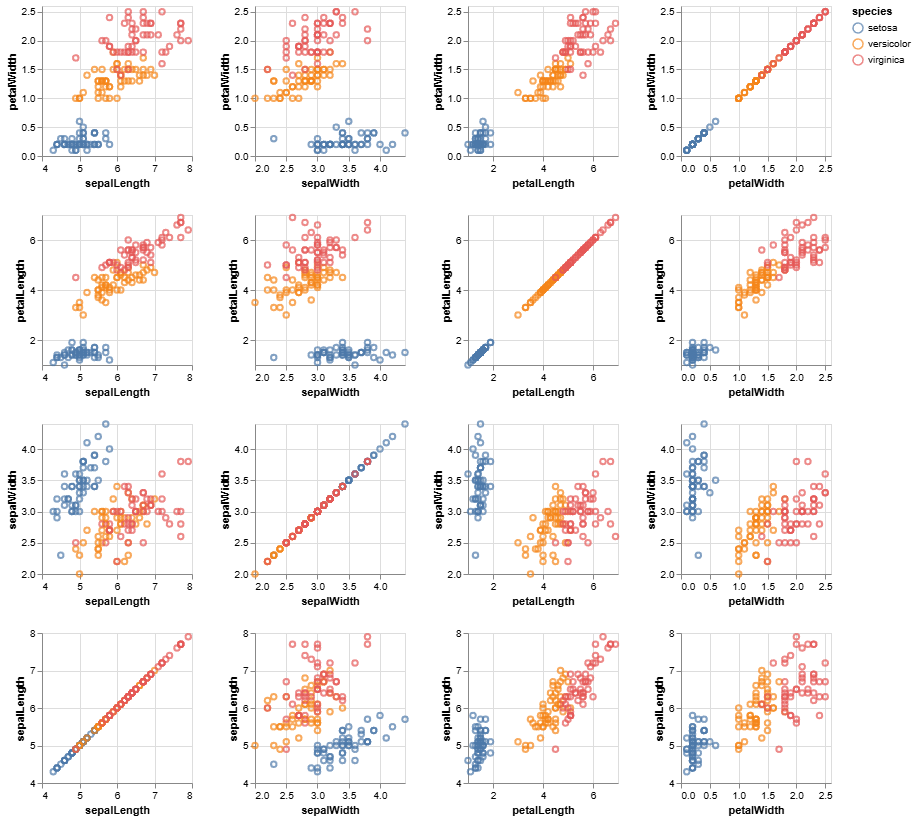
Scatterplot Matrix | ||

Scatter Plot |

Line Plot |

Surface Plot |
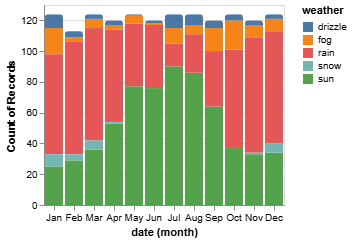
Bar Plot |
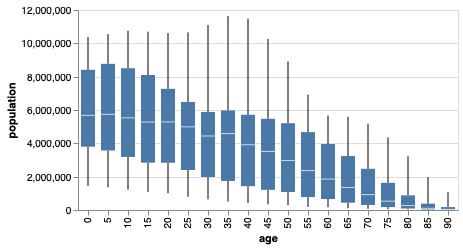
Box Plot |
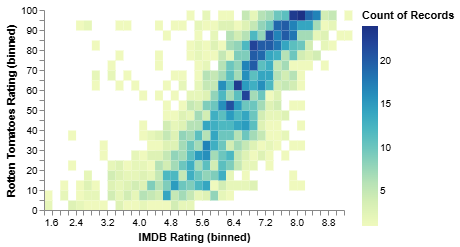
Histogram Heatmap |
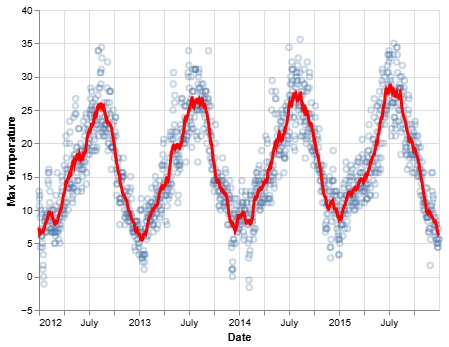
Rolling Average |
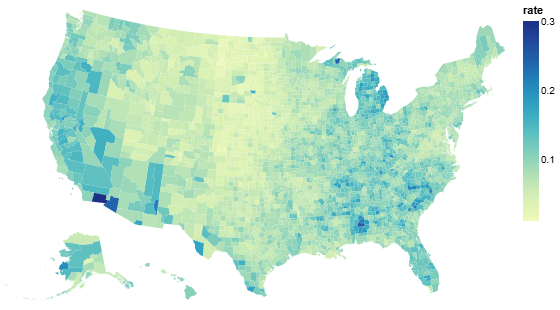
Geo Map |

UMAP |
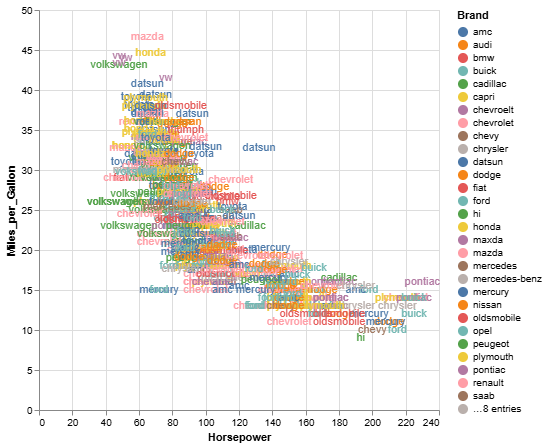
Text Plot |

Heatmap with Contour |

Hexmap |

IsoMap |

LLE |

Kernel PCA |

Neural Network |

SVM |

Hierarchical Clustering |

SOM |

DBSCAN |

Neural Gas |

Wavelet |

Exponential Family Mixture |

Teapot Wireframe |

Grid Interpolation | ||
Repo liên quan
Hugging Face Transformers (huggingface/transformers) is a Python library that centralizes model definitions for text, computer vision, audio, video, and multimodal machine learning, covering both inference and training. The README describes it as a pivot point compatible with training frameworks such as Axolotl, DeepSpeed, and PyTorch-Lightning, and inference engines such as vLLM, SGLang, and TGI, with more than 1M+ model checkpoints listed on the Hugging Face Hub.
LLMs-from-scratch is Sebastian Raschka's GitHub companion to the Manning book Build a Large Language Model (From Scratch), ISBN 9781633437166. It walks through building, pretraining, and finetuning a GPT-style model in PyTorch across seven chapters and five appendices, plus a growing set of bonus notebooks covering newer open architectures.
What Hacker News commenters said about TensorFlow's installs, sprawl and 2.x migration, set against the repo's 201,431 stars and 2026-11-10 push.
prompts.chat is the largest open-source prompt library for AI, formerly called Awesome ChatGPT Prompts. It hosts curated prompts in CSV and Markdown, available as a public website, Hugging Face dataset, or self-hosted instance. The project supports multiple LLM providers including ChatGPT, Claude, Gemini, Llama, and Mistral. Self-hosting uses a Next.js setup wizard that configures authentication via GitHub, Google, or Azure AD, with PostgreSQL as the recommended database. CLI access, an MCP server, and a Claude Code plugin extend its reach into developer workflows. The codebase is MIT-licensed while prompt data falls under CC0. Its 166k GitHub stars make it an AI resource on the platform with 166k GitHub stars, and it has been cited by Harvard, Columbia, and Forbes.
Trả lời nhanh
Cùng nhóm AI Tools còn repo nào?
haifengl/smile thuộc nhóm AI Tools trên TopGit, cùng 20 topic GitHub. Trang Trending và Topics liệt kê các repo cùng số sao và cùng ngôn ngữ để so sánh.
Đọc thêm về haifengl/smile ở đâu?
Trang TopGit này là một snapshot — tab "Readme" hiển thị nguyên văn README của repo (đã bỏ link, giữ ảnh). Repo GitHub ở github.com/haifengl/smile là nguồn chính thức.
haifengl/smile có bao nhiêu sao?
haifengl/smile có 6.4k sao GitHub — tải lại trang để xem số mới nhất, hoặc xem trực tiếp github.com/haifengl/smile. TopGit phản chiếu số sao của GitHub nhưng không cam kết đến từng phút.
haifengl/smile có phải mã nguồn mở không?
TopGit chưa ghi nhận license cho haifengl/smile. Phần lớn repo public trên GitHub là mã nguồn mở, nhưng điều khoản khác nhau từng repo — mở file LICENSE để xác nhận.
haifengl/smile còn đang phát triển không?
Commit gần nhất trên haifengl/smile là 3 tháng trước (theo timestamp GitHub). Repo có 1.1k fork — một chỉ báo về mức độ quan tâm của cộng đồng.
haifengl/smile là gì?
haifengl/smile (haifengl/smile) là dự án Java trên GitHub. Theo mô tả gốc: Statistical Machine Intelligence & Learning Engine
haifengl/smile viết bằng ngôn ngữ gì?
haifengl/smile chủ yếu viết bằng Java. Trường "language" của GitHub dựa trên phần lớn byte ở nhánh mặc định.
Đọc đầy đủ README ở tab phía trên.
Muốn nghe thêm một ý kiến về smile?
Hỏi một AI đọc được trang này — một cú bấm là có ngay nhận định về smile.