jamesmh/coravel hiện có 4.3k sao trên GitHub, viết chủ yếu bằng C#. Near-zero config .NET library that makes advanced application features like Task Scheduling, Caching, Queuing, Event Broadcasting, and more a breeze!
Tóm tắt dựng từ metadata GitHub của chính dự án — chưa có bài review TopGit. Trang sẽ tự động cập nhật khi bài review đầy đủ được xuất bản.
VÌ SAO CHƯA CÓ REVIEW
TopGit viết bài đầy đủ cho repo có nhiều sao nhất và được yêu cầu nhiều nhất. Trang này là snapshot trong thời gian chờ — xem README gốc ở tab READ ME.
Coravel helps developers get their .NET applications up and running fast by making advanced application features like task/job scheduling, queuing, caching, mailing (and more!) accessible and easy to use. Comes with simple, expressive and straightforward syntax.
You can view the official docs here.
Features:
Task/Job Scheduling
Usually, you have to configure a cron job or a task via Windows Task Scheduler to get a single or multiple re-occurring tasks to run.
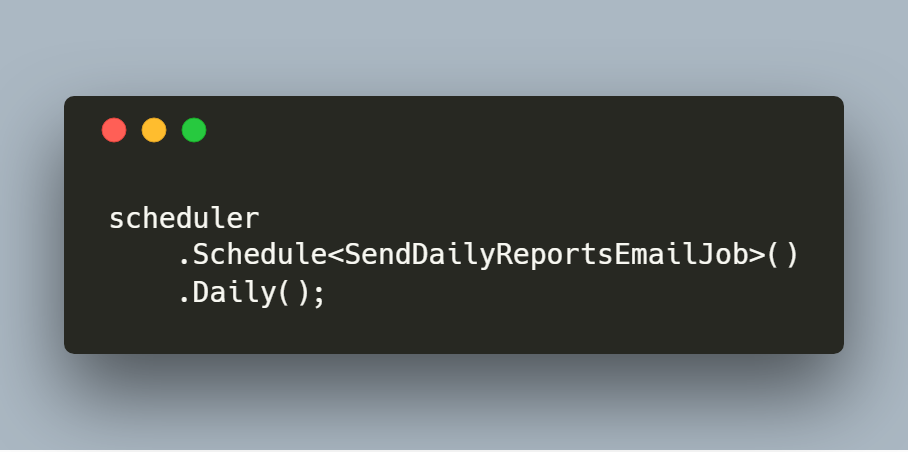
With Coravel, you can setup all your scheduled tasks in one place using a simple, elegant, fluent syntax - in code!
Queuing
Coravel gives you a zero-configuration queue that runs in-memory to offload long-winded tasks to the background instead of making your users wait for their HTTP request to finish!
Caching
Coravel provides you with an easy to use API for caching in your .NET Core applications.
By default, it uses an in-memory cache, but also has database drivers for more robust scenarios!
Event Broadcasting
Coravel's event broadcasting helps you to build maintainable applications who's parts are loosely coupled!
Mailing
E-mails are not as easy as they should be. Luckily for you, Coravel solves this by offering:
Built-in e-mail friendly razor templates
Simple and flexible mailing API
Render your e-mails for visual testing
Drivers supporting SMTP, local log file or BYOM ("bring your own mailer") driver
Quick and simple configuration via appsettings.json
And more!
Samples
Using Coravel With EF Core
.NET Worker Service using Coravel's Task Scheduling
Support Me
You can support my ongoing open-source work on BuyMeACoffee.
Quick-Start
Here's how quickly you can use Coravel to begin building a basic worker service process that can issue actions at scheduled intervals:
In terminal: dotnet new worker -n [NameOfYourApp] -o ./[NameOfYourApp]
In terminal: dotnet add package coravel
Replace Program.cs with the following:
using Coravel;

Console.OutputEncoding = System.Text.Encoding.UTF8;

var builder = Host.CreateApplicationBuilder(args);
builder.Services.AddScheduler();

var host = builder.Build();

host.Services.UseScheduler(s =>
{
    s.Schedule(() => Console.WriteLine("It's alive! 🧟")).EverySecond();
});

host.Run();
In terminal: dotnet run
That's it - happy coding!
Coravel Pro
If you are building a .NET application with Entity Framework then you might want to look into Coravel Pro. It is an admin panel & tools to make maintaining and managing your .NET app a breeze!
Visual job scheduling & management
Scaffold a CRUD UI for managing your EF entities
Easily configure a dashboard to show health metrics (or whatever you want)
Build custom tabular reports of your data
And more!
FAQ
How is Coravel different from Hangfire?
Hangfire has been around for a while - before modern .NET (Core). It's a fantastic tool that has tons of features that Coravel doesn't. Notably: persistent queues, retry mechanisms, support for many storage drivers, etc.
However, Hangfire still (as of March 2023) does not natively support true async/await (here and here). This means that using Hangfire within a web application, for example, won't be as efficient as it could be when using threads that perform I/O operations.
Coravel was created with modern C# and .NET primitives in mind - such as async/await and .NET's built-in dependency injection utilities. This means that Coravel can be easier to configure and will be very efficient with / won't hog threads that your web application needs to respond to incoming HTTP requests.
How is Coravel different from Quartz?
Quartz is an older Java library ported to .NET. It still doesn't hook into the modern .NET dependency injection tooling well. Some think that Coravel's APIs are much more succinct and understandable.
For example, compare this sample from their documentation with how working with Coravel is (e.g. you don't need to understand how to "start" and "stop" Coravel's scheduler, but you do have to manually work with the Quartz scheduler).
Does Coravel support persisting queued jobs to storage in case my application goes down?
No. At least, not yet.
Coravel processes queued items in-memory. When your application goes down it won't allow the application to shutdown until all items are processed.
Does Coravel support retry mechanisms?
Coravel's philosophy has been to work well with other .NET primitives - which means that using other libraries is easy.
Coravel doesn't support retry mechanisms internally because I am very careful not to bloat Coravel with things that aren't necessary. I want to keep Coravel focused on what it does best (e.g. "I need job scheduling, queuing, etc. without requiring extra infrastructure and complicated configuration").
For example, you can use Polly within your invocables to do retries. Some people will configure a base class that inherits from IInvocable that has retries built-in.
Does Coravel support distributed locking?
No. However, this can again be achieved by using a battle-tested distributed locking library like DistributedLock. You might create an invocable's Invoke() like this:
public class TestInvocable : IInvocable
{
  private ApplicationDbContext _context;
  private IDistributedLockProvider _distributedlock;

  public TestInvocable(ApplicationDbContext context, IDistributedLockProvider distributedlock)
  {
    this._context = context;
    this._distributedlock = distributedlock;
  }

  public async Task Invoke()
  {
    await using (await this._distributedlock.AcquireAsync())
    {
      await this._context.Test.AddAsync(new TestModel() { Name = "test name" });
      await this._context.SaveChangesAsync();
    }
  }
}
jamesmh/coravel có 4.3k sao GitHub — tải lại trang để xem số mới nhất, hoặc xem trực tiếp github.com/jamesmh/coravel. TopGit phản chiếu số sao của GitHub nhưng không cam kết đến từng phút.
jamesmh/coravel có những chủ đề gì?
GitHub topics của jamesmh/coravel: "background-jobs", "background-thread", "background-worker", "dotnet", "dotnet-core", "dotnetcore", "hacktoberfest", "mailing", "queue", "scheduled-jobs". TopGit xếp repo vào nhóm Backend.
jamesmh/coravel còn đang phát triển không?
Commit gần nhất trên jamesmh/coravel là 1.3 năm trước (theo timestamp GitHub). Repo có 269 fork — một chỉ báo về mức độ quan tâm của cộng đồng.
jamesmh/coravel là gì?
jamesmh/coravel (jamesmh/coravel) là dự án C# trên GitHub. Theo mô tả gốc: Near-zero config .NET library that makes advanced application features like Task Scheduling, Caching, Queuing, Event Broadcasting, and more a breeze!
jamesmh/coravel so với các dự án Backend khác thế nào?
jamesmh/coravel được TopGit xếp vào nhóm Backend, với 4.3k sao GitHub và viết bằng C#. Xem trang chủ đề Backend trên TopGit để so sánh với các dự án tương tự theo số sao và mức độ hoạt động.
jamesmh/coravel viết bằng ngôn ngữ gì?
jamesmh/coravel chủ yếu viết bằng C#. Trường "language" của GitHub dựa trên phần lớn byte ở nhánh mặc định.
Vì sao jamesmh/coravel được xếp vào nhóm Backend?
TopGit xếp jamesmh/coravel vào nhóm Backend dựa trên GitHub topics và mô tả của repo (gắn thẻ: "background-jobs", "background-thread", "background-worker"). Việc phân loại dựa trên metadata thật của repo, không phải đoán theo cảm tính biên tập.
Đọc đầy đủ README ở tab phía trên.
Muốn nghe thêm một ý kiến về coravel?
Hỏi một AI đọc được trang này — một cú bấm là có ngay nhận định về coravel.

 /coravel