RasaHQ/rasa-nlu-examples hiện có 194 sao trên GitHub, viết chủ yếu bằng Python. This repository contains examples of custom components for educational purposes.
Tóm tắt dựng từ metadata GitHub của chính dự án — chưa có bài review TopGit. Trang sẽ tự động cập nhật khi bài review đầy đủ được xuất bản.
VÌ SAO CHƯA CÓ REVIEW
TopGit viết bài đầy đủ cho repo có nhiều sao nhất và được yêu cầu nhiều nhất. Trang này là snapshot trong thời gian chờ — xem README gốc ở tab READ ME.
This repository contains Rasa compatible machine learning components. These components
are open sourced in order to encourage experimentation and to quickly offer support to
more tools. By hosting these components here they do not need to go through the same
vetting process as the components in Rasa and we hope that this makes it easier for
people to contribute new ideas.
The components in the repository are not officially supported. There will be units tests
as well as documentation but this project should be considered a community project,
not something that is part of core Rasa. If there's a component here that turns out to be
useful to the larger Rasa community then we might port features from this repository to Rasa.
Install
To use these tools locally you need to install via git.
If you're using any models that depend on spaCy you'll need to install the Rasa dependencies
for spaCy first.
python -m pip install rasa[spacy]
Documentation
You can find the documentation for this project here.
Compatibility
This project currently supports components for Rasa 3.0. For older versions, see the list below.
version 0.1.3 is the final release for Rasa 1.10
version 0.2.8 is the final release for Rasa 2.8
Tokenizers
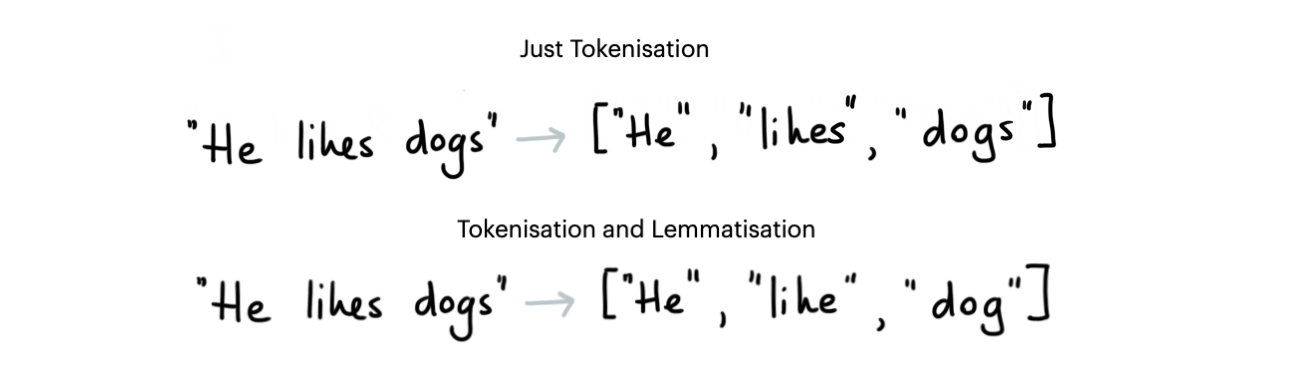
Tokenizers can split up the input text into tokens. Depending on the Tokenizer that you pick
you can also choose to apply lemmatization. For languages that have rich grammatical features
this might help reduce the size of all the possible tokens.
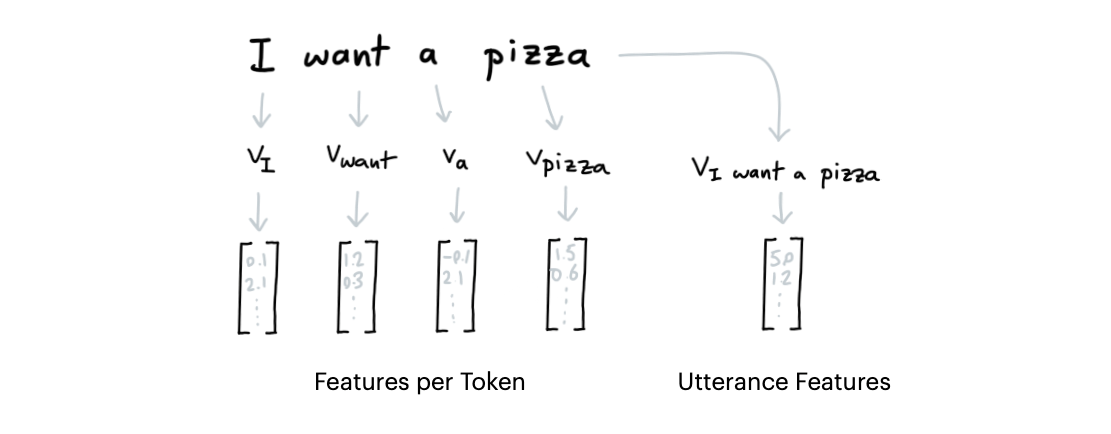
Dense featurizers attach dense numeric features per token as well as to the entire utterance. These
features are picked up by intent classifiers and entity detectors later in the pipeline.
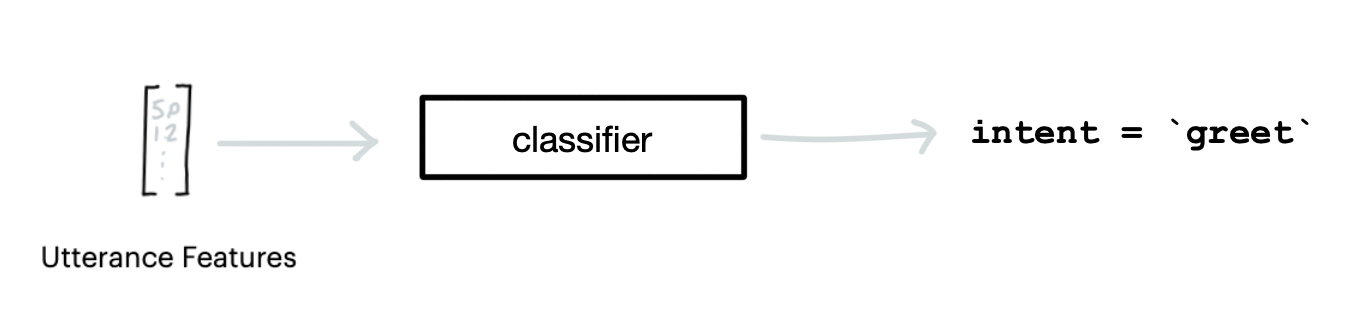
Intent classifiers are models that predict an intent from a given user message
text. The default intent classifier in Rasa NLU is the DIET
model which can be
fairly computationally expensive, especially if you do not need to detect
entities. We provide some examples of alternative intent classifiers here.
Language models are typically trained on Western datasets. That means
that the reported benchmarks might not apply to your use-case. For example; detecting
names in texts from France is not the same thing as detecting names in Madagascar. Even
though French is used actively in both countries, the names of it's citizens might
be so different that you cannot assume that the benchmarks apply universally.
To remedy this we've started collecting name lists. These can be used as a lookup table
which can be picked up by Rasa's RegexEntityExtractor
or our FlashTextEntityExtractor.
It won't be 100% perfect but it should give a reasonable starting point.
You can find the namelists here.
We currently offer namelists for the United States, Germany as well as common Arabic names.
Feel free to submit PRs for more languages. We're also eager to receive feedback.
Usage
You can install the examples from this repo via pip. Let's say you download the standard tools.
And you can use this file to run benchmarks. From the root folder of the project typically
that means running something like;
rasa test nlu --config basic-bytepair-config.yml \
          --cross-validation --runs 1 --folds 2 \
          --out gridresults/basic-bytepair-config
Open an Issue
If you've spotted a bug then you can submit an issue here.
GitHub issues allow us to keep track of a conversation about this repository and it is the preferred
communication channel for bugs related to this project.
Contribute
There are many ways you can contribute to this project.
You can suggest new features.
You can let us know if there are bugs.
You can share the results of an experiment you ran using these tools.
You can let us know if the components in this library help you.
Feel free to start the discussion by opening an issue on this repository. Before submitting code
to the repository it would help if you first create an issue so that the maintainers can disucss
the changes you would like to contribute. A more in-depth contribution guide can be found
here.
Trang TopGit này là một snapshot — tab "Readme" hiển thị nguyên văn README của repo (đã bỏ link, giữ ảnh). Repo GitHub ở github.com/RasaHQ/rasa-nlu-examples là nguồn chính thức.
RasaHQ/rasa-nlu-examples có bao nhiêu sao?
RasaHQ/rasa-nlu-examples có 194 sao GitHub — tải lại trang để xem số mới nhất, hoặc xem trực tiếp github.com/RasaHQ/rasa-nlu-examples. TopGit phản chiếu số sao của GitHub nhưng không cam kết đến từng phút.
RasaHQ/rasa-nlu-examples có phải mã nguồn mở không?
Có — RasaHQ/rasa-nlu-examples phát hành theo license Apache-2.0, nghĩa là mã nguồn mở để đọc, fork và (tùy license) tái sử dụng. Mã: github.com/RasaHQ/rasa-nlu-examples.
RasaHQ/rasa-nlu-examples còn đang phát triển không?
Commit gần nhất trên RasaHQ/rasa-nlu-examples là 2.9 năm trước (theo timestamp GitHub). Repo có 71 fork — một chỉ báo về mức độ quan tâm của cộng đồng.
RasaHQ/rasa-nlu-examples là gì?
RasaHQ/rasa-nlu-examples (RasaHQ/rasa-nlu-examples) là dự án Python trên GitHub. Theo mô tả gốc: This repository contains examples of custom components for educational purposes.
Đọc đầy đủ README ở tab phía trên.
Muốn nghe thêm một ý kiến về rasa-nlu-examples?
Hỏi một AI đọc được trang này — một cú bấm là có ngay nhận định về rasa-nlu-examples.

 /rasa-nlu-examples