srush/Tensor-Puzzles — công cụ AI — đang có 4.3k sao GitHub trong nhóm AI Tools. Solve puzzles. Improve your pytorch.
Tóm tắt dựng từ metadata GitHub của chính dự án — chưa có bài review TopGit. Trang sẽ tự động cập nhật khi bài review đầy đủ được xuất bản.
VÌ SAO CHƯA CÓ REVIEW
TopGit viết bài đầy đủ cho repo có nhiều sao nhất và được yêu cầu nhiều nhất. Trang này là snapshot trong thời gian chờ — xem README gốc ở tab READ ME.
When learning a tensor programming language like PyTorch or Numpy it
is tempting to rely on the standard library (or more honestly
StackOverflow) to find a magic function for everything. But in
practice, the tensor language is extremely expressive, and you can
do most things from first principles and clever use of broadcasting.
This is a collection of 21 tensor puzzles. Like chess puzzles these are
not meant to simulate the complexity of a real program, but to practice
in a simplified environment. Each puzzle asks you to reimplement one
function in the NumPy standard library without magic.
I recommend running in Colab. Click here and copy the notebook to get start.
If you are interested, there is also a youtube walkthrough of the puzzles
from lib import draw_examples, make_test, run_test
import torch
import numpy as np
from torchtyping import TensorType as TT
tensor = torch.tensor
Rules
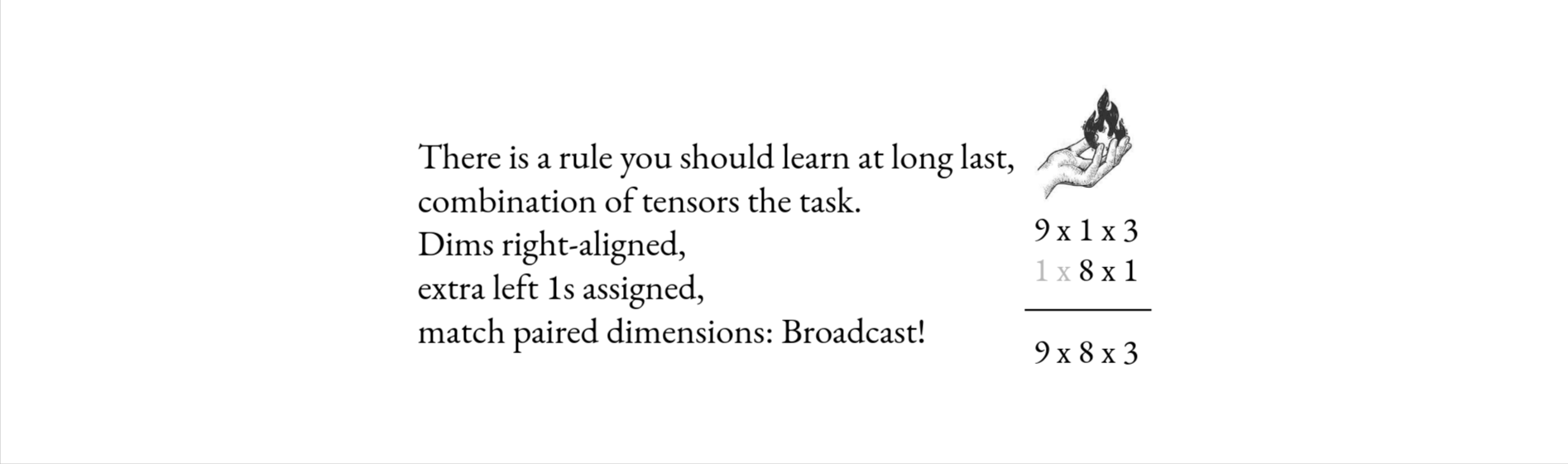
These puzzles are about broadcasting. Know this rule.
Each puzzle needs to be solved in 1 line (<80 columns) of code.
You are allowed @, arithmetic, comparison, shape, any indexing (e.g. a[:j], a[:, None], a[arange(10)]), and previous puzzle functions.
You are not allowed anything else. No view, sum, take, squeeze, tensor.
You can start with these two functions:
def arange(i: int):
    "Use this function to replace a for-loop."
    return torch.tensor(range(i))

draw_examples("arange", [{"" : arange(i)} for i in [5, 3, 9]])
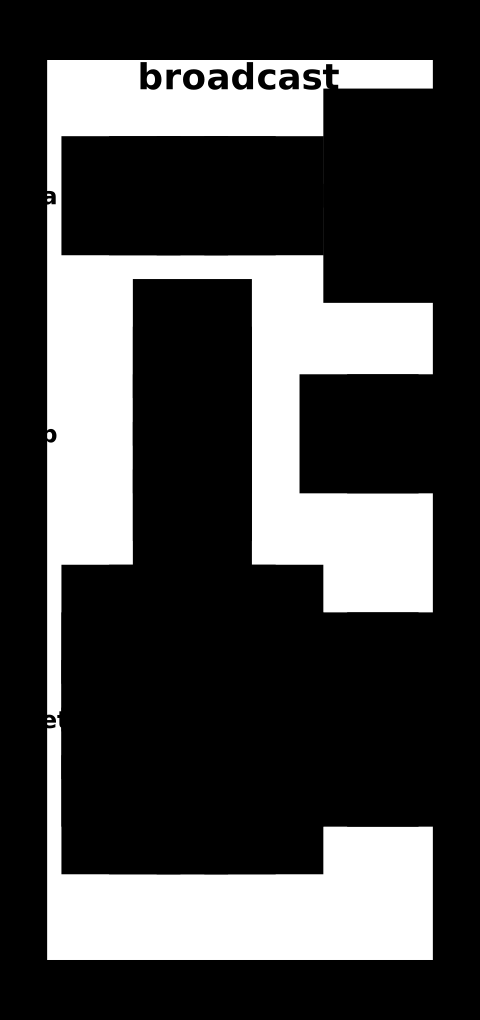
# Example of broadcasting.
examples = [(arange(4), arange(5)[:, None]) ,
            (arange(3)[:, None], arange(2))]
draw_examples("broadcast", [{"a": a, "b":b, "ret": a + b} for a, b in examples])
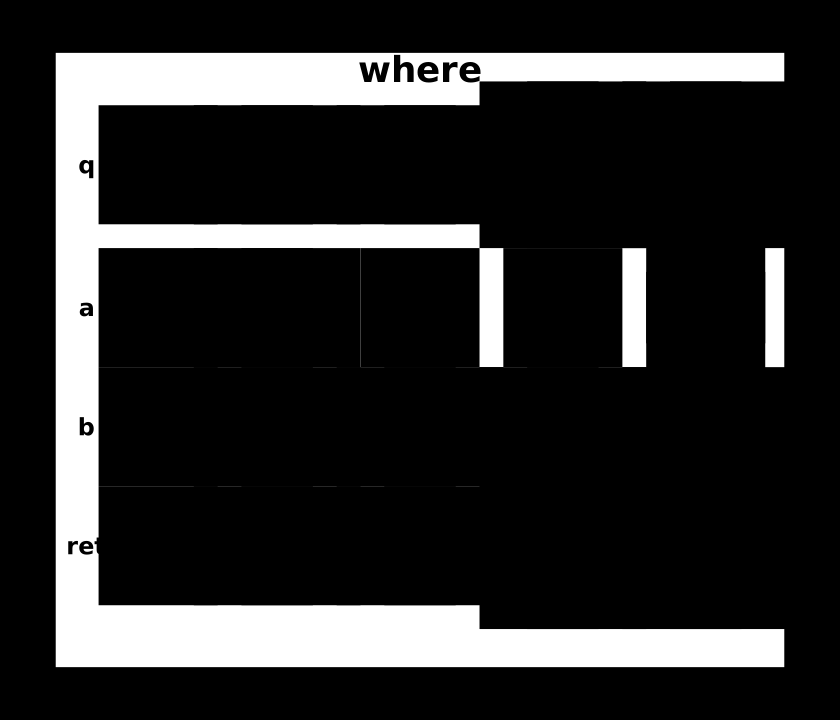
def where(q, a, b):
    "Use this function to replace an if-statement."
    return (q * a) + (~q) * b

# In diagrams, orange is positive/True, where is zero/False, and blue is negative.

examples = [(tensor([False]), tensor([10]), tensor([0])),
            (tensor([False, True]), tensor([1, 1]), tensor([-10, 0])),
            (tensor([False, True]), tensor([1]), tensor([-10, 0])),
            (tensor([[False, True], [True, False]]), tensor([1]), tensor([-10, 0])),
            (tensor([[False, True], [True, False]]), tensor([[0], [10]]), tensor([-10, 0])),
           ]
draw_examples("where", [{"q": q, "a":a, "b":b, "ret": where(q, a, b)} for q, a, b in examples])
Puzzle 1 - ones
Compute ones - the vector of all ones.
def ones_spec(out):
    for i in range(len(out)):
        out[i] = 1

def ones(i: int) -> TT["i"]:
    raise NotImplementedError

test_ones = make_test("one", ones, ones_spec, add_sizes=["i"])
# run_test(test_ones)
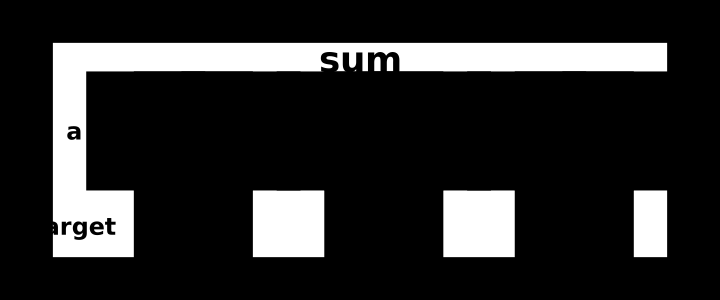
Puzzle 2 - sum
Compute sum - the sum of a vector.
def sum_spec(a, out):
    out[0] = 0
    for i in range(len(a)):
        out[0] += a[i]

def sum(a: TT["i"]) -> TT[1]:
    raise NotImplementedError


test_sum = make_test("sum", sum, sum_spec)
# run_test(test_sum)
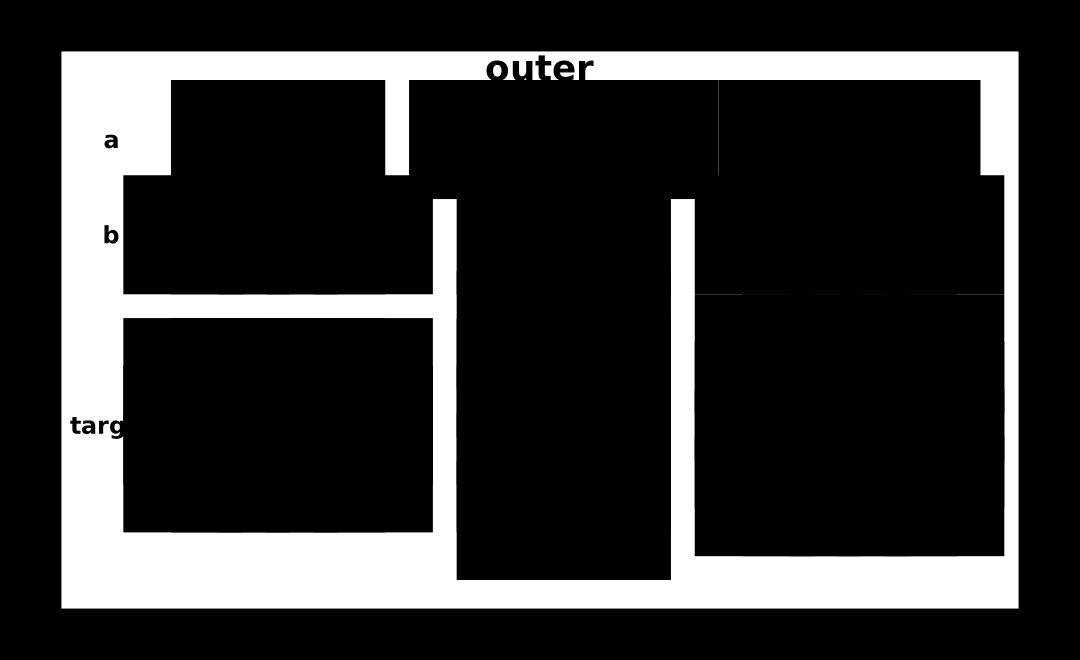
Puzzle 3 - outer
Compute outer - the outer product of two vectors.
def outer_spec(a, b, out):
    for i in range(len(out)):
        for j in range(len(out[0])):
            out[i][j] = a[i] * b[j]

def outer(a: TT["i"], b: TT["j"]) -> TT["i", "j"]:
    raise NotImplementedError

test_outer = make_test("outer", outer, outer_spec)
# run_test(test_outer)
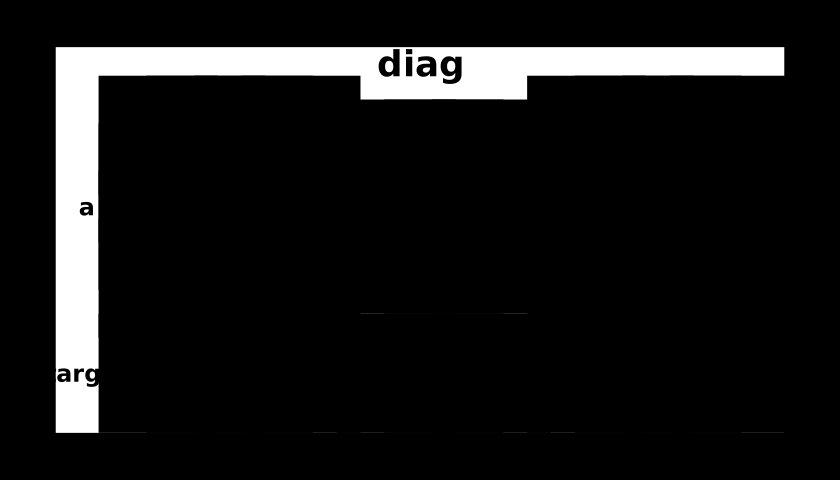
Puzzle 4 - diag
Compute diag - the diagonal vector of a square matrix.
def diag_spec(a, out):
    for i in range(len(a)):
        out[i] = a[i][i]

def diag(a: TT["i", "i"]) -> TT["i"]:
    raise NotImplementedError


test_diag = make_test("diag", diag, diag_spec)
# run_test(test_diag)
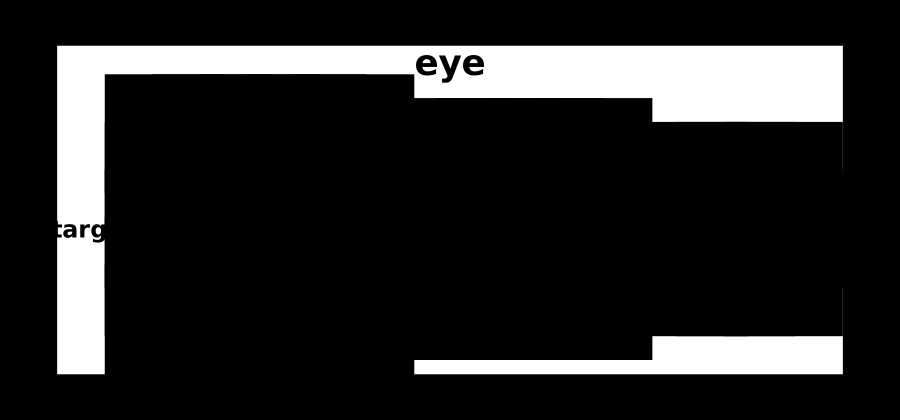
Puzzle 5 - eye
Compute eye - the identity matrix.
def eye_spec(out):
    for i in range(len(out)):
        out[i][i] = 1

def eye(j: int) -> TT["j", "j"]:
    raise NotImplementedError

test_eye = make_test("eye", eye, eye_spec, add_sizes=["j"])
# run_test(test_eye)
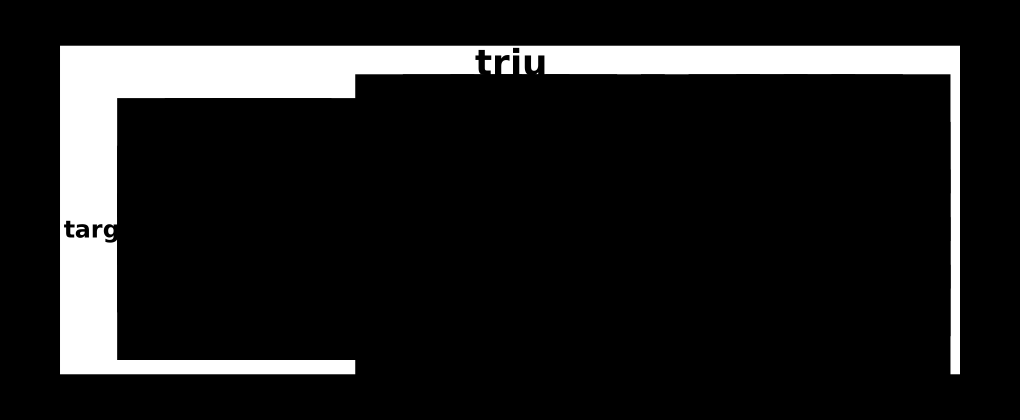
Puzzle 6 - triu
Compute triu - the upper triangular matrix.
def triu_spec(out):
    for i in range(len(out)):
        for j in range(len(out)):
            if i <= j:
                out[i][j] = 1
            else:
                out[i][j] = 0

def triu(j: int) -> TT["j", "j"]:
    raise NotImplementedError


test_triu = make_test("triu", triu, triu_spec, add_sizes=["j"])
# run_test(test_triu)
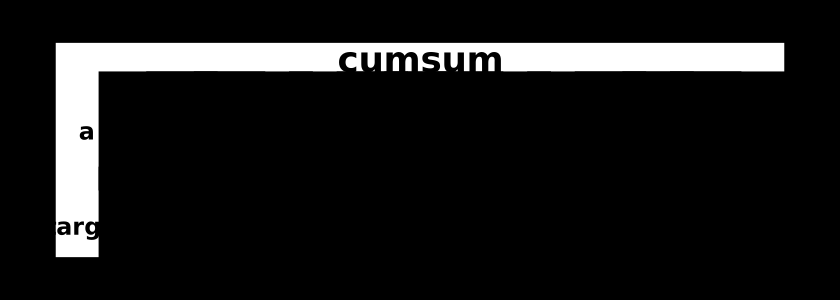
Puzzle 7 - cumsum
Compute cumsum - the cumulative sum.
def cumsum_spec(a, out):
    total = 0
    for i in range(len(out)):
        out[i] = total + a[i]
        total += a[i]

def cumsum(a: TT["i"]) -> TT["i"]:
    raise NotImplementedError

test_cumsum = make_test("cumsum", cumsum, cumsum_spec)
def flatten_spec(a, out):
    k = 0
    for i in range(len(a)):
        for j in range(len(a[0])):
            out[k] = a[i][j]
            k += 1

def flatten(a: TT["i", "j"], i:int, j:int) -> TT["i * j"]:
    raise NotImplementedError

test_flatten = make_test("flatten", flatten, flatten_spec, add_sizes=["i", "j"])
# run_test(test_flatten)
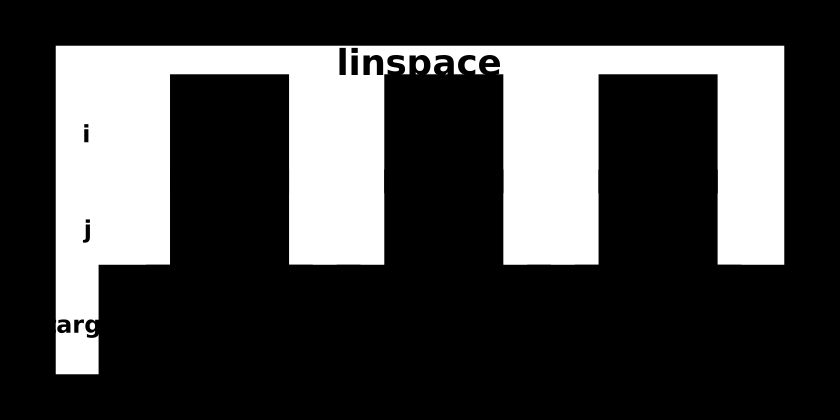
Puzzle 18 - linspace
Compute linspace
def linspace_spec(i, j, out):
    for k in range(len(out)):
        out[k] = float(i + (j - i) * k / max(1, len(out) - 1))

def linspace(i: TT[1], j: TT[1], n: int) -> TT["n", float]:
    raise NotImplementedError

test_linspace = make_test("linspace", linspace, linspace_spec, add_sizes=["n"])
# run_test(test_linspace)
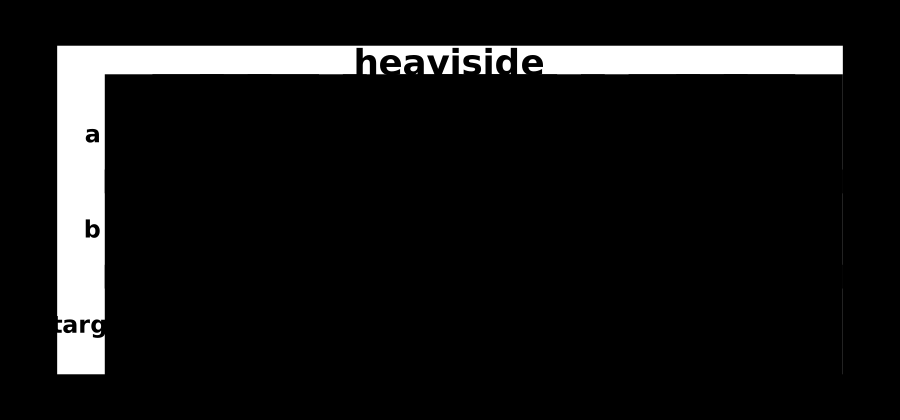
Puzzle 19 - heaviside
Compute heaviside
def heaviside_spec(a, b, out):
    for k in range(len(out)):
        if a[k] == 0:
            out[k] = b[k]
        else:
            out[k] = int(a[k] > 0)

def heaviside(a: TT["i"], b: TT["i"]) -> TT["i"]:
    raise NotImplementedError

test_heaviside = make_test("heaviside", heaviside, heaviside_spec)
# run_test(test_heaviside)
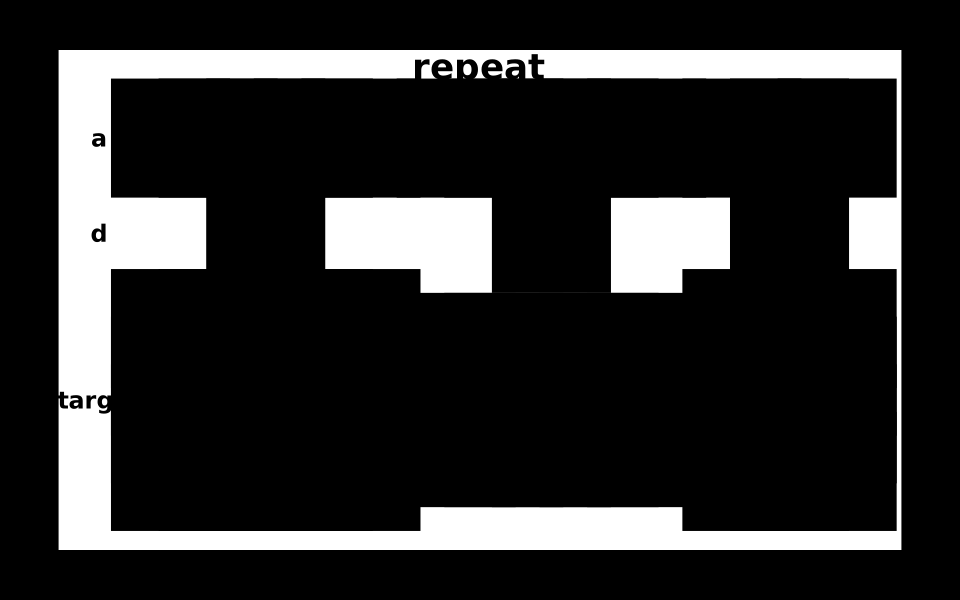
Puzzle 20 - repeat (1d)
Compute repeat
def repeat_spec(a, d, out):
    for i in range(d[0]):
        for k in range(len(a)):
            out[i][k] = a[k]

def constraint_set(d):
    d["d"][0] = d["return"].shape[0]
    return d


def repeat(a: TT["i"], d: TT[1]) -> TT["d", "i"]:
    raise NotImplementedError

test_repeat = make_test("repeat", repeat, repeat_spec, constraint=constraint_set)
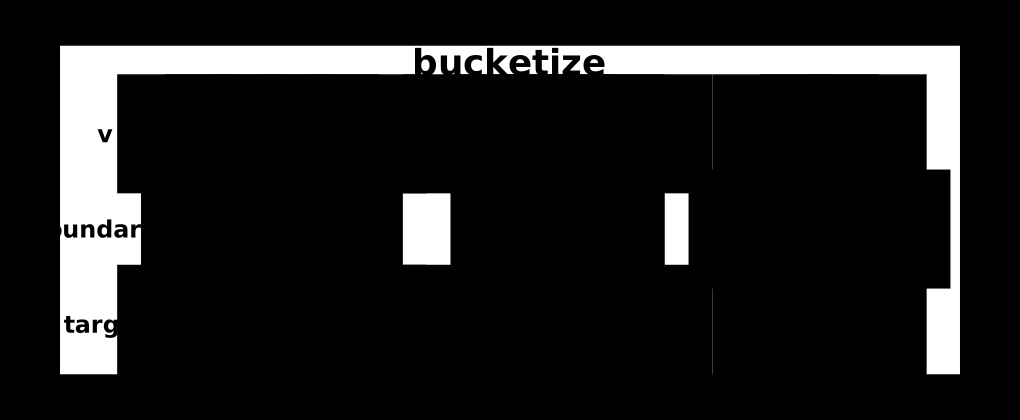
Puzzle 21 - bucketize
Compute bucketize
def bucketize_spec(v, boundaries, out):
    for i, val in enumerate(v):
        out[i] = 0
        for j in range(len(boundaries)-1):
            if val >= boundaries[j]:
                out[i] = j + 1
        if val >= boundaries[-1]:
            out[i] = len(boundaries)


def constraint_set(d):
    d["boundaries"] = np.abs(d["boundaries"]).cumsum()
    return d


def bucketize(v: TT["i"], boundaries: TT["j"]) -> TT["i"]:
    raise NotImplementedError

test_bucketize = make_test("bucketize", bucketize, bucketize_spec,
                           constraint=constraint_set)
Speed Run Mode!
What is the smallest you can make each of these?
import inspect
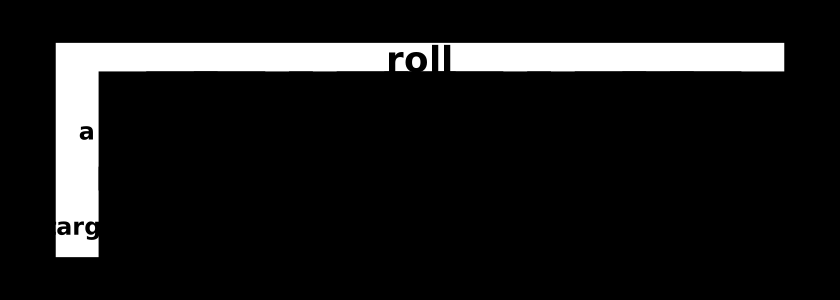
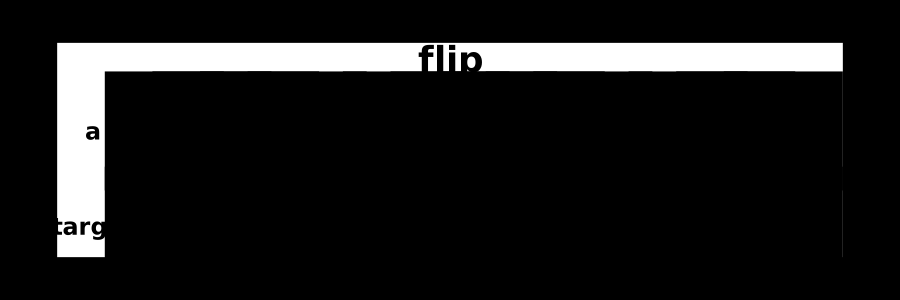
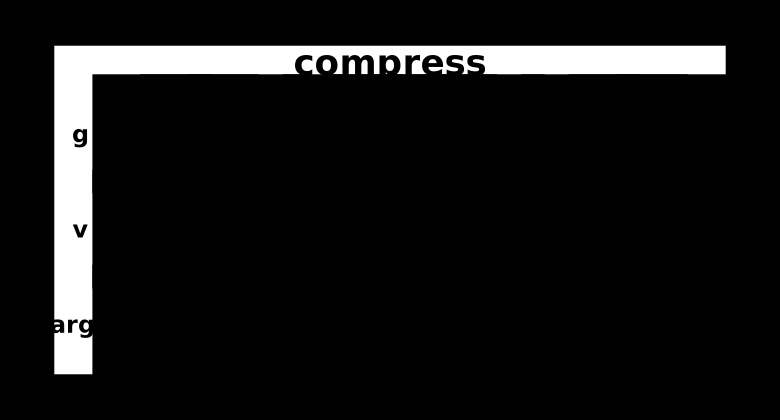
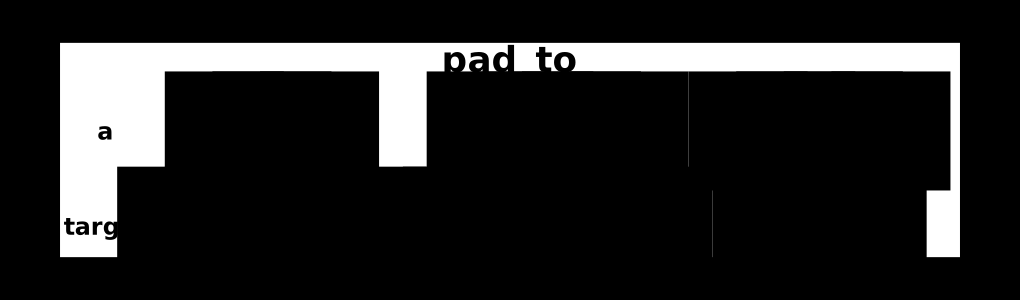
fns = (ones, sum, outer, diag, eye, triu, cumsum, diff, vstack, roll, flip,
       compress, pad_to, sequence_mask, bincount, scatter_add)

for fn in fns:
    lines = [l for l in inspect.getsource(fn).split("\n") if not l.strip().startswith("#")]

    if len(lines) > 3:
        print(fn.__name__, len(lines[2]), "(more than 1 line)")
    else:
        print(fn.__name__, len(lines[1]))
srush/Tensor-Puzzles thuộc nhóm AI Tools trên TopGit, cùng 3 topic GitHub. Trang Trending và Topics liệt kê các repo cùng số sao và cùng ngôn ngữ để so sánh.
Đọc thêm về srush/Tensor-Puzzles ở đâu?
Trang TopGit này là một snapshot — tab "Readme" hiển thị nguyên văn README của repo (đã bỏ link, giữ ảnh). Repo GitHub ở github.com/srush/Tensor-Puzzles là nguồn chính thức.
srush/Tensor-Puzzles có bao nhiêu sao?
srush/Tensor-Puzzles có 4.3k sao GitHub — tải lại trang để xem số mới nhất, hoặc xem trực tiếp github.com/srush/Tensor-Puzzles. TopGit phản chiếu số sao của GitHub nhưng không cam kết đến từng phút.
srush/Tensor-Puzzles có phải mã nguồn mở không?
Có — srush/Tensor-Puzzles phát hành theo license MIT, nghĩa là mã nguồn mở để đọc, fork và (tùy license) tái sử dụng. Mã: github.com/srush/Tensor-Puzzles.
srush/Tensor-Puzzles còn đang phát triển không?
Commit gần nhất trên srush/Tensor-Puzzles là 2.1 năm trước (theo timestamp GitHub). Repo có 392 fork — một chỉ báo về mức độ quan tâm của cộng đồng.
srush/Tensor-Puzzles dùng license gì?
srush/Tensor-Puzzles phát hành theo license MIT. Nên mở file LICENSE trên GitHub để xác nhận — license metadata đôi khi lệch với thực tế dự án.
srush/Tensor-Puzzles là gì?
srush/Tensor-Puzzles (srush/Tensor-Puzzles) là dự án Jupyter Notebook trên GitHub. Theo mô tả gốc: Solve puzzles. Improve your pytorch.
srush/Tensor-Puzzles viết bằng ngôn ngữ gì?
srush/Tensor-Puzzles chủ yếu viết bằng Jupyter Notebook. Trường "language" của GitHub dựa trên phần lớn byte ở nhánh mặc định.
Đọc đầy đủ README ở tab phía trên.
Chưa chắc Tensor-Puzzles có hợp với bạn?
Để ChatGPT, Claude hoặc Perplexity tìm hiểu giúp — bấm bên dưới và xem AI nói gì về Tensor-Puzzles.
 /Tensor-Puzzles