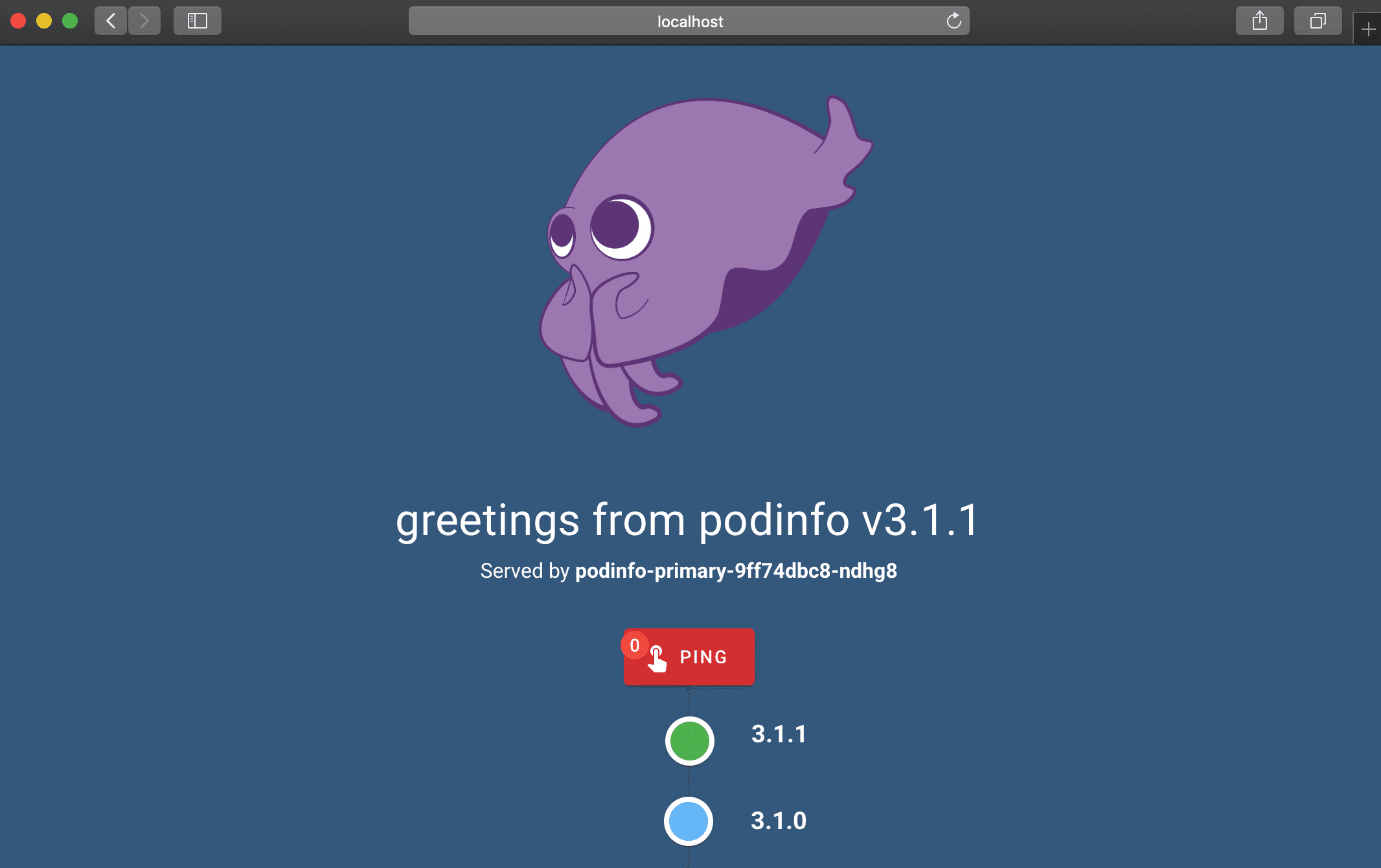
Snapshot của stefanprodan/podinfo: 6.0k★ · Go · Backend. Go microservice template for Kubernetes
Tóm tắt dựng từ metadata GitHub của chính dự án — chưa có bài review TopGit. Trang sẽ tự động cập nhật khi bài review đầy đủ được xuất bản.
VÌ SAO CHƯA CÓ REVIEW
TopGit viết bài đầy đủ cho repo có nhiều sao nhất và được yêu cầu nhiều nhất. Trang này là snapshot trong thời gian chờ — xem README gốc ở tab READ ME.
Podinfo is a tiny web application made with Go that showcases best practices of running microservices in Kubernetes.
Podinfo is used by CNCF projects like Flux and Flagger
for end-to-end testing and workshops.
Specifications:
Health checks (readiness and liveness)
Graceful shutdown on interrupt signals
File watcher for secrets and configmaps
Instrumented with Prometheus and Open Telemetry
Structured logging with zap
12-factor app with viper
Fault injection (random errors and latency)
SPIFFE mTLS with X.509 SVIDs from the SPIFFE Workload API
Swagger docs
Timoni, Helm and Kustomize installers
End-to-End testing with Kubernetes Kind and Helm
Multi-arch container image with Docker buildx and GitHub Actions
Container image signing with Sigstore cosign
SBOMs and SLSA Provenance embedded in the container image
CVE scanning with govulncheck
Web API:
GET / prints runtime information
GET /version prints podinfo version and git commit hash
GET /metrics return HTTP requests duration and Go runtime metrics
GET /healthz used by Kubernetes liveness probe
GET /readyz used by Kubernetes readiness probe
POST /readyz/enable signals the Kubernetes LB that this instance is ready to receive traffic
POST /readyz/disable signals the Kubernetes LB to stop sending requests to this instance
POST /fault_injection/enable makes this instance respond with HTTP 500 to all application endpoints (probes, metrics, pprof and the /fault_injection/* control endpoints stay healthy) — useful for testing client-side circuit breakers / outlier detection against a single "sick" replica
POST /fault_injection/disable restores normal responses
GET /fault_injection/status returns the current fault injection state (enabled or disabled)
GET /status/{code} returns the status code
GET /panic crashes the process with exit code 255
POST /echo forwards the call to the backend service and echos the posted content, without backends the content is logged at debug level
GET /env returns the environment variables as a JSON array
GET /headers returns a JSON with the request HTTP headers, plus X-Spiffe-Id for SPIFFE mTLS clients
GET /delay/{seconds} waits for the specified period
POST /token issues a JWT token valid for one minute JWT=$(curl -sd 'anon' podinfo:9898/token | jq -r .token)
GET /token/validate validates the JWT token curl -H "Authorization: Bearer $JWT" podinfo:9898/token/validate
GET /configs returns a JSON with configmaps and/or secrets mounted in the config volume
POST/PUT /cache/{key} saves the posted content to Redis
GET /cache/{key} returns the content from Redis if the key exists
DELETE /cache/{key} deletes the key from Redis if exists
POST /store writes the posted content to disk at /data/hash and returns the SHA1 hash of the content
GET /store/{hash} returns the content of the file /data/hash if exists
GET/HEAD /artifact returns the files from --artifact-path (default ./kustomize) as a tar.gz, with the sha256 digest in the X-Artifact-Digest header
GET /ws/echo echos content via websockets podcli ws ws://localhost:9898/ws/echo
GET /chunked/{seconds} uses transfer-encoding type chunked to give a partial response and then waits for the specified period
GET /swagger.json returns the API Swagger docs, used for Linkerd service profiling and Gloo routes discovery
gRPC API:
/grpc.health.v1.Health/Check health checking
/grpc.EchoService/Echo echos the received content
/grpc.VersionService/Version returns podinfo version and Git commit hash
/grpc.DelayService/Delay returns a successful response after the given seconds in the body of gRPC request
/grpc.EnvService/Env returns environment variables as a JSON array
/grpc.HeaderService/Header returns the headers present in the gRPC request. Any custom header can also be given as a part of request and that can be returned using this API
/grpc.InfoService/Info returns the runtime information
/grpc.PanicService/Panic crashes the process with gRPC status code as '1 CANCELLED'
/grpc.StatusService/Status returns the gRPC Status code given in the request body
/grpc.TokenService/TokenGenerate issues a JWT token valid for one minute
/grpc.TokenService/TokenValidate validates the JWT token
Web UI:
To access the Swagger UI open <podinfo-host>/swagger/index.html in a browser.
Guides
Getting started with Timoni
Getting started with Flux
Progressive Deliver with Flagger and Linkerd
Automated canary deployments with Kubernetes Gateway API
Install
To install Podinfo on Kubernetes the minimum required version is Kubernetes v1.23.
Podinfo can serve its HTTPS port with SPIFFE mTLS. The server gets its X.509 SVID
from the SPIFFE Workload API (e.g. a SPIRE agent),
rotates it automatically, and only accepts clients that present an SVID from the same trust bundle.
Flag
Description
--spiffe-endpoint-socket
Workload API address, e.g. unix:///spiffe-workload-api/spire-agent.sock, requires --secure-port
--spiffe-authorized-ids
Client SPIFFE IDs allowed to connect, when empty any ID in podinfo's trust domain is allowed
--spiffe-backend-mtls
Call the https backends with SPIFFE mTLS, requires --spiffe-endpoint-socket
--spiffe-backend-ids
Server SPIFFE IDs accepted from https backends, when empty any ID in podinfo's trust domain is accepted, requires --spiffe-backend-mtls
Podinfo starts the HTTP port and passes the liveness probe right away, and keeps retrying the Workload API
until the SVID is issued. The readiness probe fails until the HTTPS port is serving with the SVID.
The request log includes the spiffe_id of the client at debug level.
With --spiffe-backend-mtls, /api/echo calls the https:// backends set with --backend-url over SPIFFE mTLS,
presenting the same SVID and verifying the backend against --spiffe-backend-ids.
All https:// backends must then be SPIFFE workloads, calls to http:// backends are unchanged.
Without the flag, backends are called with the default TLS settings. To chain two podinfo instances,
point the frontend at the backend's HTTPS port and authorize the frontend's ID on the backend:
Based on the above definition, Flux will upgrade the release automatically
when a new version of podinfo is released. If the upgrade fails, Flux
can rollback
to the previous working version.
You can check what version is currently deployed with:
flux get helmreleases -n default
To delete podinfo's Helm repository and release from your cluster run:
If you wish to manage the lifecycle of your applications in a GitOps manner, check out
this workflow example
for multi-env deployments with Flux, Kustomize and Helm.
Trang TopGit này là một snapshot — tab "Readme" hiển thị nguyên văn README của repo (đã bỏ link, giữ ảnh). Repo GitHub ở github.com/stefanprodan/podinfo là nguồn chính thức.
stefanprodan/podinfo có những chủ đề gì?
GitHub topics của stefanprodan/podinfo: "cuelang", "e2e-testing", "gitops", "golang", "helm", "kubernetes", "kustomize", "microservice". TopGit xếp repo vào nhóm Backend.
stefanprodan/podinfo có phải mã nguồn mở không?
Có — stefanprodan/podinfo phát hành theo license Apache-2.0, nghĩa là mã nguồn mở để đọc, fork và (tùy license) tái sử dụng. Mã: github.com/stefanprodan/podinfo.
stefanprodan/podinfo có website riêng không?
TopGit chưa ghi nhận URL trang chủ cho stefanprodan/podinfo. Phần README ở tab phía trên thường có link demo, hoặc xem mô tả GitHub của repo.
stefanprodan/podinfo còn đang phát triển không?
Commit gần nhất trên stefanprodan/podinfo là 10 ngày trước (theo timestamp GitHub). Repo có 1.9k fork — một chỉ báo về mức độ quan tâm của cộng đồng.
stefanprodan/podinfo dùng license gì?
stefanprodan/podinfo phát hành theo license Apache-2.0. Nên mở file LICENSE trên GitHub để xác nhận — license metadata đôi khi lệch với thực tế dự án.
Đọc đầy đủ README ở tab phía trên.
podinfo có đáng để bạn bỏ thời gian?
ChatGPT, Claude và Perplexity đều đọc được trang này. Hỏi thử xem họ nghĩ gì về podinfo.

 /podinfo