webiny/webiny-js — 8.1k★ trên GitHub (TypeScript). Open-source, self-hosted CMS platform on AWS serverless (Lambda, DynamoDB, S3). TypeScript framework with multi-tenancy, lifecycle hooks, GraphQL API, and AI-assisted development via MCP server. Built for developers at large organizations.
Tóm tắt dựng từ metadata GitHub của chính dự án — chưa có bài review TopGit. Trang sẽ tự động cập nhật khi bài review đầy đủ được xuất bản.
VÌ SAO CHƯA CÓ REVIEW
TopGit viết bài đầy đủ cho repo có nhiều sao nhất và được yêu cầu nhiều nhất. Trang này là snapshot trong thời gian chờ — xem README gốc ở tab READ ME.
AI-programmable CMS for enterprises hosting on AWS
About Webiny
Open-source content platform. Self-hosted on AWS serverless. Built as a TypeScript framework you extend with code, not a closed product you configure through a UI.
Runs on Lambda, DynamoDB, S3, and CloudFront inside your own AWS account. Scales automatically. No servers to manage. Infrastructure provisioned via IaC (Pulumi) in a single deploy command.
Used in production by teams managing hundreds of millions of content records, petabytes of assets, and thousands of editors — including Amazon, Emirates, Fortune 500 companies, government agencies, and SaaS platforms that white-label Webiny inside their own products.
Documentation · Learn Webiny Course · Community Slack
What's Inside
Headless CMS — Custom content models, GraphQL API, field-level permissions, localization, versioning. Models can be defined through the admin UI or in code via the framework.
Website Builder — Visual drag-and-drop page editor with a Next.js SDK. Render pages through your own frontend (Vercel, CloudFront, wherever). Create custom page elements with React components.
File Manager — Digital asset management with CDN delivery, folder structure, tagging, search. Integrated into CMS and Website Builder.
Publishing Workflows — Multi-step content approval with draft states, reviewer assignments, scheduled publishing, and audit trails.
Multi-Tenancy — Native tenant isolation (data, users, assets, permissions) from a single deployment. One instance can host thousands of tenants. Tenants are created and managed programmatically via GraphQL API. Supports hierarchical tenant structures (Root → Brand → Market, Root → Client → Site, etc.).
Webiny Framework — TypeScript framework with lifecycle hooks, dependency injection, GraphQL schema extensions, admin UI extension points, and infrastructure extensions. This is the core — it's what makes Webiny programmable rather than just configurable.
What you control: Everything. The IaC templates are open-source. Modify Lambda memory, add CloudWatch alarms, change VPC configuration, add custom AWS resources — it's your infrastructure.
What you don't manage: Servers. Patching. Scaling. Capacity planning. That's the point of serverless.
Quick Start
Prerequisites: Node.js 22+, Yarn, AWS account with programmatic access.
npx create-webiny-project my-project
cd my-project
yarn webiny deploy
First deploy takes 5–15 minutes (AWS provisioning). After that, you get an admin panel URL. Create your first admin account, and you're in.
Local development:
yarn webiny watch admin  # React dev server on localhost:3001
yarn webiny watch api    # Local Lambda execution environment
New team member onboarding:
git clone <your-repo>
yarn
# Ready to develop
AI-Assisted Development
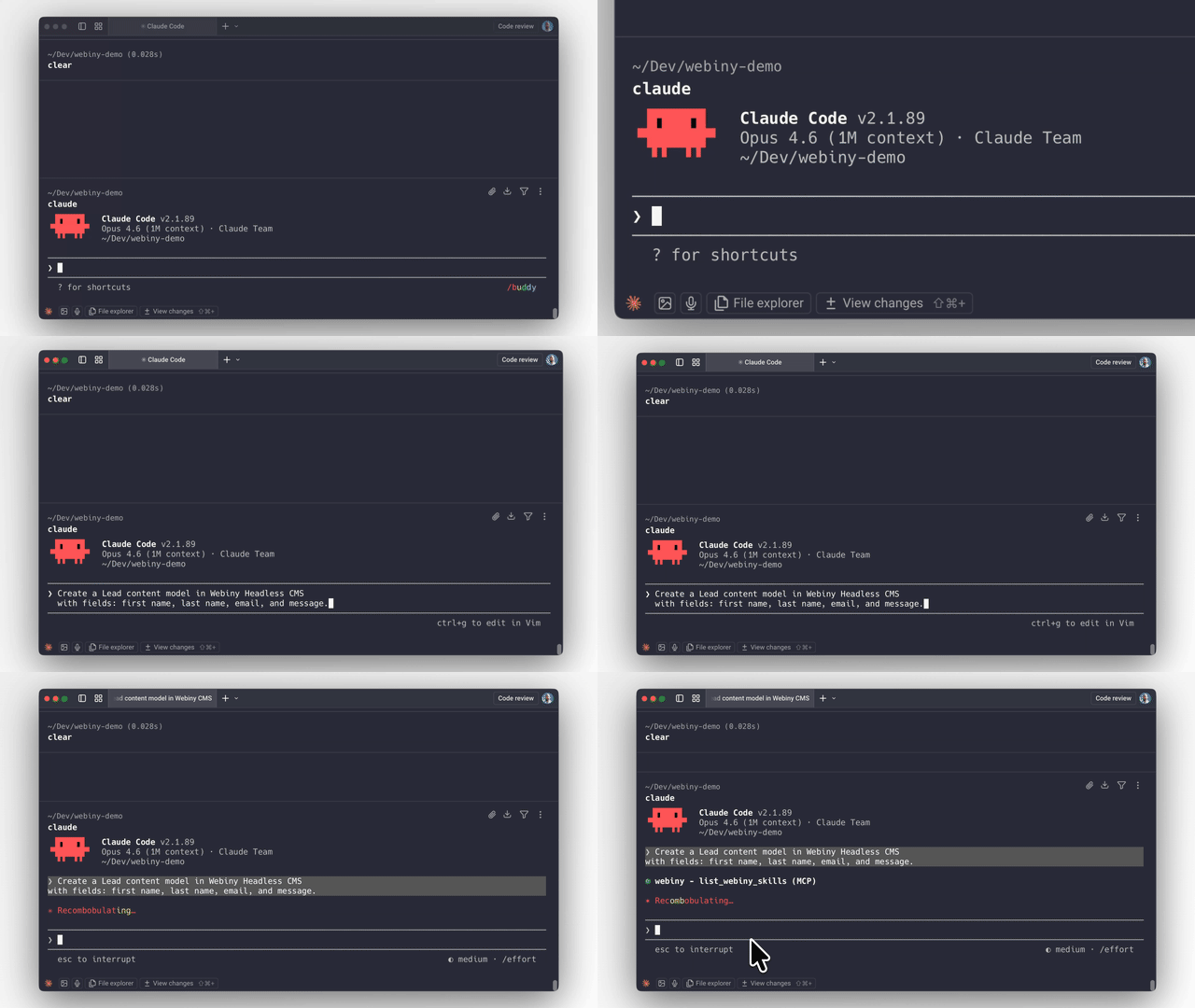
Webiny ships with an MCP server and AI skills that give AI coding agents (Claude Code, Cursor, Kiro, etc.) deep context about the platform's architecture, extension points, and patterns.
This means you can ask an AI agent to:
Create content models with specific field types and validation
Build lifecycle hooks that trigger on content events
Extend the GraphQL API with custom queries and business logic
Scaffold admin UI extensions with React components
Wire integrations with external systems via lifecycle events
Set up multi-tenant configurations programmatically
The AI produces code that follows Webiny's actual patterns because the MCP server gives it real knowledge of the framework — not generic guesses.
Why this works better on Webiny than most platforms: The framework is strongly typed with explicit extension points. AI-generated code either fits the type system or it doesn't compile. There's no ambiguous plugin API where the AI has to guess. Types enforce correctness.
Getting started with the MCP server:
# The MCP server runs locally inside your Webiny project
# Connect it to your AI coding tool of choice
# See docs for tool-specific setup instructions
→ AI-Assisted Development Guide
Extending Webiny
All customization happens in the extensions/ folder and is registered in webiny.config.tsx. Four extension types:
API Extensions — Custom GraphQL schemas, resolvers, lifecycle hooks, business logic.
// extensions/NotifyOnPublish.ts — Example: send Slack notification when content is published
class NotifyOnPublish implements CmsLifecycleHook.Interface {
  constructor(private slackService: SlackService.Interface) {}

  async afterPublish(params: AfterPublishParams): Promise<void> {
    await this.slackService.notify(`Content published: ${params.entry.title}`);
  }
}
Admin Extensions — Custom UI components, white-label branding, new views, tenant-specific themes. Standard React — use any patterns and libraries you already know.
Infrastructure Extensions — Modify AWS resources via Pulumi. Add Lambda functions, S3 buckets, CloudWatch alarms, or change existing resource configuration.
CLI Extensions — Custom commands for deployment workflows, data migrations, code generators.
→ Extensions Guide
When to Use Webiny
You need a self-hosted CMS and don't want to run servers
You need multi-tenancy as a first-class primitive, not a workaround
You want to extend the CMS with real code (TypeScript), not just configuration
You need to embed a CMS inside your own product (white-label)
Data ownership and compliance requirements rule out SaaS CMS
You want AI agents to be able to build on your content platform effectively
You're on AWS (or planning to be)
When Not to Use Webiny
Be honest with yourself about these:
Simple sites or blogs. Webiny is built for complex projects. If you need a blog with 10 pages, use something simpler.
Not on AWS. Webiny only runs on AWS. No GCP, no Azure, no on-prem. If that's a dealbreaker, it's a dealbreaker.
No TypeScript/React skills on the team. The entire extension model is TypeScript and React. If your team works in a different stack and doesn't want to adopt these, Webiny won't be a good fit.
You want a no-code, plug-and-play SaaS CMS. Webiny is a platform for developers to build on. If you want zero development involvement, this isn't it.
Licensing
Community Edition — MIT license. Free forever. Includes Headless CMS, Website Builder, File Manager.
Business Edition — Commercial license starting at $79/mo. Adds RBAC, multi-tenancy, publishing workflows.
Single package.json. Single tsconfig.json. Configuration in webiny.config.tsx uses React components for type safety and IDE auto-completion.
Key Commands
npx create-webiny-project <name>    # Create new project
yarn webiny deploy                   # Deploy to AWS
yarn webiny deploy core api          # Deploy specific apps
yarn webiny watch admin              # Local admin dev server
yarn webiny watch api                # Local Lambda dev environment
yarn webiny info                     # Show endpoints and URLs
yarn webiny destroy                  # Tear down all AWS resources
Resources
Learn Webiny Course — Structured course covering architecture, extensions, deployment, and AI-assisted development
Documentation — Full reference docs
Community Slack — Community chat
Website Builder Next.js Starter — Starter kit for rendering Webiny pages with Next.js
Contributing
We welcome contributions. See CONTRIBUTING.md for guidelines.
Before opening a PR, please check existing issues or start a discussion — it helps us give you better guidance and avoids duplicate work.
webiny/webiny-js thuộc nhóm Frontend trên TopGit, cùng 18 topic GitHub. Trang Trending và Topics liệt kê các repo cùng số sao và cùng ngôn ngữ để so sánh.
Đọc thêm về webiny/webiny-js ở đâu?
Trang TopGit này là một snapshot — tab "Readme" hiển thị nguyên văn README của repo (đã bỏ link, giữ ảnh). Repo GitHub ở github.com/webiny/webiny-js là nguồn chính thức.
Vì sao webiny/webiny-js được xếp vào nhóm Frontend?
TopGit xếp webiny/webiny-js vào nhóm Frontend dựa trên GitHub topics và mô tả của repo (gắn thẻ: "ai-assisted-development", "aws", "aws-lambda"). Việc phân loại dựa trên metadata thật của repo, không phải đoán theo cảm tính biên tập.
webiny/webiny-js có bao nhiêu sao?
webiny/webiny-js có 8.1k sao GitHub — tải lại trang để xem số mới nhất, hoặc xem trực tiếp github.com/webiny/webiny-js. TopGit phản chiếu số sao của GitHub nhưng không cam kết đến từng phút.

 /webiny-js





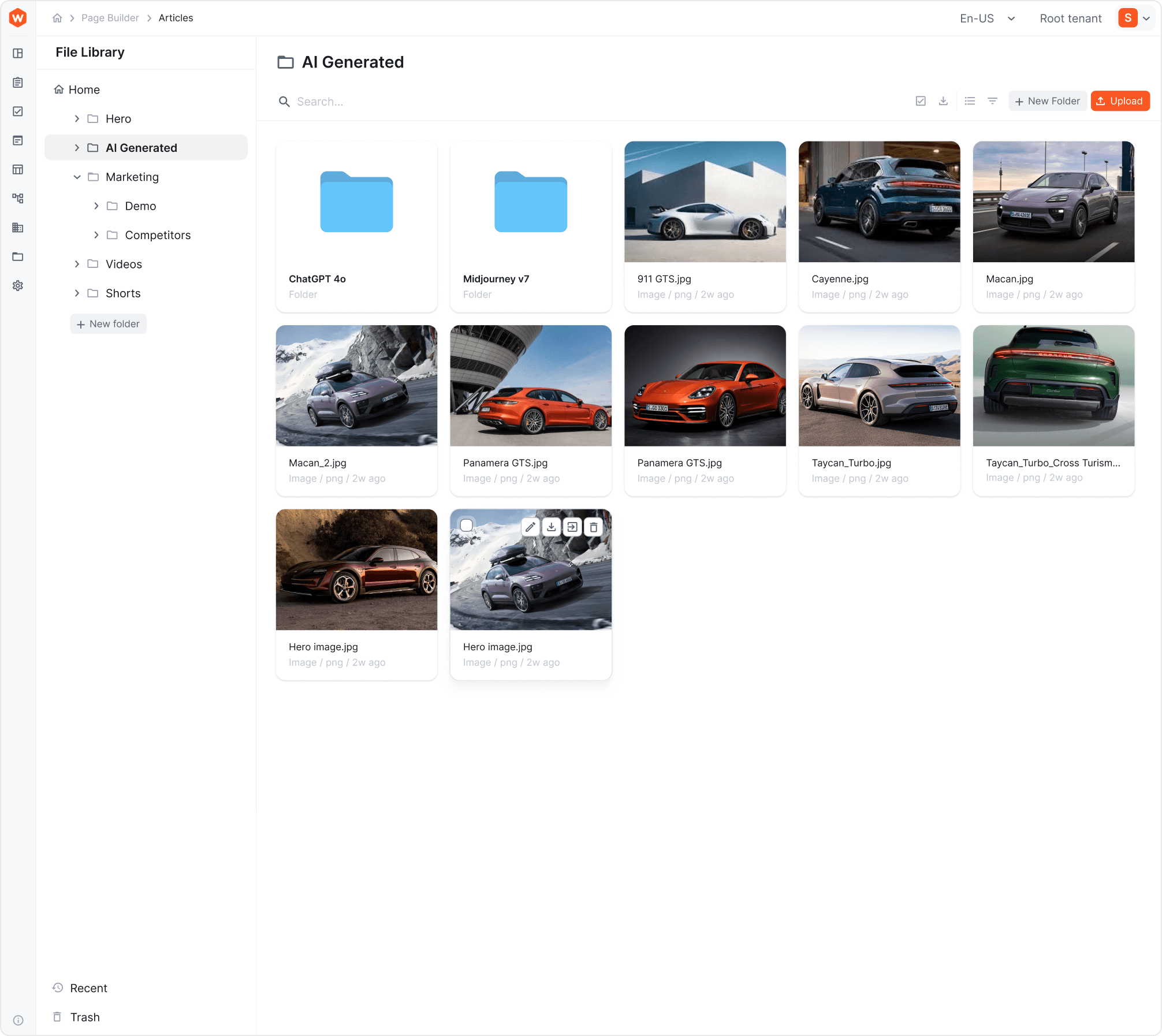 File Manager — Digital asset management with CDN delivery, folder structure, tagging, search. Integrated into CMS and Website Builder.