As a backend project, ReactiveX/RxCpp has picked up 3.2k stars on GitHub (C++). Reactive Extensions for C++
Snapshot summary built from the project's own GitHub metadata — there's no written TopGit review yet. The page will update automatically when a full review is published.
WHY NO REVIEW YET
TopGit writes full reviews for the most-starred, most-requested repositories. This page is a snapshot until then — see the READ ME tab for the original README in full.
The Reactive Extensions for C++ (RxCpp) is a library of algorithms for values-distributed-in-time. The Range-v3 library does the same for values-distributed-in-space.
Task
Status
rxcpp CI
Source
Badges
Github
Gitter.im
Packages
Documentation
Usage
RxCpp is a header-only C++ library that only depends on the standard library. The CMake build generates documentation and unit tests. The unit tests depend on a git submodule for the Catch library.
Example
Add Rx/v2/src to the include paths
#include "rxcpp/rx.hpp"
namespace Rx {
using namespace rxcpp;
using namespace rxcpp::sources;
using namespace rxcpp::operators;
using namespace rxcpp::util;
}
using namespace Rx;

#include <regex>
#include <random>
using namespace std;
using namespace std::chrono;

int main()
{
    random_device rd;   // non-deterministic generator
    mt19937 gen(rd());
    uniform_int_distribution<> dist(4, 18);

    // for testing purposes, produce byte stream that from lines of text
    auto bytes = range(0, 10) |
        flat_map([&](int i){
            auto body = from((uint8_t)('A' + i)) |
                repeat(dist(gen)) |
                as_dynamic();
            auto delim = from((uint8_t)'\r');
            return from(body, delim) | concat();
        }) |
        window(17) |
        flat_map([](observable<uint8_t> w){
            return w |
                reduce(
                    vector<uint8_t>(),
                    [](vector<uint8_t> v, uint8_t b){
                        v.push_back(b);
                        return v;
                    }) |
                as_dynamic();
        }) |
        tap([](const vector<uint8_t>& v){
            // print input packet of bytes
            copy(v.begin(), v.end(), ostream_iterator<long>(cout, " "));
            cout << endl;
        });

    //
    // recover lines of text from byte stream
    //

    auto removespaces = [](string s){
        s.erase(remove_if(s.begin(), s.end(), ::isspace), s.end());
        return s;
    };

    // create strings split on \r
    auto strings = bytes |
        concat_map([](vector<uint8_t> v){
            string s(v.begin(), v.end());
            regex delim(R"/(\r)/");
            cregex_token_iterator cursor(&s[0], &s[0] + s.size(), delim, {-1, 0});
            cregex_token_iterator end;
            vector<string> splits(cursor, end);
            return iterate(move(splits));
        }) |
        filter([](const string& s){
            return !s.empty();
        }) |
        publish() |
        ref_count();

    // filter to last string in each line
    auto closes = strings |
        filter(
            [](const string& s){
                return s.back() == '\r';
            }) |
        Rx::map([](const string&){return 0;});

    // group strings by line
    auto linewindows = strings |
        window_toggle(closes | start_with(0), [=](int){return closes;});

    // reduce the strings for a line into one string
    auto lines = linewindows |
        flat_map([&](observable<string> w) {
            return w | start_with<string>("") | sum() | Rx::map(removespaces);
        });

    // print result
    lines |
        subscribe<string>(println(cout));

    return 0;
}
Reactive Extensions
The ReactiveX Observable model allows you to treat streams of asynchronous events with the same sort of simple, composable operations that you use for collections of data items like arrays. It frees you from tangled webs of callbacks, and thereby makes your code more readable and less prone to bugs.
Credit ReactiveX.io
Other language implementations
Java: RxJava
JavaScript: rxjs
C#: Rx.NET
More..
Resources
Intro
Tutorials
Marble Diagrams
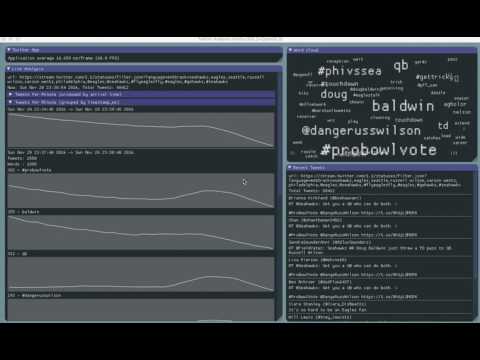
twitter stream analysis app
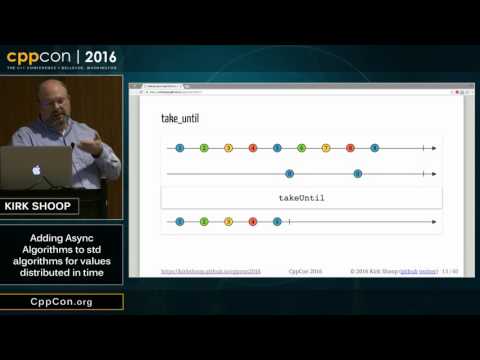
Algorithm Design For Values Distributed In Time
Cloning RxCpp
RxCpp uses a git submodule (in ext/catch) for the excellent Catch library. The easiest way to ensure that the submodules are included in the clone is to add --recursive in the clone command.
git clone --recursive https://github.com/ReactiveX/RxCpp.git
cd RxCpp
Installing
To install RxCpp into your OS you need to follow standart procedure:
mkdir build
cd build
cmake ..
make install
If you're using the vcpkg dependency manager, you can install RxCpp using a single one-line command:
vcpkg install rxcpp
Vcpkg will acquire RxCpp, build it from source in your computer, and provide CMake integration support for your projects.
See the vcpkg repository for more information.
Importing
After you have successfully installed RxCpp you can import it into any project by simply adding to your CMakeLists.txt:
find_package(rxcpp CONFIG)
Building RxCpp Unit Tests
RxCpp is regularly tested on OSX and Windows.
RxCpp is regularly built with Clang, Gcc and VC
RxCpp depends on the latest compiler releases.
RxCpp uses CMake to create build files for several platforms and IDE's
ide builds
XCode
mkdir projects/build
cd projects/build
cmake -G"Xcode" -DRXCPP_DISABLE_TESTS_AND_EXAMPLES=0 ../CMake -B.
Visual Studio 2017
mkdir projects\build
cd projects\build
cmake -G "Visual Studio 15" -DRXCPP_DISABLE_TESTS_AND_EXAMPLES=0 ..\CMake\
msbuild Project.sln
makefile builds
OSX
mkdir projects/build
cd projects/build
cmake -G"Unix Makefiles" -DCMAKE_BUILD_TYPE=RelWithDebInfo -DRXCPP_DISABLE_TESTS_AND_EXAMPLES=0 -B. ../CMake
make
Linux --- Clang
mkdir projects/build
cd projects/build
cmake -G"Unix Makefiles" -DCMAKE_C_COMPILER=clang -DCMAKE_CXX_COMPILER=clang++ -DCMAKE_BUILD_TYPE=RelWithDebInfo -DCMAKE_EXE_LINKER_FLAGS="-stdlib=libc++" -DRXCPP_DISABLE_TESTS_AND_EXAMPLES=0 -B. ../CMake
make
Linux --- GCC
mkdir projects/build
cd projects/build
cmake -G"Unix Makefiles" -DCMAKE_C_COMPILER=gcc -DCMAKE_CXX_COMPILER=g++ -DCMAKE_BUILD_TYPE=RelWithDebInfo -DRXCPP_DISABLE_TESTS_AND_EXAMPLES=0 -B. ../CMake
make
The build only produces test and example binaries.
Running tests
You can use the CMake test runner ctest
You can run the test binaries directly rxcpp_test_*
Tests can be selected by name or tag
Example of by-tag
rxcpp_test_subscription [perf]
Documentation
RxCpp uses Doxygen to generate project documentation.
When Doxygen+Graphviz is installed, CMake creates a special build task named doc. It creates actual documentation and puts it to projects/doxygen/html/ folder, which can be published to the gh-pages branch. Each merged pull request will build the docs and publish them.
Developers Material
Contributing Code
Before submitting a feature or substantial code contribution please discuss it with the team and ensure it follows the product roadmap. Note that all code submissions will be rigorously reviewed and tested by the Rx Team, and only those that meet an extremely high bar for both quality and design/roadmap appropriateness will be merged into the source.
Microsoft Open Source Code of Conduct
This project has adopted the Microsoft Open Source Code of Conduct. For more information see the Code of Conduct FAQ or contact [email protected] with any additional questions or comments.
The most recent commit recorded on ReactiveX/RxCpp was 2.1 years ago, based on the GitHub push timestamp. The repository has 406 forks — one of the better signals of community interest.
How many stars does ReactiveX/RxCpp have?
ReactiveX/RxCpp has 3.2k GitHub stars — refresh the page for the live number, or check github.com/ReactiveX/RxCpp. TopGit mirrors GitHub's count but does not claim minute-by-minute accuracy.
What else is in the Backend space?
ReactiveX/RxCpp is tracked by TopGit under the Backend category, alongside 6 GitHub-tagged topics. Trending and Topics pages list peer repositories of comparable stars and language.
What language is ReactiveX/RxCpp written in?
ReactiveX/RxCpp is written primarily in C++. GitHub's language field is based on the largest share of bytes in the default branch.
What topics is ReactiveX/RxCpp associated with?
GitHub's repository topics for ReactiveX/RxCpp: "algorithms", "c-plus-plus", "reactivex", "rxcpp", "values-distributed-in-time", "virtuous-procrastination". TopGit's editorial category is Backend.
Where do I read more about ReactiveX/RxCpp?
This TopGit page is a snapshot — the READ ME tab shows the project's own README content (links stripped, images preserved). The GitHub repository at github.com/ReactiveX/RxCpp is the definitive source.
Why is ReactiveX/RxCpp categorized under Backend?
TopGit places ReactiveX/RxCpp in the Backend category based on its GitHub topics and description (tagged: "algorithms", "c-plus-plus", "reactivex"). Categories are assigned from real repository metadata, not editorial guesswork.
Read full README in the tab above.
Want a second opinion on RxCpp?
Ask an AI that can read this page — one click and you get its take on RxCpp.
 /RxCpp