Một mục tích hợp AI trong kho dữ liệu GitHub của TopGit: AliaksandrSiarohin/first-order-model, 15.0k sao, nhóm AI Tools, Jupyter Notebook. This repository contains the source code for the paper First Order Motion Model for Image Animation
Tóm tắt dựng từ metadata GitHub của chính dự án — chưa có bài review TopGit. Trang sẽ tự động cập nhật khi bài review đầy đủ được xuất bản.
VÌ SAO CHƯA CÓ REVIEW
TopGit viết bài đầy đủ cho repo có nhiều sao nhất và được yêu cầu nhiều nhất. Trang này là snapshot trong thời gian chờ — xem README gốc ở tab READ ME.
!!! Check out our new paper and framework improved for articulated objects
First Order Motion Model for Image Animation
This repository contains the source code for the paper First Order Motion Model for Image Animation by Aliaksandr Siarohin, Stéphane Lathuilière, Sergey Tulyakov, Elisa Ricci and Nicu Sebe.
Hugging Face Spaces
Example animations
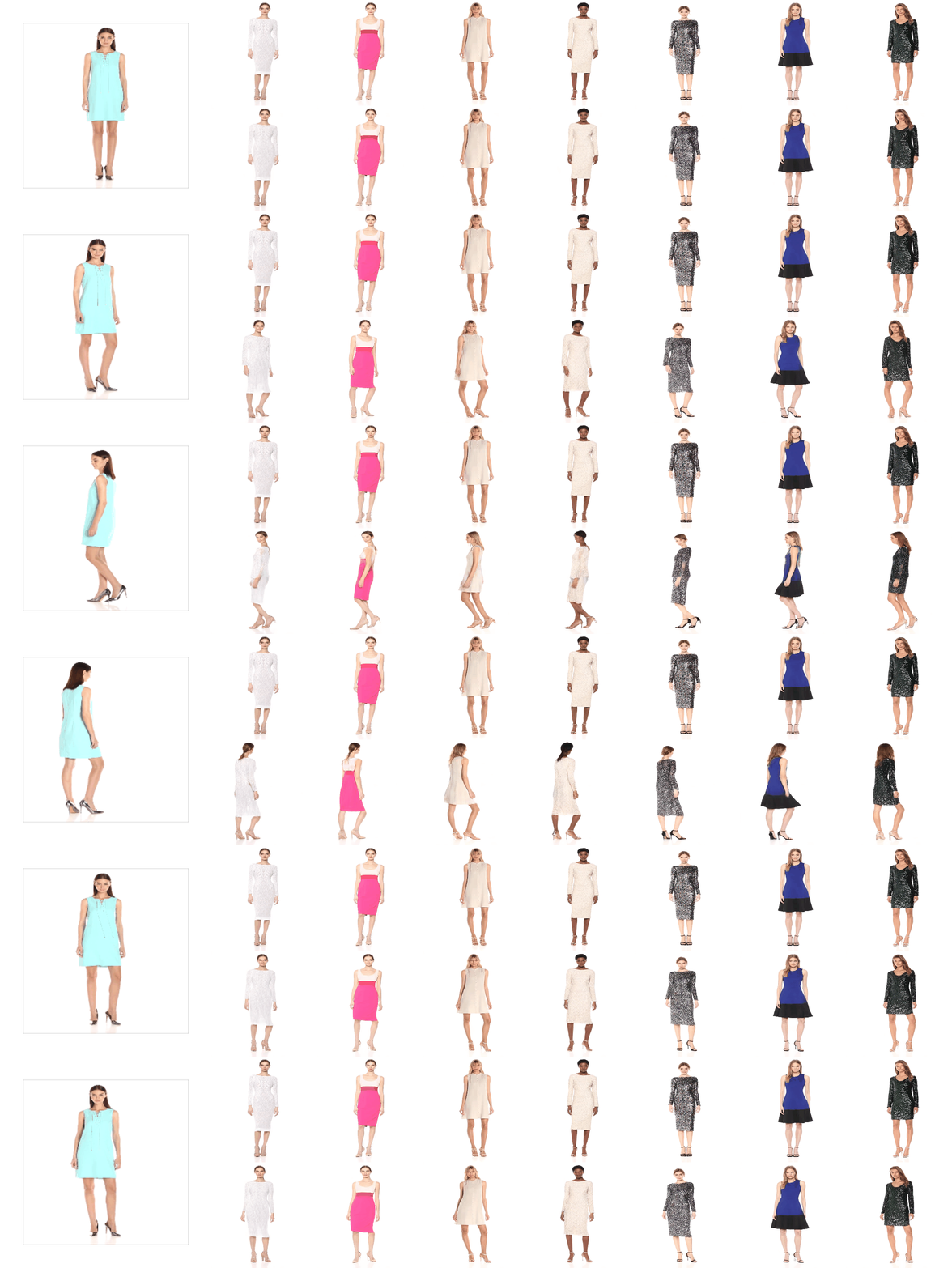
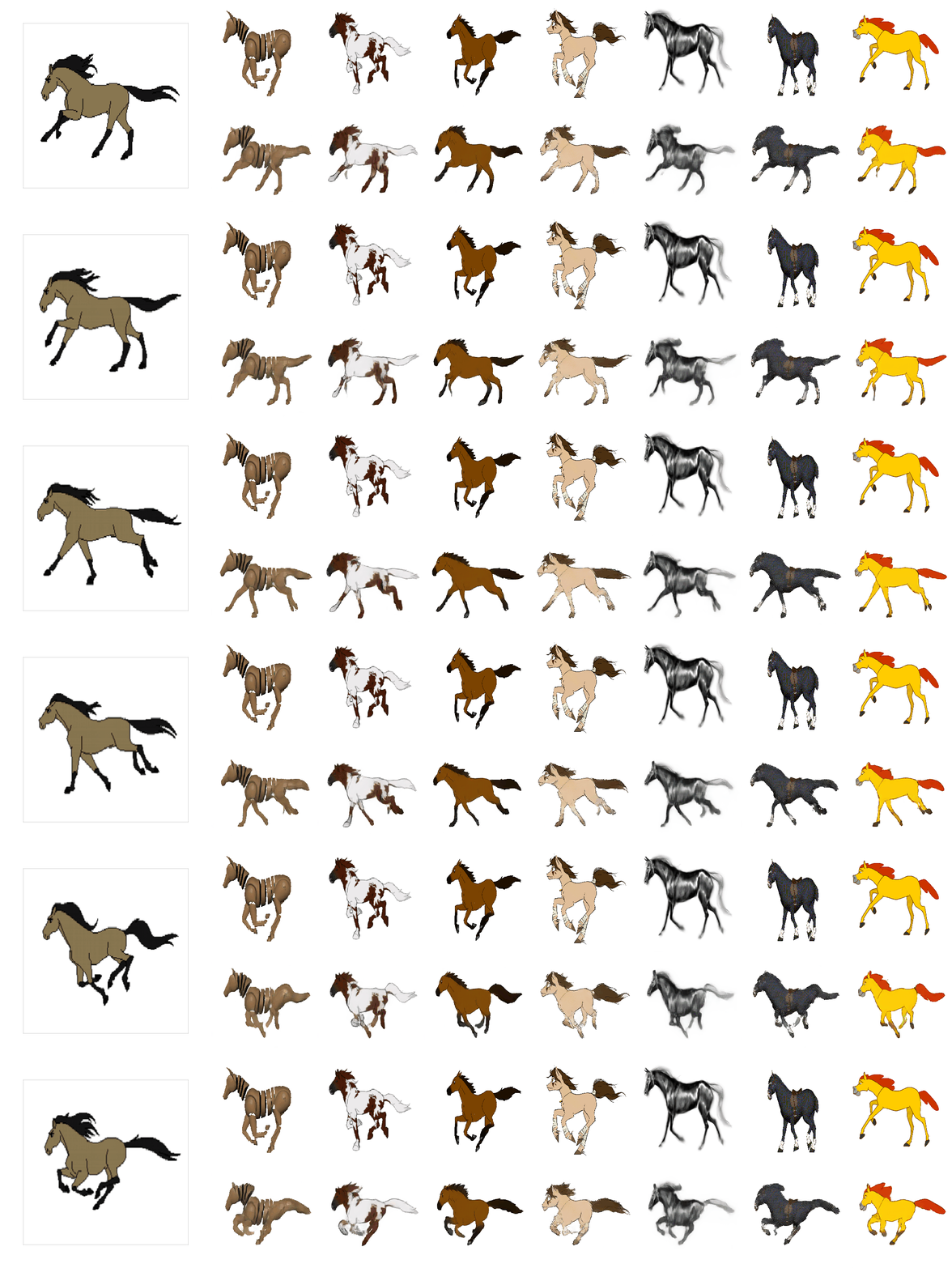
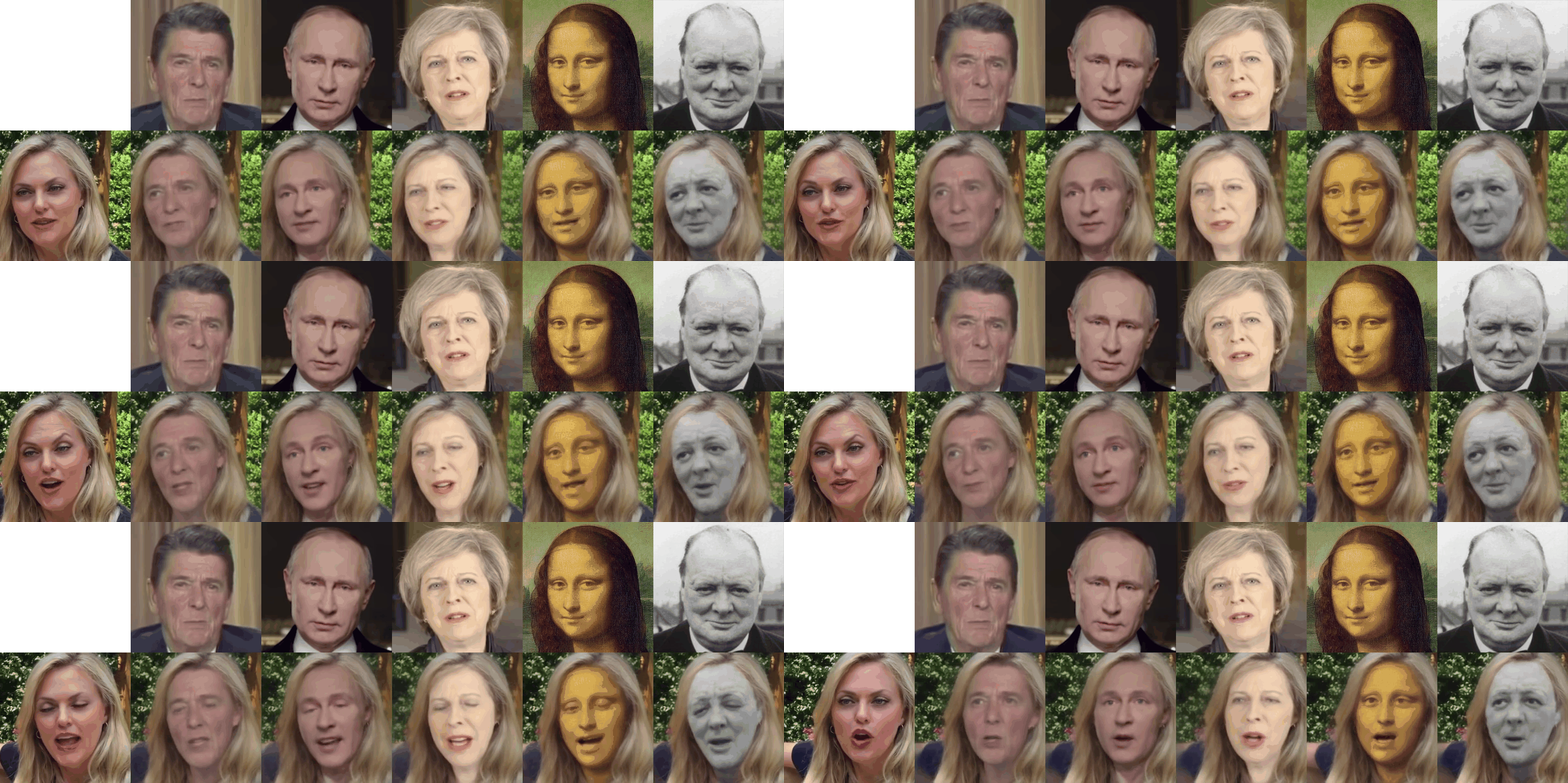
The videos on the left show the driving videos. The first row on the right for each dataset shows the source videos. The bottom row contains the animated sequences with motion transferred from the driving video and object taken from the source image. We trained a separate network for each task.
VoxCeleb Dataset
Fashion Dataset
MGIF Dataset
Installation
We support python3. To install the dependencies run:
pip install -r requirements.txt
YAML configs
There are several configuration (config/dataset_name.yaml) files one for each dataset. See config/taichi-256.yaml to get description of each parameter.
Pre-trained checkpoint
Checkpoints can be found under following link: google-drive or yandex-disk.
Animation Demo
To run a demo, download checkpoint and run the following command:
The driving videos and source images should be cropped before it can be used in our method. To obtain some semi-automatic crop suggestions you can use python crop-video.py --inp some_youtube_video.mp4. It will generate commands for crops using ffmpeg. In order to use the script, face-alligment library is needed:
If you are having trouble getting the demo to work because of library compatibility issues,
and you're running Linux, you might try running it inside a Docker container, which would
give you better control over the execution environment.
Requirements: Docker 19.03+ and nvidia-docker
installed and able to successfully run the nvidia-docker usage tests.
We'll first build the container.
docker build -t first-order-model .
And now that we have the container available locally, we can use it to run the demo.
@graphemecluster prepared a GUI demo for the Google Colab. It also works in Kaggle. For the source code, see demo.ipynb.
For the old demo, see old_demo.ipynb.
Face-swap
It is possible to modify the method to perform face-swap using supervised segmentation masks.
For both unsupervised and supervised video editing, such as face-swap, please refer to Motion Co-Segmentation.
The code will create a folder in the log directory (each run will create a time-stamped new directory).
Checkpoints will be saved to this folder.
To check the loss values during training see log.txt.
You can also check training data reconstructions in the train-vis subfolder.
By default the batch size is tuned to run on 2 or 4 Titan-X gpu (apart from speed it does not make much difference). You can change the batch size in the train_params in corresponding .yaml file.
You will need to specify the path to the checkpoint,
the reconstruction subfolder will be created in the checkpoint folder.
The generated video will be stored to this folder, also generated videos will be stored in png subfolder in loss-less '.png' format for evaluation.
Instructions for computing metrics from the paper can be found: https://github.com/AliaksandrSiarohin/pose-evaluation.
You will need to specify the path to the checkpoint,
the animation subfolder will be created in the same folder as the checkpoint.
You can find the generated video there and its loss-less version in the png subfolder.
By default video from test set will be randomly paired, but you can specify the "source,driving" pairs in the corresponding .csv files. The path to this file should be specified in corresponding .yaml file in pairs_list setting.
There are 2 different ways of performing animation:
by using absolute keypoint locations or by using relative keypoint locations.
Animation using absolute coordinates: the animation is performed using the absolute positions of the driving video and appearance of the source image.
In this way there are no specific requirements for the driving video and source appearance that is used.
However this usually leads to poor performance since irrelevant details such as shape is transferred.
Check animate parameters in taichi-256.yaml to enable this mode.
Animation using relative coordinates: from the driving video we first estimate the relative movement of each keypoint,
then we add this movement to the absolute position of keypoints in the source image.
This keypoint along with source image is used for animation. This usually leads to better performance, however this requires
that the object in the first frame of the video and in the source image have the same pose
Datasets
Bair. This dataset can be directly downloaded.
Mgif. This dataset can be directly downloaded.
Fashion. Follow the instruction on dataset downloading from.
Taichi. Follow the instructions in data/taichi-loading or instructions from https://github.com/AliaksandrSiarohin/video-preprocessing.
Nemo. Please follow the instructions on how to download the dataset. Then the dataset should be preprocessed using scripts from https://github.com/AliaksandrSiarohin/video-preprocessing.
VoxCeleb. Please follow the instruction from https://github.com/AliaksandrSiarohin/video-preprocessing.
Training on your own dataset
Resize all the videos to the same size e.g 256x256, the videos can be in '.gif', '.mp4' or folder with images.
We recommend the later, for each video make a separate folder with all the frames in '.png' format. This format is loss-less, and it has better i/o performance.
Create a folder data/dataset_name with 2 subfolders train and test, put training videos in the train and testing in the test.
Create a config config/dataset_name.yaml, in dataset_params specify the root dir the root_dir: data/dataset_name. Also adjust the number of epoch in train_params.
Additional notes
Citation:
@InProceedings{Siarohin_2019_NeurIPS,
  author={Siarohin, Aliaksandr and Lathuilière, Stéphane and Tulyakov, Sergey and Ricci, Elisa and Sebe, Nicu},
  title={First Order Motion Model for Image Animation},
  booktitle = {Conference on Neural Information Processing Systems (NeurIPS)},
  month = {December},
  year = {2019}
}
AliaksandrSiarohin/first-order-model có bao nhiêu sao?
AliaksandrSiarohin/first-order-model có 15.0k sao GitHub — tải lại trang để xem số mới nhất, hoặc xem trực tiếp github.com/AliaksandrSiarohin/first-order-model. TopGit phản chiếu số sao của GitHub nhưng không cam kết đến từng phút.
AliaksandrSiarohin/first-order-model có những chủ đề gì?
GitHub topics của AliaksandrSiarohin/first-order-model: "deep-learning", "generative-model", "image-animation", "motion-retargeting". TopGit xếp repo vào nhóm AI Tools.
AliaksandrSiarohin/first-order-model có trang demo không?
Dự án có trang chủ ở https://aliaksandrsiarohin.github.io/first-order-model-website/. Tab "Readme" ở trang này thường có ảnh chụp và hướng dẫn bắt đầu nhanh.
AliaksandrSiarohin/first-order-model còn đang phát triển không?
Commit gần nhất trên AliaksandrSiarohin/first-order-model là 2.0 năm trước (theo timestamp GitHub). Repo có 3.2k fork — một chỉ báo về mức độ quan tâm của cộng đồng.
AliaksandrSiarohin/first-order-model dùng license gì?
AliaksandrSiarohin/first-order-model phát hành theo license MIT. Nên mở file LICENSE trên GitHub để xác nhận — license metadata đôi khi lệch với thực tế dự án.
AliaksandrSiarohin/first-order-model viết bằng ngôn ngữ gì?
AliaksandrSiarohin/first-order-model chủ yếu viết bằng Jupyter Notebook. Trường "language" của GitHub dựa trên phần lớn byte ở nhánh mặc định.
Đọc thêm về AliaksandrSiarohin/first-order-model ở đâu?
Trang TopGit này là một snapshot — tab "Readme" hiển thị nguyên văn README của repo (đã bỏ link, giữ ảnh). Repo GitHub ở github.com/AliaksandrSiarohin/first-order-model là nguồn chính thức.
Đọc đầy đủ README ở tab phía trên.
first-order-model có đáng để bạn bỏ thời gian?
ChatGPT, Claude và Perplexity đều đọc được trang này. Hỏi thử xem họ nghĩ gì về first-order-model.

 /first-order-model



 For both unsupervised and supervised video editing, such as face-swap, please refer to Motion Co-Segmentation.