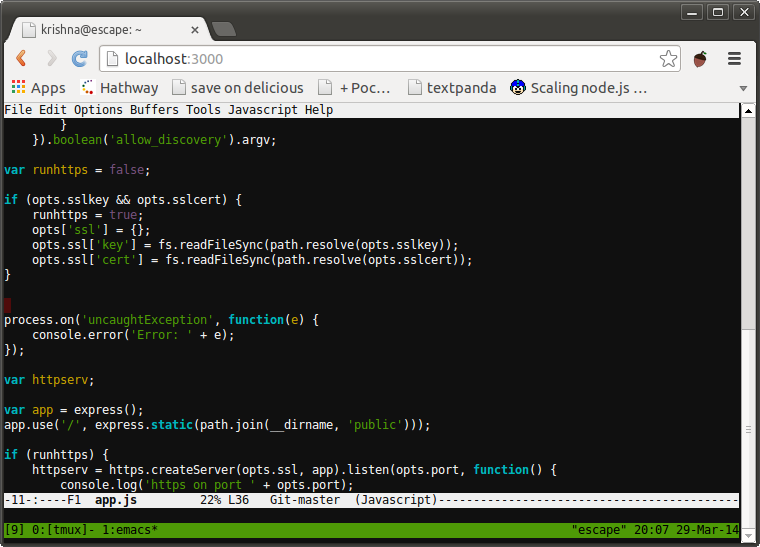
Trên GitHub, butlerx/wetty đã đạt 5.5k sao, nhóm API, ngôn ngữ TypeScript. Terminal in browser over http/https. (Ajaxterm/Anyterm alternative, but much better)
Tóm tắt dựng từ metadata GitHub của chính dự án — chưa có bài review TopGit. Trang sẽ tự động cập nhật khi bài review đầy đủ được xuất bản.
VÌ SAO CHƯA CÓ REVIEW
TopGit viết bài đầy đủ cho repo có nhiều sao nhất và được yêu cầu nhiều nhất. Trang này là snapshot trong thời gian chờ — xem README gốc ở tab READ ME.
Terminal over HTTP and https. WeTTY is an alternative to ajaxterm and anyterm
but much better than them because WeTTY uses xterm.js which is a full fledged
implementation of terminal emulation written entirely in JavaScript. WeTTY uses
websockets rather than Ajax and hence better response time.
Prerequisites
node ^22.23.4 || ^24.22.1 || >=26.12.1 — only the Node lines that carry the
fix for the Brotli decoder RCE (CVE-2026-111497); 18, 20, 23 and 25 are EOL
and never get it
make
python
build-essential
Install
npm -g i wetty
Usage
$ wetty --help
Options:
  --help, -h              Print help message                            [boolean]
  --version               Show version number                           [boolean]
  --conf                  config file to load config from                [string]
  --ssl-key               path to SSL key                                [string]
  --ssl-cert              path to SSL certificate                        [string]
  --ssh-host              ssh server host                                [string]
  --ssh-port              ssh server port                                [number]
  --ssh-user              ssh user                                       [string]
  --title                 window title                                   [string]
  --ssh-auth              defaults to "password", you can use
                          "publickey,password" instead                   [string]
  --ssh-pass              ssh password                                   [string]
  --ssh-key               path to an optional client private key
                          (connection will be password-less and
                          insecure!)                                     [string]
  --ssh-config            Specifies an alternative ssh configuration
                          file. For further details see "-F" option in
                          ssh(1)                                         [string]
  --force-ssh             Connecting through ssh even if running as
                          root                                          [boolean]
  --known-hosts           path to known hosts file                       [string]
  --base, -b              base path to wetty                             [string]
  --port, -p              wetty listen port                              [number]
  --host                  wetty listen host                              [string]
  --socket                Make wetty listen on unix socket               [string]
  --command, -c           command to run in shell                        [string]
  --allow-iframe          Allow wetty to be embedded in an iframe,
                          defaults to allowing same origin              [boolean]
  --allow-remote-hosts    Allow wetty to use the host and port params
                          in a url as ssh destination                   [boolean]
  --allow-remote-command  Allow wetty to use the command and path
                          params in a url as command and working
                          directory on ssh host                         [boolean]
  --ping-interval         Milliseconds between Socket.IO heartbeat
                          pings sent to the client                       [number]
  --ping-timeout          Milliseconds to wait for a Socket.IO
                          heartbeat pong before considering the
                          connection dead                                [number]
  --allowed-origin        Required trusted browser origin allowed to
                          connect to Socket.IO. Repeat for multiple
                          origins; also accepts ALLOWEDORIGINS            [array]
  --log-level             set log level of wetty server                  [string]
Start WeTTY with an explicit trusted browser origin (required):
wetty --allowed-origin http://yourserver:3000
Open your browser on http://yourserver:3000 and you will be prompted to login.
Or go to http://yourserver:3000/ssh/<username> to specify the user beforehand.
For local use, configure http://localhost:3000 instead. Behind a reverse
proxy, configure the public HTTPS origin, not the internal backend address.
Origins never include the base path. Repeat --allowed-origin or set a
comma-separated ALLOWEDORIGINS list to allow multiple origins.
If you run it as root it will launch /bin/login (where you can specify the
user name), else it will launch ssh and connect by default to localhost. The
SSH connection can be forced using the --force-ssh option.
If instead you wish to connect to a remote host you can specify the --ssh-host
option, the SSH port using the --ssh-port option and the SSH user using the
--ssh-user option.
Check out the Flags docs for a full
list of flags
Docker container
To use WeTTY as a docker container, a docker image is available on
docker hub. To run this image, use
docker run --rm -p 3000:3000 -e ALLOWEDORIGINS=http://localhost:3000 wettyoss/wetty --ssh-host=<YOUR-IP>
and you will be able to open a ssh session to the host given by YOUR-IP under
the URL http://localhost:3000.
It is recommended to drive WeTTY behind a reverse proxy to have HTTPS security
and possibly Let’s Encrypt support. Popular containers to achieve this are
nginx-proxy and
traefik. For traefik there is an example
docker-compose file in the containers directory.
FAQ
Check out the docs
Running as daemon
HTTPS Support
Using NGINX
Using Apache
Automatic Login
Downloading Files
What browsers are supported?
WeTTY supports all browsers that
xterm.js supports.
Có — butlerx/wetty phát hành theo license MIT, nghĩa là mã nguồn mở để đọc, fork và (tùy license) tái sử dụng. Mã: github.com/butlerx/wetty.
butlerx/wetty là gì?
butlerx/wetty (butlerx/wetty) là dự án TypeScript trên GitHub. Theo mô tả gốc: Terminal in browser over http/https. (Ajaxterm/Anyterm alternative, but much better)
butlerx/wetty so với các dự án API khác thế nào?
butlerx/wetty được TopGit xếp vào nhóm API, với 5.5k sao GitHub và viết bằng TypeScript. Xem trang chủ đề API trên TopGit để so sánh với các dự án tương tự theo số sao và mức độ hoạt động.
Cùng nhóm API còn repo nào?
butlerx/wetty thuộc nhóm API trên TopGit, cùng 9 topic GitHub. Trang Trending và Topics liệt kê các repo cùng số sao và cùng ngôn ngữ để so sánh.
Đọc thêm về butlerx/wetty ở đâu?
Trang TopGit này là một snapshot — tab "Readme" hiển thị nguyên văn README của repo (đã bỏ link, giữ ảnh). Repo GitHub ở github.com/butlerx/wetty là nguồn chính thức.
Vì sao butlerx/wetty được xếp vào nhóm API?
TopGit xếp butlerx/wetty vào nhóm API dựa trên GitHub topics và mô tả của repo (gắn thẻ: "ajaxterm", "anyterm", "hacktoberfest"). Việc phân loại dựa trên metadata thật của repo, không phải đoán theo cảm tính biên tập.
Đọc đầy đủ README ở tab phía trên.
Muốn nghe thêm một ý kiến về wetty?
Hỏi một AI đọc được trang này — một cú bấm là có ngay nhận định về wetty.

 /wetty