Indexed by TopGit from live GitHub metadata: antfu/vue-starport has 1.9k stars, written primarily in TypeScript. 🛰 Shared component across routes with animations
Snapshot summary built from the project's own GitHub metadata — there's no written TopGit review yet. The page will update automatically when a full review is published.
WHY NO REVIEW YET
TopGit writes full reviews for the most-starred, most-requested repositories. This page is a snapshot until then — see the READ ME tab for the original README in full.
Shared Vue component across routes with animations
Live Demo
English | 简体中文
Note: With the View Transitions API coming to the browsers, you may not this library anymore (even tho it's not a 1:1 replacement as View Transition does not preseve dom and state).
Why?
It's quite common you might have a same component used in different routes (pages) with a bit different sizes and positions. Sometimes you might want to animate them when user navigates between routes to provide a smooth UX. While such animation is common to be seen in native apps, it's could be a bit challenging to do it in Web.
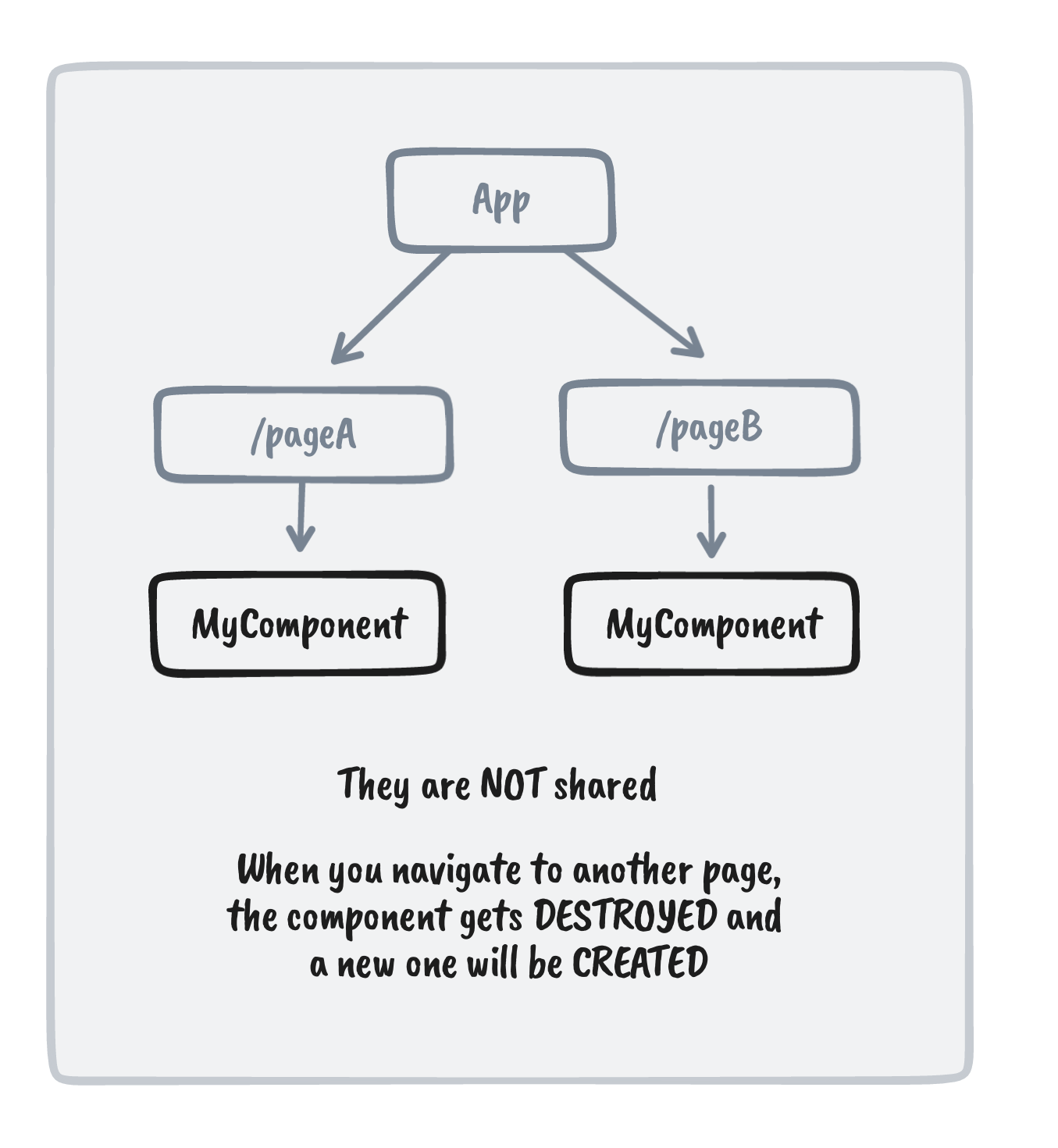
Vue's component structure is presented as a tree, and the child components are in different branches with their own instances. Meaning when users navigate between routes, the components are not shared across routes.
By that means you can't directly animate the changes because they are in two different instances. The good news is, there is a technique called FLIP to enumerate the transitions between them.
However, FLIP only solves the problem of transitions, the components are still not the same. During the navigation, the internal state of the component will lost.
Thus I started this new approach Starport to experiment with a better solution to fit this requirement.
How?
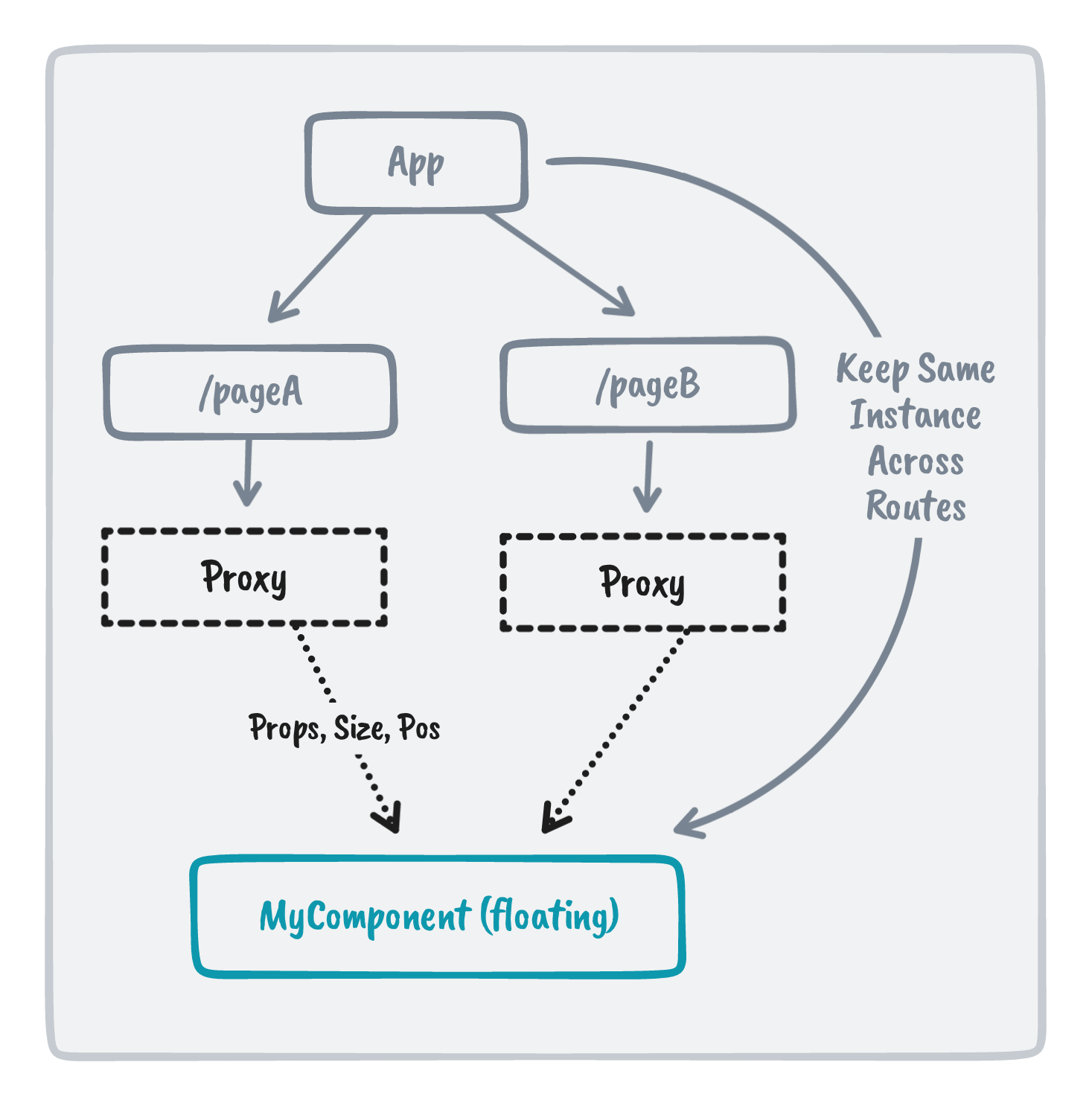
So since we can't share the components across different branches in the component tree, we could actually hoist them to the root so they become independent from the routes.
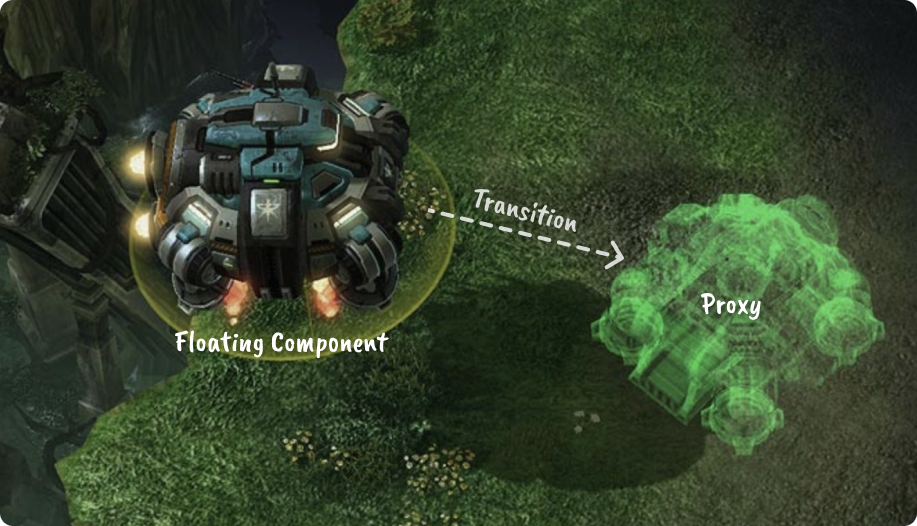
To allow each page to still have control of the components, we introduced a Proxy component to present the expected size and position of that component. The proxy will pass the props and position information to the actual component and let it "fly over" the proxy with animations.
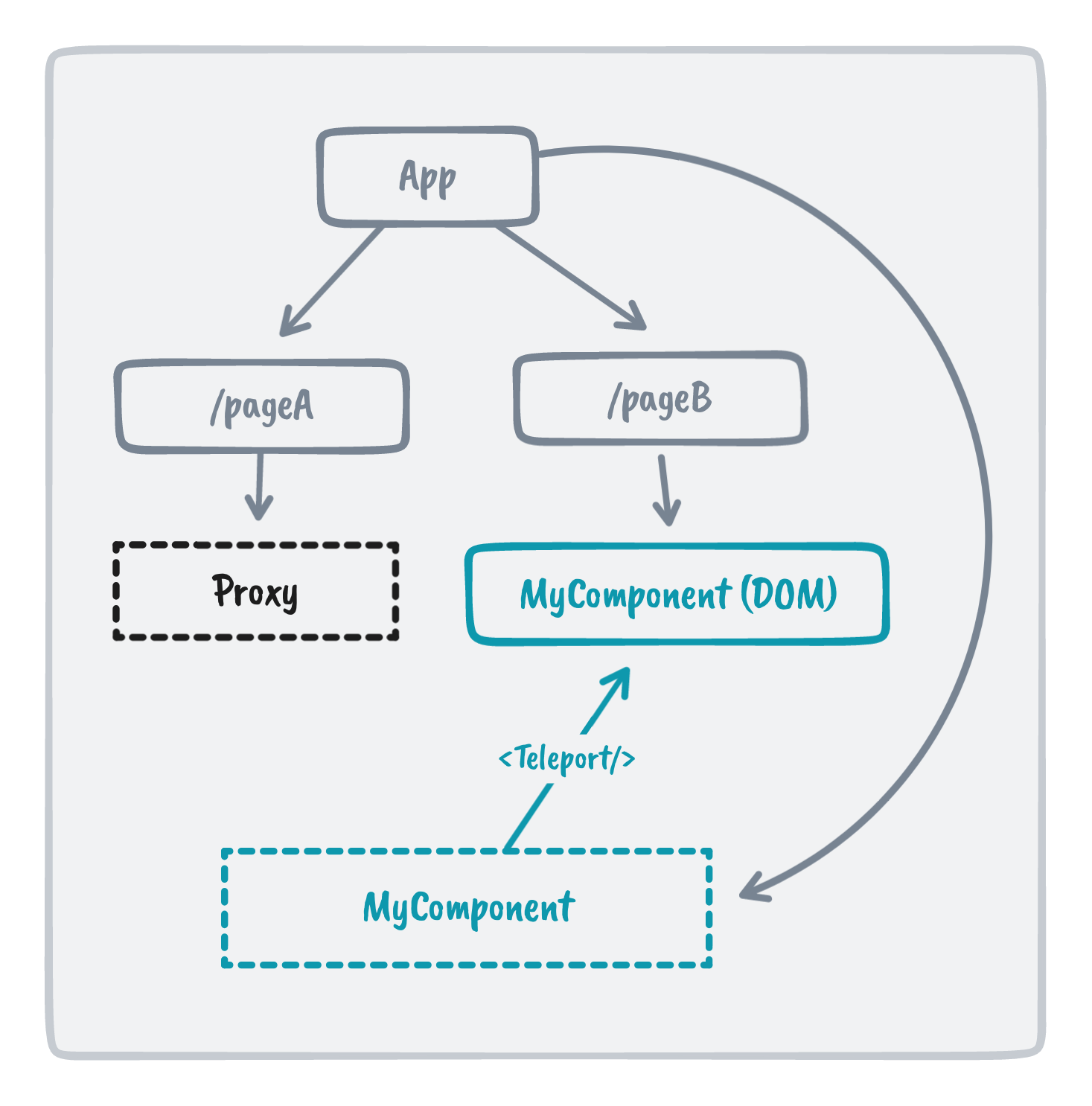
When the transition ends and it arrived to the expected position, it will then "land down" to the actual component using the <Teleport/> component.
With this "landing" mechanism, the DOM tree will be preserved as what you will have with the original tree structure. When navigating to another route, the component then will "lift off" back to the floating state, "fly" to the new proxy's position and "land" again.
This is very similar to Terran's Buildings in StarCraft (able to leave the ground and fly to new locations). It's also the inspiration source of the project name Starport.
Install
⚗️ Experimental
npm i vue-starport
Vue Starport only works for Vue 3
Usage
Add <StarportCarrier> component from vue-starport to your root component (app.vue). All <Starport> usage should be inside <StarportCarrier> component.
<script setup>
import { StarportCarrier } from 'vue-starport'
</script>

<template>
  <StarportCarrier> <!-- here -->
    <RouterView />
  </StarportCarrier>
</template>
In routes, wrap the component with the <Starport> component.
Note that you might need to apply some styles to <Starport> to make it have a defined size indicating the area for the "floating starcraft" to land.
Checkout the Playground for more examples.
Register Components Globally
// main.ts
import StarportPlugin from 'vue-starport'

app.use(StarportPlugin())
And then you can use Starport and StarportCarrier components without importing.
Keep Alive
By default, when navigating to a page without a corresponding <Starport> proxy to land, the component will be destroyed. If you want to keep the component alive even when it's not presented in the current route, you can set keepAlive to true for that specific instance.
Thanks to @hangsman who helped to provide the initial solution of proper teleport the element and made this idea valid. Also thanks to the viewers of my live-streaming on Bilibili, those who spend time with me to working on this idea and provided useful feedback during the live.
You can check the recordings of my live-streams (in Chinese), where I wrote this project from scratch.
TopGit's last sync did not record any GitHub topics for antfu/vue-starport. GitHub topics appear in the right sidebar of a repository page; that's the authoritative place to check.
How active is development on antfu/vue-starport?
The most recent commit recorded on antfu/vue-starport was 3.2 years ago, based on the GitHub push timestamp. The repository has 98 forks — one of the better signals of community interest.
How many stars does antfu/vue-starport have?
antfu/vue-starport has 1.9k GitHub stars — refresh the page for the live number, or check github.com/antfu/vue-starport. TopGit mirrors GitHub's count but does not claim minute-by-minute accuracy.
What language is antfu/vue-starport written in?
antfu/vue-starport is written primarily in TypeScript. GitHub's language field is based on the largest share of bytes in the default branch.
What license does antfu/vue-starport use?
antfu/vue-starport is released under the MIT license. Always verify the LICENSE file directly on GitHub for the authoritative terms — license strings can be edited out of sync with a project's actual stance.
Where can I see antfu/vue-starport in action?
The project maintains a homepage at https://vue-starport.netlify.app/. The README tab on this page also usually contains screenshots and a quickstart.
Where do I read more about antfu/vue-starport?
This TopGit page is a snapshot — the READ ME tab shows the project's own README content (links stripped, images preserved). The GitHub repository at github.com/antfu/vue-starport is the definitive source.
Read full README in the tab above.
Is vue-starport worth your time?
ChatGPT, Claude and Perplexity can all read this page. Ask one of them what it makes of vue-starport.

 /vue-starport